Music Monday: April 13, 2026

Hi, everyone. Welcome to this week’s edition of Music Monday.

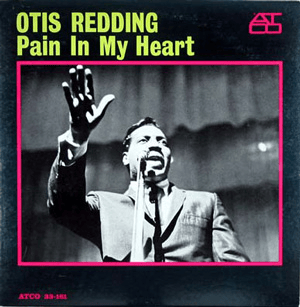
(Image found online.  Original source unknown.)

Last week we celebrated how successful Otis Redding was in 1966. Not only did he release two albums that year, he also made his debut at the Whisky A Go Go on the Sunset Strip in West Hollywood, California. He performed seven shows during his three night engagement which took place on Friday April 8, Saturday April 9 and Sunday April 10, 1966.

Photo of Otis Redding (center) on stage at The Whisky A Go Go from his Facebook page. (Image found online.  Original source unknown.)

The now legendary Whisky-which opened in January 1964 & continues to operate today-welcomed many bands and artists over the last six decades & Redding’s shows were one of the first to feature a soul music artist. His shows took place a month before The Doors became the house band which opened for all the performers that played at the venue from May 23 to August 21, 1966 (more on that next week). But how incredibly sublime would it have been to have them & Redding on the same stage on the same night?

His live shows were his secret weapon. While the passion he exuded in his recordings was palpable, it was in full view when he was on stage. And it was infectious. That energy and Redding’s immense talent made him a standout at the The Monterey International Pop Festival a year later in June 1967, a career defining moment that became his breakthough to the American audience. But The Whisky is where California welcomed him first.

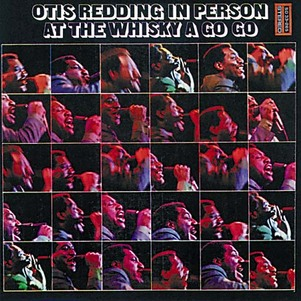
An album featuring that performance-In Person at the Whisky a Go Go-was released October 1968, 10 months after Redding’s death in December 1967.

(Image found online.  Original source unknown.)

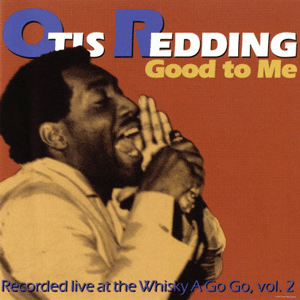
A second album, Good to Me: Live at the Whisky a Go Go, Vol. 2, was released in 1993.

(Image found online.  Original source unknown.)

In honor of the 50th anniversary of Redding’s appearances at the club, all seven performances were released on Live at the Whisky a Go Go: The Complete Recordings, on October 21, 2016. It won writer Lynell George the Grammy Award for Best Album Notes at the 60th Annual Grammy Awards in 2018. A playlist for all the songs from this recording are available on Redding’s YouTube channel.

(Image found online.  Original source unknown.)

Otis Redding: “I Can’t Turn You Loose” (1966, written by Otis Redding).

Otis Redding: “Pain In My Heart” (1966, written by Naomi Neville a/k/a Allen Toussaint).

Otis Redding: “Mr. Pitiful” (1966, written by Steve Cropper and Otis Redding).

Otis Redding: “(I Can’t Get No) Satisfaction” (1966, written by Mick Jagger and Keith Richards).

Otis Redding: “These Arms of Mine” (1966, written by Otis Redding).

Otis Redding: “Chained and Bound” (1966, written by Otis Redding).

Otis Redding: “A Hard Day’s Night” (1966, written by John Lennon and Paul McCartney).

Stay safe & well.

Music Monday: April 6, 2026

Hi, everyone. Welcome to this week’s edition of Music Monday.

(Image found online.  Original source unknown.)

1966 was a big year for Stax Records & Otis Redding and Steve Cropper-the label’s resident musical designated hitter-had a lot to do with that. He joined the label in 1961 as an A&R man before establishing his musical talent as a songwriter & as a supberbly skilled guitar player in the group he co-founded, Booker T & The M.G.’s, the house band for Stax. Cropper eventually became an in-house producer as well and saw success in that role, especially with the 1965 album, Otis Blue/Otis Redding Sings Soul.

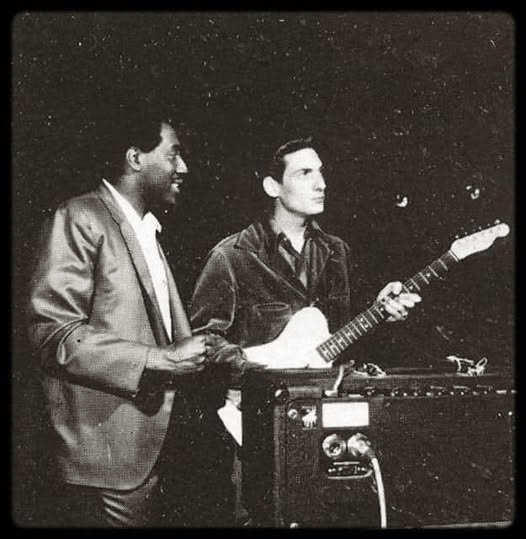
Otis Redding (L) with Steve Cropper (R) circa 1967. (Image found online.  Original source unknown.)

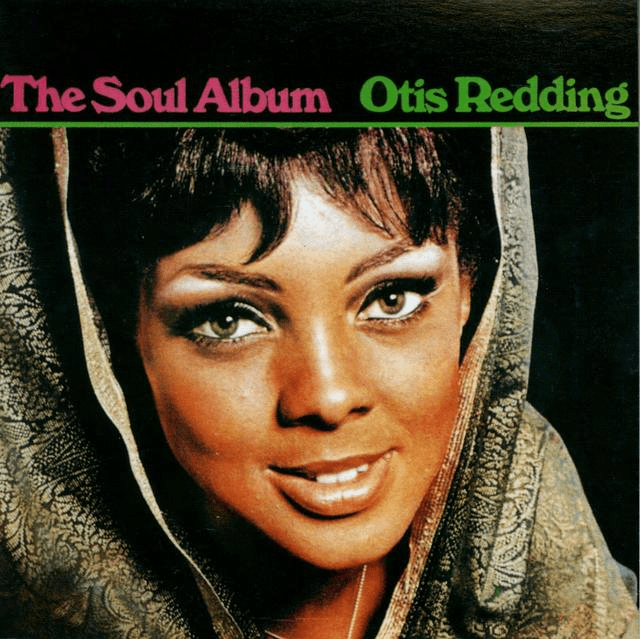
The next year started with the release of a song written by Cropper and Eddie Floyd, played on by the house band and sung by Wilson Pickett. He took it to #1 on Billboard’s Hot Rhythm & Blues Singles Chart for seven consecutive weeks in the spring of 1966 (It peaked at #13 on the Billboard Hot 100 chart in March 1966). The track also featured backing vocals by Patti LaBelle and the Bluebelles. A month later, the same song was covered by Redding on The Soul Album, which Cropper co-produced & played on with the house band. The record also includes another track co-written by Floyd (“Everybody Makes a Mistake”) as well as a great take on a Sam Cooke song.

(Image found online.  Original source unknown.)

In June 1966 Sam & Dave had their own #1 hit on the R&B chart for one week with “Hold On, I’m Comin'”, with Cropper & the rest of Booker T & The M.G.’s performing on the song. In July another track he co-wrote with Floyd-“Knock On Wood”-was released, this time with Floyd on lead vocal. It reached #1 for one week in November on the same R&B chart while also reaching #28 on Billboard’s Hot 100 singles chart.

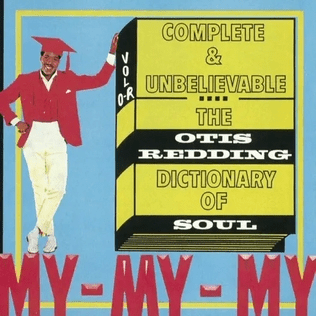
Redding released a second album 60 years ago. Complete & Unbelievable: The Otis Redding Dictionary of Soul, which came out in October 1966, also featured Booker T & The M.G.’s as the house band, with Cropper contributing as a co-writer on two tracks. On their own, he & Redding were two musical powerhouses that helped put Stax & soul music on the map. Together, they created a sound so original that 60 years later, it still defines the genre.

(Image found online.  Original source unknown.)

Wilson Pickett: “634-5789 (Soulsville, U.S.A.)” (1966, written by Steve Cropper and Eddie Floyd).

Otis Redding: “634-5789 (Soulsville, U.S.A.)” (1966, written by Steve Cropper and Eddie Floyd).

Otis Redding: “Chain Gang” (1966, written by Sam Cooke).

Otis Redding: “Try A Little Tenderness” (1966, written by Jimmy Campbell, Reginald Connelly and Harry M. Woods).

Otis Redding: “Day Tripper” (1966, written by John Lennon and Paul McCartney).

Otis Redding: “My Lover’s Prayer” (1966, written by Otis Redding).

Stay safe & well.
Music Monday: January 1, 2024

Hi, everyone. Welcome to the first Music Monday of 2024.

Blog image for 2024

(Image found online.  Original source unknown.)

Happy New Year, everyone! I wish all of you the best during the next 12 months. Thank you for being here with me week after week. I really appreciate it.

I do not believe in resolutions, but I do believe in Otis Redding. And his duets with Carla Thomas from their 1967 album, King & Queen, are some of his best moments. ”Tramp” was always my favorite collaboration of theirs, but today’s song is nearly tied with it. The lyrics offer good advice for every day, not just the first one. I can think of no better way to start off a week-let alone a new year-than with a lot of soul.    

Let’s turn over a new leave
And baby let’s make promises
That we can keep
And call it a new year’s resolution
“.

So baby before we fall out
Let’s fall on in, yeah yeah
And we’re gonna try harder
Not to hurt each other again
“. 

otis 1

otis

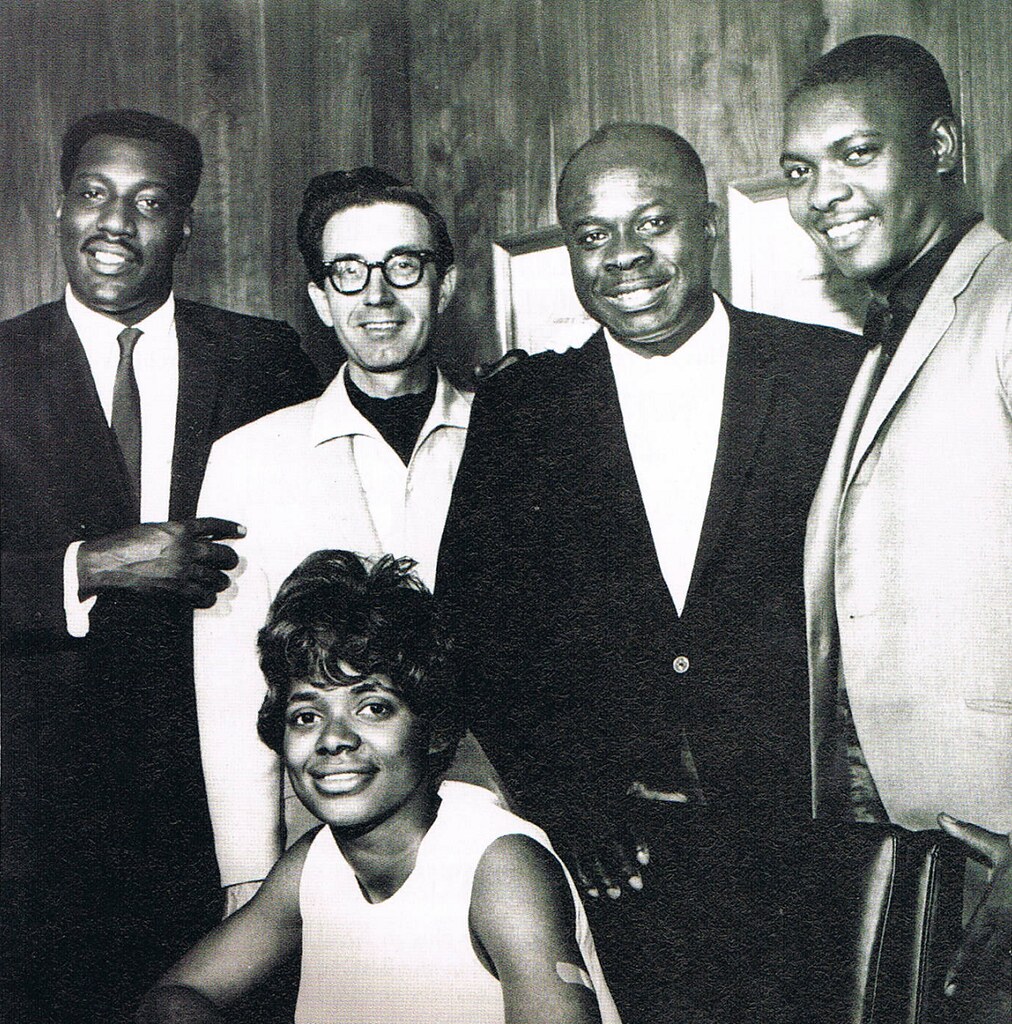
Top:Otis Redding & Carla Thomas’s 1967 album.Bottom:Carla Thomas (seated, then L-R):Otis Redding, Jim Stewart, co-founder of Stax Records, Rufus Thomas (Carla’s father) and Booker T. Jones in the Stax studio in 1967. (Images found online.  Original sources unknown.)

Otis Redding and Carla Thomas: “A New Year’s Resolution” (1967, written by Randle Catron, Mary Frierson and Willie Dean “Deanie” Parker).

Stay safe and well.

Music Monday: September 19, 2022

Hi, everyone. Welcome to another edition of Music Monday.

Music Monday

(Image found online.  Original source unknown.)

September 9 marked the 81st birth anniversary for The King Of Soul. Otis Ray Redding Jr. was born in 1941 in Dawson, Georgia and lived in that state for his entire all too brief life. Like many soul and R&B artists, he started his career singing in church when he was a child. By the age of 17 he had already won numerous local talent shows and became a member of Johnny Jenkins and The Pinetoppers.

In 1962 Redding drove Jenkins to Stax Records in Memphis to record a few songs. His session ended early so Redding was given that time to record some of his own tracks by none other than Jim Stewart, one of the owners of Stax. The rest of the story involves five incredibly short but unbelievably powerful years that would account for Redding’s entire career. And what an outstanding one it was.

If you are not already a fan, I suggest you find any of his performances from the 1967 Monterey Pop Festival on YouTube and watch them. I promise it will not only change your mind, but your life as well. The energy, the passion, the soul, the presence, the unmitigated joy this man experienced on a stage was unmatched. That is why he remains a legend in every sense of the word.

Today’s song holds the number two spot on my top ten list of favorite songs of all time. The album of the same name was released in February 1968, a mere two & a half months after his death. But it changed music forever, as did Redding himself.

Look like nothin’s gonna change
Everything still remains the same
I can’t do what ten people tell me to do
So I guess I’ll remain the same”.

Otis circa 1965

Otis Redding circa 1965. (Image courtesy of otisredding.com. Original source unknown.)

Otis Redding: “(Sittin’ On) The Dock Of The Bay” (1968, written by Steve Cropper and Otis Redding).

Stay safe and well.

Let’s Take A Moment Day 369

Hi everyone.  Hope you are all well and continue to stay that way during this global health crisis we are facing.  But in addition to protecting your physical wellness, what are you doing to stay mentally healthy today?

March 2021 Blog

(Image found online.  Original source unknown.)

I know we are still facing a serious situation but a new year gives us hope for the new days, seasons, opportunities & moments ahead. Still, music is something that will never change for me. It is my refuge, the most comforting part of my life & the one thing I consistently count on. So until a more normal semblance of life returns, I am going to share a song I listen to that helps me escape the current state of things, if only for a few minutes each day. And if this helps anyone else, even better.

March 18 marked the 80th birth anniversary for singer & songwriter Wilson Pickett, born in 1941 in Alabama. His years at Stax Records brought him most of his success, most notably for the songs “In The Midnight Hour” (Day 131), “634-5789”, “Land of 1000 Dances” and today’s track. Part soul, part R&B with a touch of funk added to the mix, “Wicked” Wilson Pickett was one of a kind.

I bought you a brand new mustang
A nineteen sixty five, huh
Now you come around signifying a woman
You don’t want to let me ride

Wilson

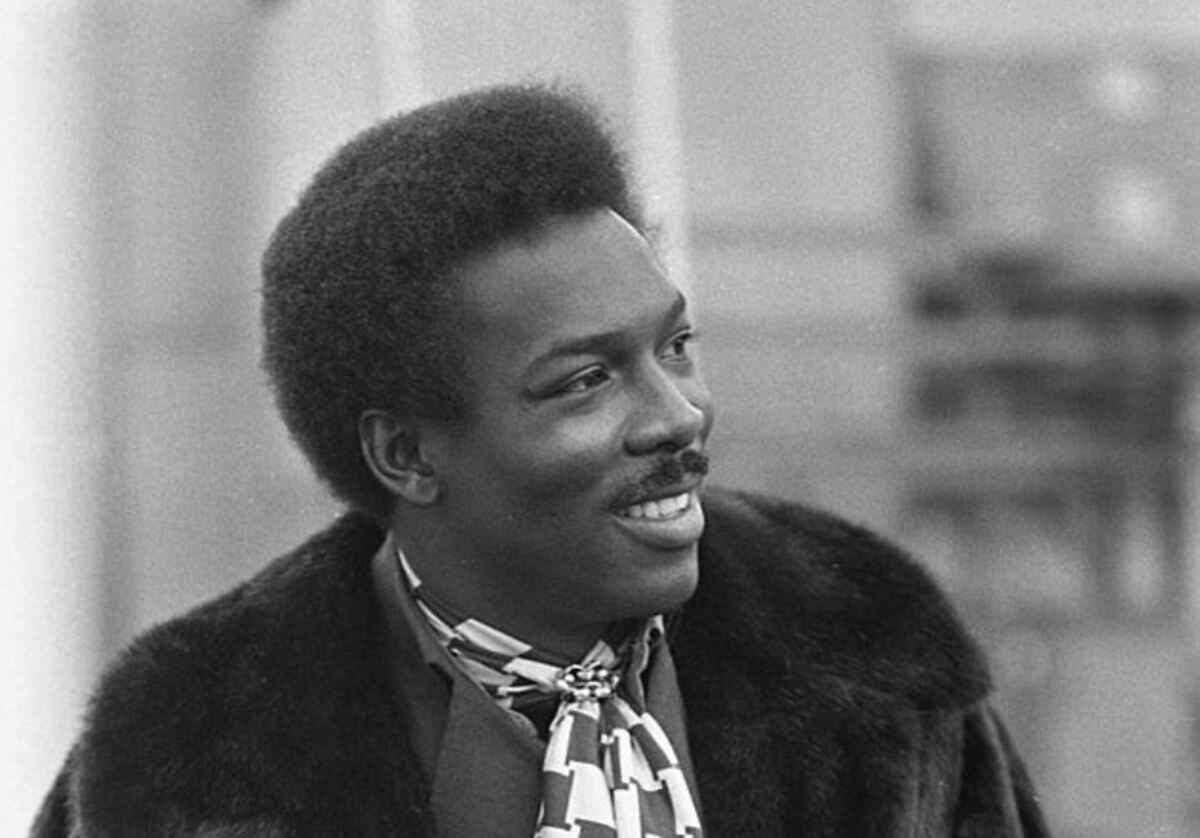
Wilson Pickett circa 1968. (Image found online.  Original source unknown.)

Wilson Pickett: “Mustang Sally” (1966, written by Mack Rice).

I do not own the rights to anything.  I am just sharing what I love and how I am coping with you.

Stay well.

Let’s Take A Moment Day 259

Hi everyone.  Hope you are all well and continue to stay that way during this global health crisis we are facing.  But in addition to protecting your physical wellness, what are you doing to stay mentally healthy today?

kurt v

(Image found online.  Original source unknown.)

I know we are in a serious situation, but I need a break from the gloom, doom and bullying by way of hoarding. Music has always been my refuge and watching those beautiful Italians singing to each other from their balconies reaffirmed my belief that music is the answer. So until the old normal returns, I am going to share a song I listen to that helps me escape the current state of things, if only for a few minutes each day.  And if this helps anyone else, even better.

I have written on several occasions how 1978 was a monumental year in music for me & the industry in general. Well, when the universe gives you something it takes something else away. And the thing it took away from me was my peaceful relationship with my grandmother-for a while, anyway.

For two years she enjoyed listening to my records with me. She may have not remembered the artists names correctly (she called Bad Company “the not so nice visitors”) but I knew what she meant so we were good. Until the first time I played “Slowhand” by my great love Eric Clapton, that is. My grandmother’s disdain started with side one track one, “Cocaine”, and went downhill from there. She asked me what kind of person would write a song about drugs. I thought I was helping by telling her that he was only singing about them, that he did not write the tune. That led her to wonder out loud, “Was he too high to write it, perhaps?” I moved the needle to track two which was “Wonderful Tonight” so that stopped her scolding. But when track three came on, she became irritated again. She ordered me to turn the album off because she thought “Lay Down Sally” was too suggestive for a girl my age. Then she asked where Bruce was (as in Springsteen) and told me to put his music on so she could eat dinner in peace.

A few weeks later I was listening to a Neil Young album I borrowed. All I can tell you is that when “Down By The River” came on, my grandmother decided I must have started taking drugs because how else could I listen to a man brag about shooting someone. My punishment was twofold-I was banned from bringing any new records home for the foreseeable future AND I had to sit through her music shows. That way, she told me, I would hear songs that did not resort to questionable subject matter for shock value. Since she liked country music that meant episodes of “Hee-Haw” & “The Barbara Mandrell Show”. The first one was tough-not because of the music as much as what passed for humor. Mandrell’s music, while not really a favorite of mine, was tolerable. So imagine my grandmother’s horror & dismay when Mandrell premiered her new song, a tale of a woman unapologetic about her love for a married man. Music had beat my grandmother at her censorship game. And I must say, it was not a bad song. But the original was so much better.

It was a big record for singer Luther Ingram in 1972, hitting the #3 spot on the Hot 100 chart & the #1 spot on the R&B chart that year. He was born on this day in 1937 in Jackson, TN and thanks to his deep soulful voice, he had a record deal by the time he was 18. However, he did not see any success until he was signed to a small independent label, Koko Records, in the late 1960’s. They were associated with Stax Records at that time and by 1971, Ingram had co-written the hit song, “Respect Yourself” for that label’s group, The Staple Singers. Three songwriters from Stax wrote the song that Ingram became best known for and despite covers by Mandrell, Rod Stewart, Isaac Hayes David Ruffin and others, it is Ingram’s version that I find most inspired & soulful.

And am I wrong to hunger
for the gentleness of your touch
knowing I got somebody else at home
who needs me just as much
“.

Luther Ingram

Luther Ingram circa 1972. (Image found online.  Original source unknown.)

Luther Ingram: “(If Loving You Is Wrong) ] I Don’t Want to Be Right” (1972, written by Homer Banks, Carl Hampton and Raymond Jackson).

I do not own the rights to anything.  I am just sharing what I love and how I am coping with you.

Stay well.

Let’s Take A Moment Day 219

Hi everyone.  Hope you are all well and continue to stay that way during this global health crisis we are facing.  But in addition to protecting your physical wellness, what are you doing to stay mentally healthy today?

Thoreau quote 2

(Image found online.  Original source unknown.)

I know we are in a serious situation, but I need a break from the gloom, doom and bullying by way of hoarding. Music has always been my refuge and watching those beautiful Italians singing to each other from their balconies reaffirmed my belief that music is the answer. So until the old normal returns, I am going to share a song I listen to that helps me escape the current state of things, if only for a few minutes each day.  And if this helps anyone else, even better.

In 1978 SNL cast members John Belushi & Dan Aykroyd introduced us to their singing counterparts, The Blue Brothers, through the song, “Soul Man”. At one point in the tune, Belushi said “Play it, Steve”. That Steve is the innovative legendary guitarist Steve Cropper who has been gracing the world with his impeccable talent for six decades. Today marks his 79th birthday.

Born today in 1941 in Missouri, his family relocated to Memphis when he was nine. He started playing guitar at age 14 and the first band he was in went on to become a session band, The Mar-Keys. That brought Cropper to the attention of Stax Records owner Jim Stewart who hired Cropper as the label’s A&R man. Around the same time he co-founded his own group, Booker T & The MG’s with keyboard player Booker T. Jones, drummer Al Jackson Jr. and bassist Lewie Steinberg, who was eventually replaced by Donald “Duck” Dunn. That band was unique for two reasons: their trailblazing sounds which formed the foundation of southern soul music with elements of funk sounds and despite the fact that it was Memphis, Tennessee in 1962, the band was an equal balance of race with two white members and two black members.

Booker T & The MG’s became the house band at Stax and set the sound, tone & rhythm for the label, just as The Funk Brothers were doing for the Motown label in Detroit. Cropper not only played guitar for his group but started composing songs with many of the singers on Stax. He co-wrote “Knock On Wood”, “Raise Your Hand” & “634-5789” with Eddie Floyd, “In The Midnight Hour” (Day 131) with Wilson Pickett and “Mr. Pitiful”, “The Happy Song”, “Just One More Day” & “(Sittin’ On) The Dock Of The Bay” (Day 28) with Otis Redding. He & Cropper had become good friends and it was left to him to finish & produce “Dock Of The Bay” after Redding’s tragic death in 1967. It became a #1 hit in March 1968 for four consecutive weeks.

Cropper, who appeared in both Blues Brothers films (released in 1980 & 1998, respectively), is still actively playing & touring. He is considered to be one of the greatest guitar players of all time. He has contributed his signature sound or produced records by Ringo Starr, John Lennon, Levon Helm, Albert King, Roy Orbison, Rod Stewart, Leon Russell, Etta James. Art Garfunkel, Peter Frampton, Dolly Parton and John Mellencamp. He released 11 solo records between 1969-2018 and 13 albums with Booker T & The MG’s between 1962-1994, including today’s song which hit #3 on the Billboard Hot 100 chart & #1 on the R&B chart in 1962. It is considered one of the finest instrumentals ever recorded and I concur.

Booker T The MGs

Crop

Top: Booker T & The MG’s circa 1962 (L-R): Donald “Duck” Dunn, Booker T. Jones, Steve Cropper & Al Jackson Jr. Bottom: Cropper & his beautiful talented hands circa 2000. (Images found online.  Original sources unknown.)

Booker T & The MG’s: “Green Onions” (1962, written by Booker T. Jones, Steve Cropper, Lewie Steinberg & Al Jackson, Jr.).

I do not own the rights to anything.  I am just sharing what I love and how I am coping with you.

Stay well.

Let’s Take A Moment Day 177

Hi everyone.  Hope you are all well and continue to stay that way during this global health crisis we are facing.  But in addition to protecting your physical wellness, what are you doing to stay mentally healthy today?

Bruce quote

(Image found online.  Original source unknown.)

I know we are in a serious situation, but I need a break from the gloom, doom and bullying by way of hoarding. Music has always been my refuge and watching those beautiful Italians singing to each other from their balconies reaffirmed my belief that music is the answer. So until the old normal returns, I am going to share a song I listen to that helps me escape the current state of things, if only for a few minutes each day.  And if this helps anyone else, even better.

Today is another music birth anniversary.  This one belongs to the greatest soul singer who ever held a microphone (in my opinion), Otis Redding.  He was born 79 years ago in Dawson, GA but raised in nearby Macon.  He started singing in his church choir when he was a child.  By 1956 he was out of school helping to support his family.  He entered a local talent show 15 times and won the $5 prize every time.  Eventually he joined two vocal groups, first The Upsetters (who backed Little Richard) and then The Pinetoppers (who backed blues guitarist Johnny Jenkins).

In August 1962, after driving Jenkins to Stax Records in Mississippi, Redding met label owner Jim Stewart.  He gave Redding a chance to sing during some remaining studio time.  The song he recorded was “These Arms Of Mine”.  It became a hit and sent Redding on the path to his destiny as one of the most phenomenal performers in music history.  Since his death in 1967, his widow, Zelma (co-writer of “I’ve Got Dreams To Remember”), his daughter, Karla Redding- Andrews and his two sons, Dexter and Otis III (both music producers & songwriters) continue his legacy through The Otis Redding Foundation.  In addition to that, the website lists its mission statement as follows:  “To empower, enrich,and motivate all young people through programs involving music, writing and instrumentation”.

Today’s song was the B side to “Just One More Day” in 1965 but became more popular than the A side.  If you are a fan of The Blue Brothers, you will recognize today’s song as their introduction music, although in that capacity it is at a faster tempo.  But still fabulous, of course.

The link to the song is a performance video.  If you have never watched Redding sing, I strongly encourage you to view this and not just listen to the audio.  It is two minutes and ten seconds long and worth every single second.  To see his energy, his stage presence, his smile, his vibrance, his sheer utter joy of performing is just too grand not to see.  His voice was one of a kind and so was the way he absolutely owned any stage he was on.  As much as the people in the audience enjoyed watching him, no one had a better time during his shows than Redding himself.  And that was another gift he gave us.

I can’t ever turn you loose now
If I do, I’m gonna lose my life
I can’t turn you loose to nobody
‘Cause I love you baby, yes I do now“.

Otis

  Otis Redding circa 1965.  (Image found online.  Original source unknown.)

Otis Redding:  “I Can’t Turn You Loose” ( 1965, written by Otis Redding).

I do not own the rights to anything.  I am just sharing what I love and how I am coping with you.

Stay well.

Let’s Take A Moment Day 157

Hi everyone.  Hope you are all well and continue to stay that way during this global health crisis we are facing.  But in addition to protecting your physical wellness, what are you doing to stay mentally healthy today?

Bruce quote

(Image found online.  Original source unknown.)

I know we are in a serious situation, but I need a break from the gloom, doom and bullying by way of hoarding. Music has always been my refuge and watching those beautiful Italians singing to each other from their balconies reaffirmed my belief that music is the answer. So until the old normal returns, I am going to share a song I listen to that helps me escape the current state of things, if only for a few minutes each day.  And if this helps anyone else, even better.

Today marks the birth anniversary of soul superstar Isaac Hayes, who was born on this day 78 years ago.  Many people may remember him for today’s tune which won the Academy Award For Best Original Song in 1972.  It also has the distinction of being the funkiest song to ever win an Oscar.  Others may remember him for his interpretations of songs like “Walk On By”, “By The Time I Get To Phoenix” and “You’ve Lost That Lovin’ Feeling”.  Or maybe some remember him for co-writing (along with David Porter) several of the biggest hits for Stax Records duo, Sam & Dave, including “Soul Man”, “Hold On I’m Coming” & “When Something Is Wrong With My Baby”.

I love him for all those reasons, too.  But I also love him for voicing the character of Chef on “South Park” from 1997-2006.  I loved his character’s eye for the ladies which inevitably led to him dropping his already low baritone voice another 10 octaves before delivering his hilarious pick-up lines.  I also loved how he broke into song whenever he needed to explain things to the kids but not before he prefaced the conversation with “Oh, Children”.  But mostly I loved how he brought some soul to the quiet little fictitious town in Colorado.  Can you dig it?

Who’s the cat that won’t cop out when there’s danger all about? (Shaft)
Right on
You see this cat Shaft is a bad mother (Shut your mouth)
But I’m talkin’ about Shaft (Then we can dig it)
He’s a complicated man but no one understands him but his woman (John Shaft)“.

L-R:  Isaac Hayes at the 1972 Oscars & his alter ego, Chef, with children (L-R) Stan, Eric & Kyle of “South Park”.  (Images found online.  Original sources unknown.)

Isaac Hayes:  “Theme From Shaft” (1971, written by Isaac Hayes).

I do not own the rights to anything.  I am just sharing what I love and how I am coping with you.

Stay well.

25 Days Of Christmas Songs: Day 10

Hello, Vixens!!!  Welcome back to the countdown.

robin

(Original source unknown.)

I can remember the exact moment when I fell in love with this singer.  I was seven or eight years old, and I was in the back seat of my mom’s car while we were on our way home.  She always had the radio on but suddenly I heard a voice like nothing I had ever heard before.  Now in my young life, I had already heard a lot of great music courtesy of my parent’s records:  Elvis (my mom’s swoon-worthy crush when she was a teenager), Motown (my parents had a K-Tel four album compilation set) Doo-Wop & the Crooners (Dean Martin, Frank Sinatra, Tony Bennett, etc.).

But what I heard on the radio that day was not like anything I had heard before, and more importantly, it hit me in a place so deep inside I did not even know existed.  Being so young, I could not verbalize what I was feeling, but when the song was over I remember the DJ saying something about “soul music”.   I took that literally to mean “music that touches the soul” and figured that is what had just happened to me.  The song was less than three minutes long but in that time it changed my whole life.

Otis 4

Otis Redding (original source unknown)

The song was “(Sittin’ On The) Dock On The Bay“by Otis Redding, who we lost 50 years ago today when he was just 26 years old.  His career was for only five short years, but his reach has endured the last fifty years because his voice changed the landscape of music as it was.  In the mid 1960’s music was changing and with the death of Sam Cooke (one of Redding’s heroes) in December 1964, soul music was getting lost in a sea that included the Beatles, the British Invasion, Motown, etc.  When Redding’s voice began to be heard through his records and live shows, there was no denying his immense talent.  No one before or since has sung with his gut-wrenching, achingly impassioned vocal.  It quickly & rightfully earned him the title of “King of Soul”.  Redding put Soul Music back on the map, and just as importantly, became the voice of Stax Records.

Incidentally. “Dock of the Bay” was co-written by legendary guitarist Steve Cropper, a member of Stax’s house band, Booker T & The M.G.’s.  “Crop”, as he is affectionately known, had the heartbreaking task of finishing the song after the death of his best friend.  Learn more about that and more about Redding’s career in this fantastic interview by CBS News correspondent & fellow music connoisseur, Anthony Mason.

Otis 3

Otis Redding at the Monterey International Pop Music Festival-June 1967 (original source unknown)

Even more sad than his loss to the music industry, Redding left behind a young wife and three small children when he died.  All of them have worked incredibly hard to preserve his legacy.  Also, on December 15, Rhino Records is releasing “OTIS REDDING: THE DEFINITIVE STUDIO ALBUM COLLECTION”, a 7-LP set.  More proof that the world still cannot get enough of Otis Redding’s timeless talent.

There is not a song by Redding that I do not like, so I decided to share several of my favorites below.  After you listen to his two Christmas songs, indulge yourself by listening to the rest, including his phenomenal performance at the Monterey International Pop Music Festival from June 1967.  If you have never seen it before, you cannot miss it.  He performed five songs in twenty minutes…..and STOLE the show.

Thank you, Otis Redding.  You are missed every day.

Otis Redding:  “White Christmas

Otis Redding:  “Merry Christmas Baby

Otis Redding:  “Try A Little Tenderness

Otic Redding:  “You Left The Water Running

Otis Redding:  “A Change Is Gonna Come

Otis Redding:  “These Arms of Mine

Otis Redding:  “My Lover’s Prayer

Otis Redding:  “You Don’t Miss Your Water

Otis Redding and Carla Thomas:  “When Something Is Wrong With My Baby“***

***(It was hard to beat Sam & Dave’s original passion infused version, but between Redding’s voice & the phenomenal horns added to the fact that this was a male-female duet, this cover is as close to perfection as possible.  Redding & Thomas did several duets together, but this is by far my favorite followed closely by “Tramp“.)

Otis Redding:  Full Monterey International Pop Music Festival Performance (1967)

I do not own the rights to anything.  I am just sharing some things that I love with you   🙂

What are some of your favorite Christmas songs?

Until next time, fellow Vixens, happy listening!!!