Music Monday: April 27, 2026  

Hi, everyone. Welcome to this week’s edition of Music Monday.
#musicmonday #musicblog #musicandlyrics

(Image found online.  Original source unknown.)

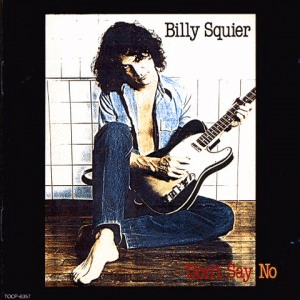
Billy Squier’s sophmore album, Don’t Say No, was released 45 years ago on April 13, 1981. A record with a heavy rock sound featuring strong guitar licks and catchy choruses was perfectly timed to become a hit all on its own. But when it collided with the other musical benchmark of the decade-the premiere of MTV four months later on August 1, 1981-it put Squier front and center to become one of its earliest stand out artists. His simple performance videos showed us all how his sound looked. And as a young Gen Xer at the time, I can attest that Squier was not bad on the eyes, which only added to his MTV appeal.

By September 1981, the album peaked at #5 on the Billboard 200. It stayed on the chart for over two years, an astounding 111 weeks. The record produced four big songs, one of which became a Top 20 hit, and was featured in the 2007 comedy, “Blades of Glory”, during Chazz Michael Michaels’ “tsunami of swagger”.

On Day 68 of my Lockdown Countdown, I shared my love for Squier-a Wellesley, Massachusetts native-who will celebrate birthday #76 on May 12. He has released nine studio throughout his career but it is his second album that remains a classic rock staple and a tremendous moment in music history when seeing the music mattered as much as hearing it.
(Image found online.  Original source unknown.)
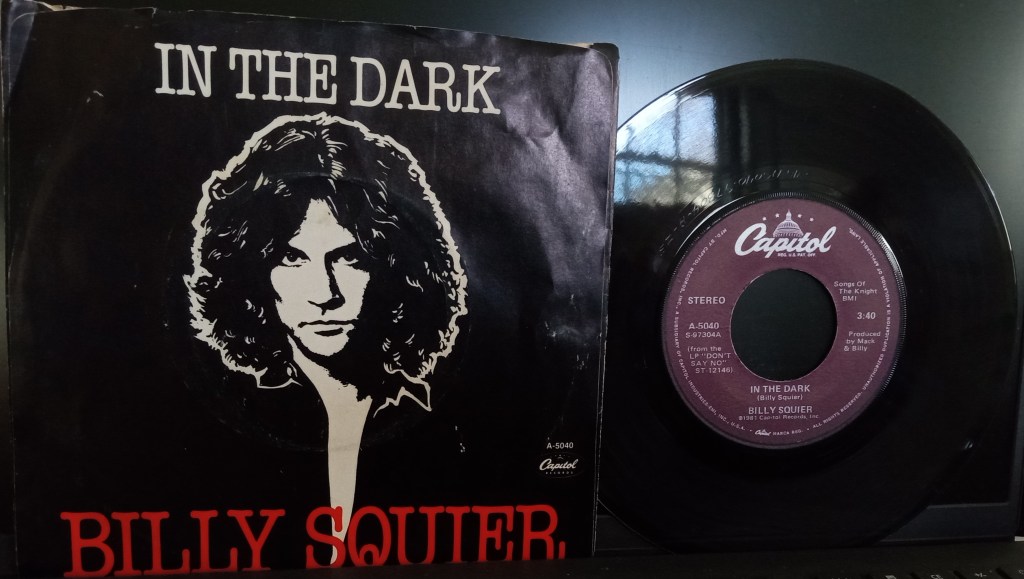
My 45 of my favorite Squier song. (Image by me.)

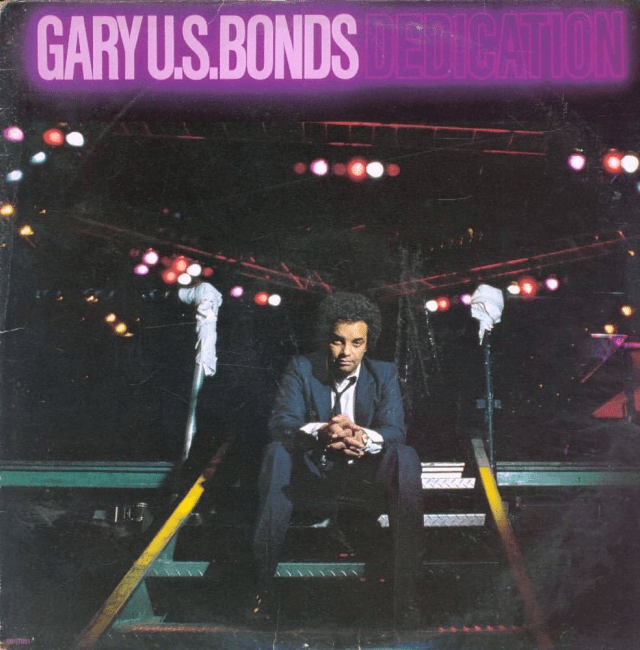
Another album released 45 years ago in April 1981 is Dedication by Gary U.S. Bonds. He co-produced it along with Bruce Springsteen, Steven Van Zandt & Rob Parissi. The record consisted of 10 songs with three written by Bruce including the first single, one written by Van Zandt, two co-written by Bonds, a Cajun traditional song, a Beatles cover (It’s Only Love”), a Dylan cover (“From A Buick 6”) & a Jackson Browne cover.

This was a labor of love for Springsteen and Van Zandt who were fans of Bonds from his early rock & roll hits like “New Orleans”, “School’s Out” and “Quarter To Three” which was released 65 years ago in May 1961. It was performed by Springsteen at the 1979 NYC “No Nukes” concerts and featured in the 1980 film by the same name.

Bonds-born Gary Levone Anderson on June 6, 1939 in Jacksonville, Florida-enjoyed a career resurrgence with Dedication, which peaked at #27 on the Billboard 200 in 1981. It also gave him a Top Twenty hit with the first single, the opportunity to duet with Springsteen for the second single and a chance to collaborate with The E Street Band. They all joined forces together again on Bonds’ next album, On The Line, released in June 1982.
(Image found online.  Original source unknown.)
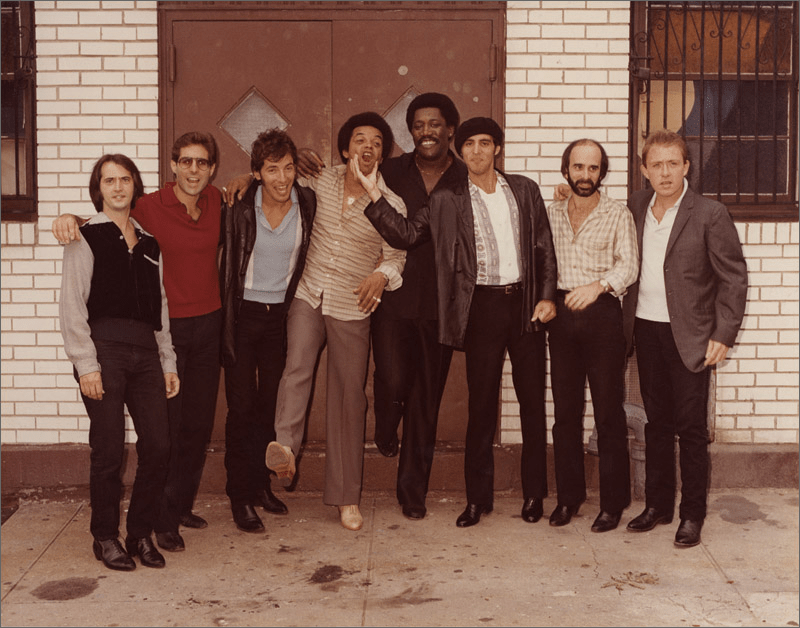
The E Street Band, Bruce Springsteen & Gary U.S. Bonds (L to R): Garry Tallent, Max Weinberg, Springsteen, Bonds, Clarence Clemons, Miami Steve Van Zandt, Roy Bittan and Danny Federici circa 1981. (Image found online.  Original source unknown.)
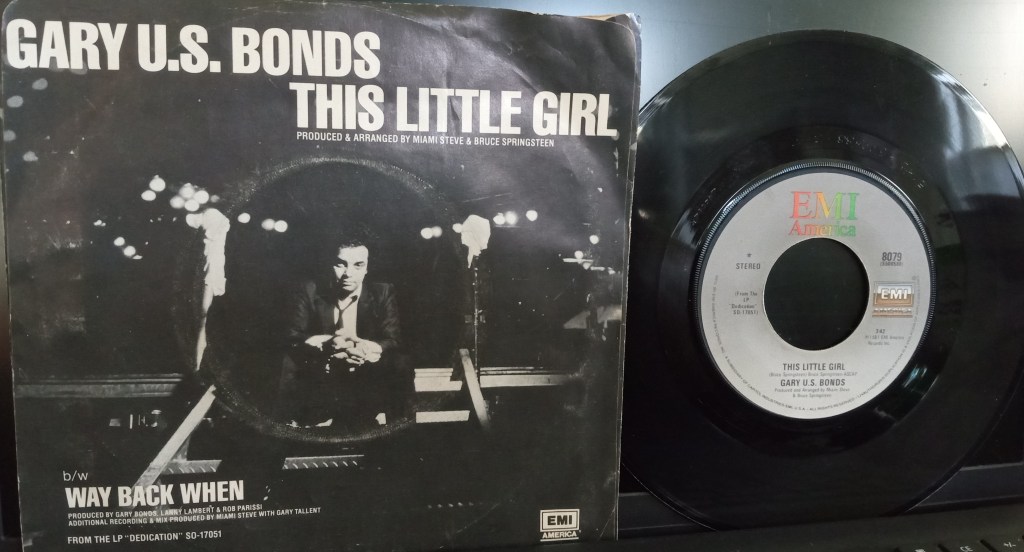
My own 45 of the album’s first single. (Image by me.)
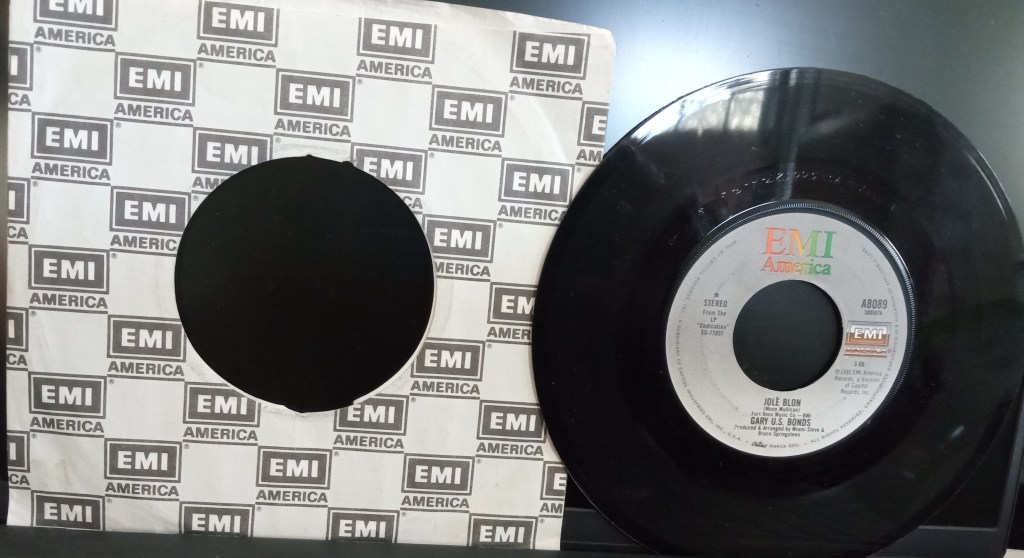
I also own the second single. (Image by me.)
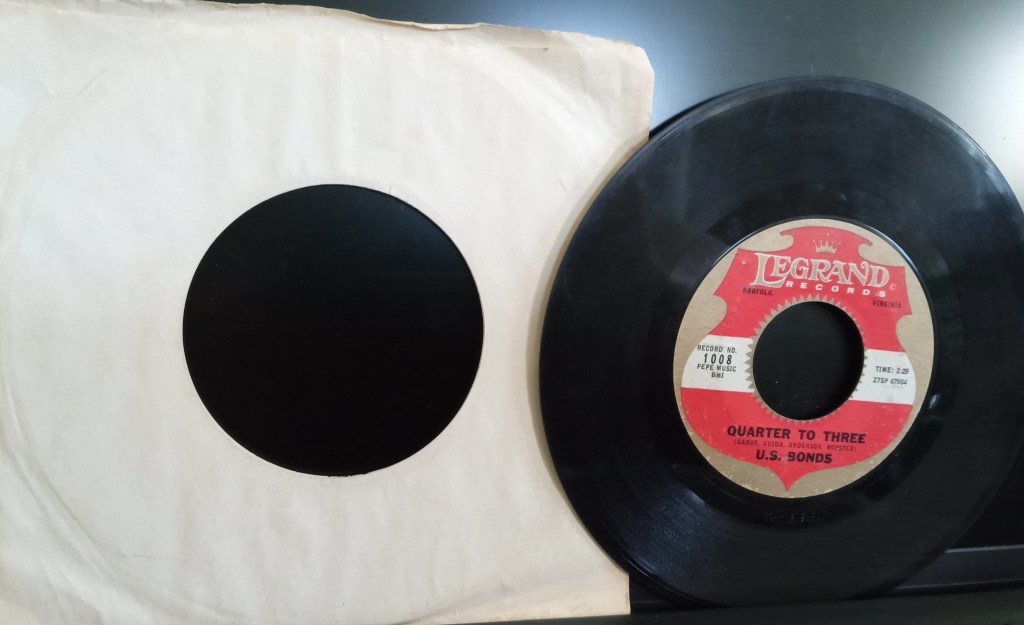
I still have my mom’s 45 of Bonds’ 1961 hit. (Image by me.)

Journey released two albums in 1981. Captured-the band’s first live record-was released in January of that year. It was co-founder & keyboard player Gregg Rolie’s final album with the band. My favorite track & the only single released is the only song recorded in the studio which was written by lead singer, Steve Perry.

Seven months later Escape was released July 1981. Rolie’s successor, keyboardist & songwriter Jonathan Cain left the English band, The Babys, to join Journey. He co-wrote all 10 tracks on the album which produced five singles, including two of the band’s biggest songs, “Don’t Stop Believing” and “Open Arms”. My favorite song by the band is the first single which I wrote about in my October 7 2024 post.
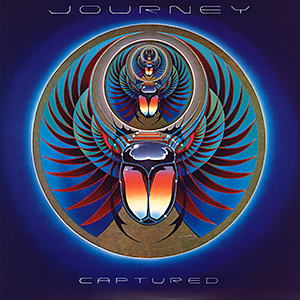
(Image found online.  Original source unknown.)
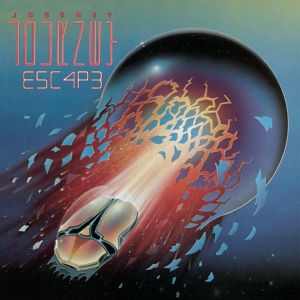
(Image found online.  Original source unknown.)
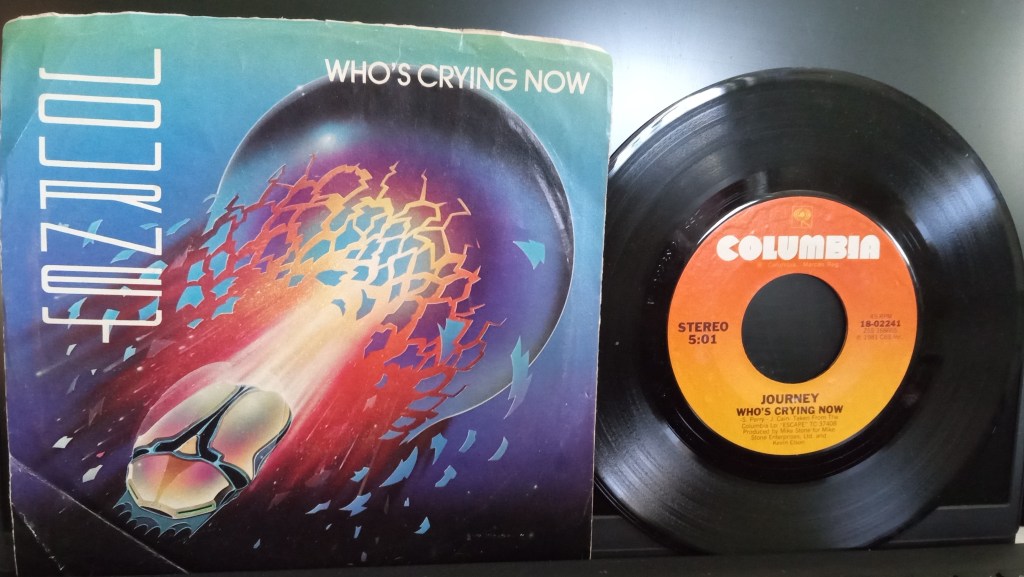
I still have the 45 of my favorite Journey song. (Image by me.)
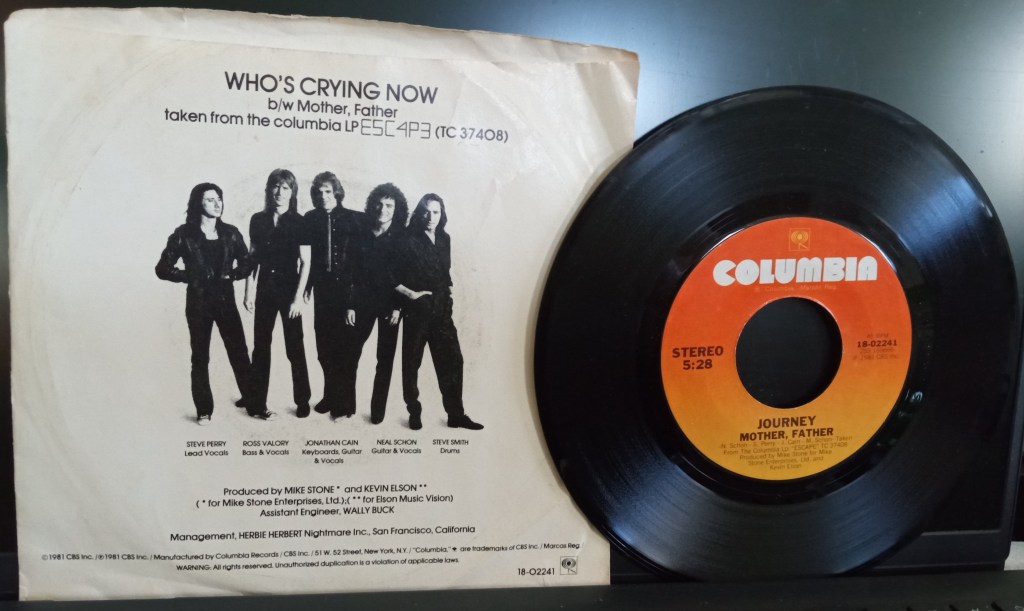
The 45’s flip side. (Image by me.)

Billy Squier:  “In The Dark” (1981, written by Billy Squier).

Billy Squier: “The Stroke” (1981, written by Billy Squier).

Billy Squier: “Lonely Is The Night” (1981, written by Billy Squier).

Gary U.S. Bonds: “This Little Girl” (1981, written by Bruce Springsteen).

Gary U.S. Bonds: “Jole Blon” (1981, traditional; arranged by Moon Mullican).

Gary U.S. Bonds: “The Pretender” (1981, written by Jackson Browne).

Journey: “The Party’s Over (Hopelessly in Love)” (1981, written by Steve Perry).

Journey: “Who’s Crying Now” (1981, written by Jonathan Cain and Steve Perry).

Stay safe & well.

Music Monday: April 20, 2026

Hi, everyone. Welcome to this week’s edition of Music Monday.

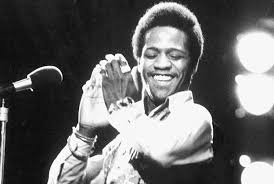
(Image found online.  Original source unknown.)

Albert Leornes Greene, known professionally as Al Green, celebrated birthday #80 last week. Born April 13, 1946 in Forrest City, Arkansas, the man who would become one of the world’s most acclaimed R&B and soul artisits started singing in a family group before he was a teenager. Eventually his love of secular music by Elvis Presley, Jackie Wilson and Wilson Pickett led to a falling out with Greene and his religious father, sending his young son out on his own. His debut album, Back Up Train, was released nearly 60 years ago in March 1967. Soon after he met musician, bandleader and record producer Willie Mitchell who hired Greene as a vocalist & eventually signed the singer to a recording contract after modifying his last name to Green.

And 55 years ago he released his third album, Al Green Gets Next to You, in March 1971 which included a cover of The Doors’ #1 hit from 1967. In November of the same year, the title track from Green’s fourth album was released. It became his signature song & a top seller, reaching the #1 spot for one week in February 1972.

A string of hits followed along with some personal issues that led Green to become a minister and open the Full Gospel Tabernacle church in Memphis. He released several gospel albums in the 1980’s and appeared on Broadway with Patti LaBelle in “Your Arms Too Short To Box With God” in 1982. Green returned to secular music in 1988 with a duet with Annie Lennox, “Put A Little Love In Your Heart”, for the movie, “Scrooged”.

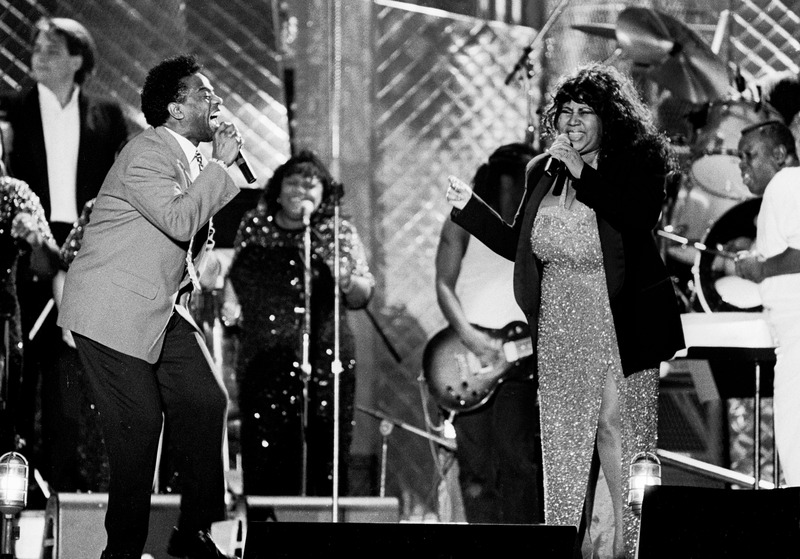
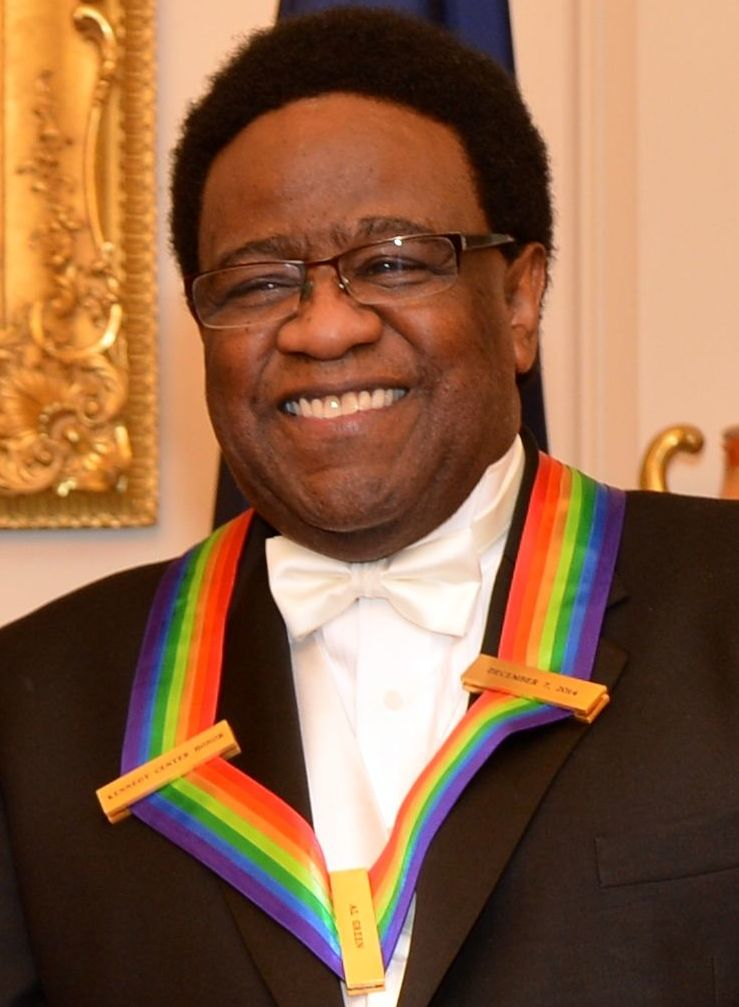
In January 1995 Green was inducted into the Rock & Roll Hall Of Fame and performed at its opening concert in Cleveland that September. He has received a number of awards and accolades throughout his career, including a Kennedy Center Honor in 2014. He continues to make music while holding services each Sunday at his Tennessee church. That role was immortalized 35 years ago in Marc Cohn’s 1991 hit, “Walking In Memphis”:

They’ve got catfish on the table
They’ve got gospel in the air
And Reverend Green be glad to see you
When you haven’t got a prayer
But boy you’ve got a prayer in Memphis
“.

Al Green circa 1971. (Image found online.  Original source unknown.)

Green (L) performed with The Queen Of Soul, Aretha Franklin (R), at the 1995 Rock & Roll Hall Of Fame Concert in Cleveland. (Image found online.  Original source unknown.)

Green was a 2014 Kennedy Centers Honoree. (Image found online.  Original source unknown.)

Sixty years ago, The Doors became the house band at the Whisky a Go Go in West Hollywood from May 23 to August 21, 1966. The were fired due to a performance of “The End” but their residency at the club led to their recording contract with Elektra. And that song appears as the closing track on the band’s debut album, released just five months later in January 1967.

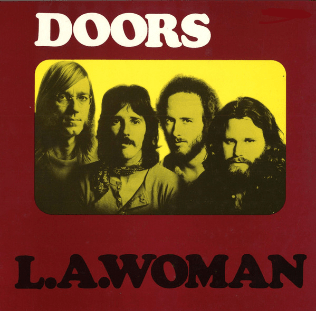
Their sixth album, L.A. Woman, was released 55 years ago on April 19, 1971. It was the last album before Jim Morrison’s death three months later on July 3, 1971. The recording sessions for The Doors final album together began in November 1970 after a tumultuous period for the band which began with Jim Morrison’s arrest at their March 1969 concert in Miami. It essentially blacklisted them from radio airplay & further live shows. It also led to Morrison’s conviction for profanity and indecent exposure in September 1970 (he was posthumourly pardoned in 2010 by Florida’s then Govenor Charlie Crist).

The band’s meteoric rise to international stardom from the moment their first album was released had taken its toll on Morrison, who was only 23 at the time. The mesmerizing & enigmatic lead singer & main songwriter for The Doors struggled with the attention, the industry demands and the fame. It increased his experimentation and dependence on drugs and alcohol which fueled the Miami incident.

But other opportunities presented themselves for the band during their touring hiatus. In April 1969 they appeared on the PBS television show, Critique. It aired two months later, just ahead of the July 1970 release date for their fourth album, The Soft Parade. The show includes performances of several songs & an interview with the band by host & Village Voice writer, Richard Goldstein.

This signified my favorite era for Morrison. The longer hair, the beard, the extra weight turned him from a good looking guy into an absolutely beautiful man. I know his addictions were getting worse but to me, he never sounded or looked better than this period of time. And L.A. Woman was another step forward for him to put the legal problems behind him so he & the band could get back to their purpose of creating some of the greatest rock music ever recorded. And even with the period of controversy, the band had a remarkable run of success in under five years with six studio albums, two #1 songs and an unwavering amount of sophisticated talent that made them one of the early architects of the classic rock sound.

(Image found online.  Original source unknown.)

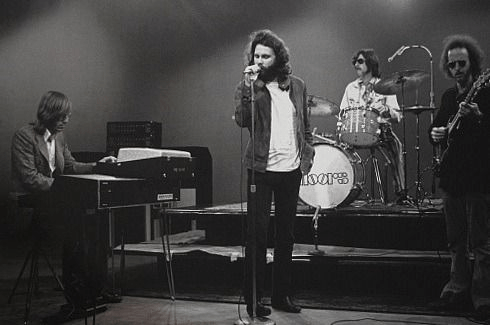
The Doors on the “Critique” soundstage in April 1969 (L to R): Ray Manzarek (organ/keyboards), Jim Morrison (lead vocals), John Densmore (drums) and Robby Krieger (guitar). (Image found online.  Original source unknown.)

Al Green: “Tired of Being Alone” (1971, written by Al Green).

Al Green: “Light My Fire” (1971, written by The Doors: John Densmore, Ray Krieger, Ray Manzarek and Jim Morrison).

Al Green: “Let’s Stay Together” (Live performance on “The Late Show With David Letterman” on January 13, 1995. Originally recorded in 1971, written by Al Green, Al Jackson Jr. and Willie Mitchell).

Al Green: “Love and Happiness” (1972, written by Al Green and Mabon Lewis “Teenie” Hodges).

AL Green: “A Change Is Gonna Come” (Live performance at The Rock & Roll Hall Of Fame concert on September 2, 1995, at Cleveland Municipal Stadium, Cleveland, Ohio. Written by Sam Cooke).

The Doors: “Love Her Madly” (1971, written by The Doors: John Densmore, Robby Krieger, Ray Manzarek and Jim Morrison).

The Doors: “L.A. Woman” (1971, written by The Doors: John Densmore, Robby Krieger, Ray Manzarek and Jim Morrison).

The Doors: “Hyacinth House” (1971, written by The Doors: John Densmore, Robby Krieger, Ray Manzarek and Jim Morrison).

The Doors: “Riders On The Storm” (1971, written by The Doors: John Densmore, Robby Krieger, Ray Manzarek and Jim Morrison).

Stay safe & well.

Music Monday: April 13, 2026

Hi, everyone. Welcome to this week’s edition of Music Monday.

(Image found online.  Original source unknown.)

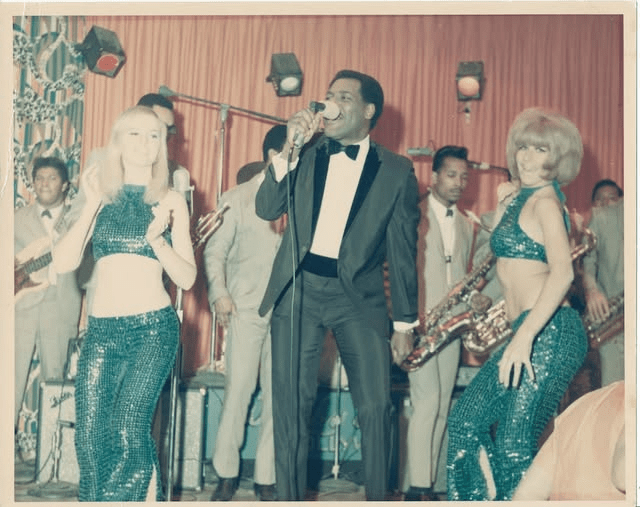
Last week we celebrated how successful Otis Redding was in 1966. Not only did he release two albums that year, he also made his debut at the Whisky A Go Go on the Sunset Strip in West Hollywood, California. He performed seven shows during his three night engagement which took place on Friday April 8, Saturday April 9 and Sunday April 10, 1966.

Photo of Otis Redding (center) on stage at The Whisky A Go Go from his Facebook page. (Image found online.  Original source unknown.)

The now legendary Whisky-which opened in January 1964 & continues to operate today-welcomed many bands and artists over the last six decades & Redding’s shows were one of the first to feature a soul music artist. His shows took place a month before The Doors became the house band which opened for all the performers that played at the venue from May 23 to August 21, 1966 (more on that next week). But how incredibly sublime would it have been to have them & Redding on the same stage on the same night?

His live shows were his secret weapon. While the passion he exuded in his recordings was palpable, it was in full view when he was on stage. And it was infectious. That energy and Redding’s immense talent made him a standout at the The Monterey International Pop Festival a year later in June 1967, a career defining moment that became his breakthough to the American audience. But The Whisky is where California welcomed him first.

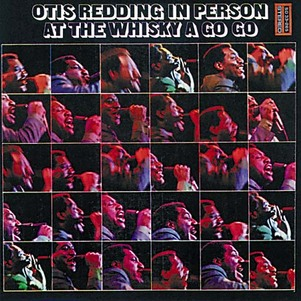
An album featuring that performance-In Person at the Whisky a Go Go-was released October 1968, 10 months after Redding’s death in December 1967.

(Image found online.  Original source unknown.)

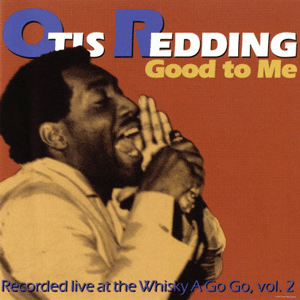
A second album, Good to Me: Live at the Whisky a Go Go, Vol. 2, was released in 1993.

(Image found online.  Original source unknown.)

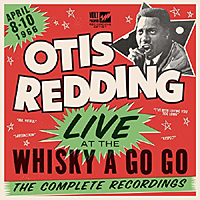
In honor of the 50th anniversary of Redding’s appearances at the club, all seven performances were released on Live at the Whisky a Go Go: The Complete Recordings, on October 21, 2016. It won writer Lynell George the Grammy Award for Best Album Notes at the 60th Annual Grammy Awards in 2018. A playlist for all the songs from this recording are available on Redding’s YouTube channel.

(Image found online.  Original source unknown.)

Otis Redding: “I Can’t Turn You Loose” (1966, written by Otis Redding).

Otis Redding: “Pain In My Heart” (1966, written by Naomi Neville a/k/a Allen Toussaint).

Otis Redding: “Mr. Pitiful” (1966, written by Steve Cropper and Otis Redding).

Otis Redding: “(I Can’t Get No) Satisfaction” (1966, written by Mick Jagger and Keith Richards).

Otis Redding: “These Arms of Mine” (1966, written by Otis Redding).

Otis Redding: “Chained and Bound” (1966, written by Otis Redding).

Otis Redding: “A Hard Day’s Night” (1966, written by John Lennon and Paul McCartney).

Stay safe & well.

Music Monday: April 6, 2026

Hi, everyone. Welcome to this week’s edition of Music Monday.

(Image found online.  Original source unknown.)

1966 was a big year for Stax Records & Otis Redding and Steve Cropper-the label’s resident musical designated hitter-had a lot to do with that. He joined the label in 1961 as an A&R man before establishing his musical talent as a songwriter & as a supberbly skilled guitar player in the group he co-founded, Booker T & The M.G.’s, the house band for Stax. Cropper eventually became an in-house producer as well and saw success in that role, especially with the 1965 album, Otis Blue/Otis Redding Sings Soul.

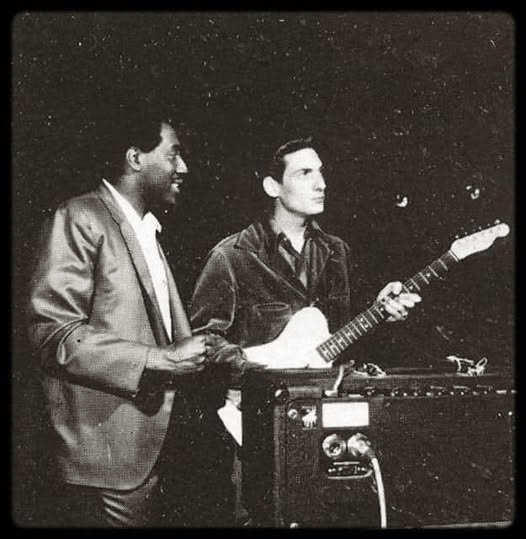
Otis Redding (L) with Steve Cropper (R) circa 1967. (Image found online.  Original source unknown.)

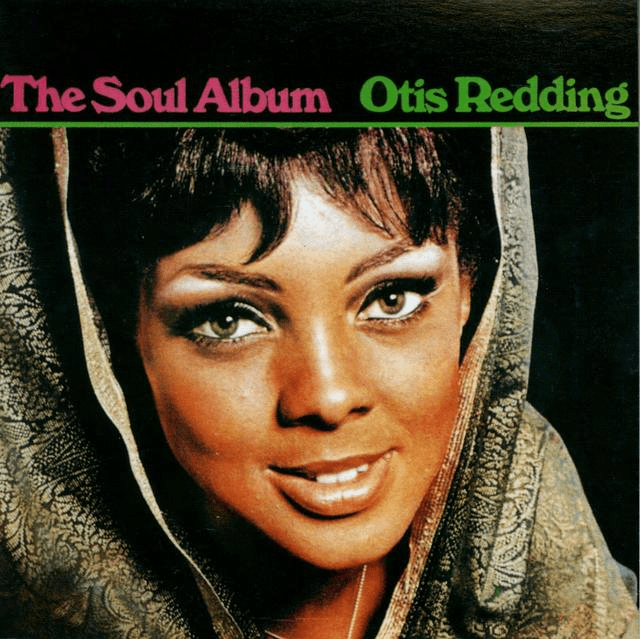
The next year started with the release of a song written by Cropper and Eddie Floyd, played on by the house band and sung by Wilson Pickett. He took it to #1 on Billboard’s Hot Rhythm & Blues Singles Chart for seven consecutive weeks in the spring of 1966 (It peaked at #13 on the Billboard Hot 100 chart in March 1966). The track also featured backing vocals by Patti LaBelle and the Bluebelles. A month later, the same song was covered by Redding on The Soul Album, which Cropper co-produced & played on with the house band. The record also includes another track co-written by Floyd (“Everybody Makes a Mistake”) as well as a great take on a Sam Cooke song.

(Image found online.  Original source unknown.)

In June 1966 Sam & Dave had their own #1 hit on the R&B chart for one week with “Hold On, I’m Comin'”, with Cropper & the rest of Booker T & The M.G.’s performing on the song. In July another track he co-wrote with Floyd-“Knock On Wood”-was released, this time with Floyd on lead vocal. It reached #1 for one week in November on the same R&B chart while also reaching #28 on Billboard’s Hot 100 singles chart.

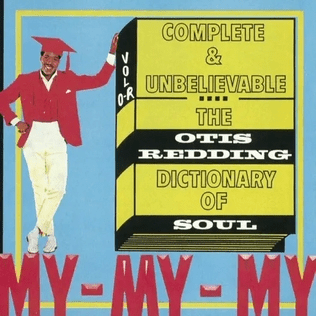
Redding released a second album 60 years ago. Complete & Unbelievable: The Otis Redding Dictionary of Soul, which came out in October 1966, also featured Booker T & The M.G.’s as the house band, with Cropper contributing as a co-writer on two tracks. On their own, he & Redding were two musical powerhouses that helped put Stax & soul music on the map. Together, they created a sound so original that 60 years later, it still defines the genre.

(Image found online.  Original source unknown.)

Wilson Pickett: “634-5789 (Soulsville, U.S.A.)” (1966, written by Steve Cropper and Eddie Floyd).

Otis Redding: “634-5789 (Soulsville, U.S.A.)” (1966, written by Steve Cropper and Eddie Floyd).

Otis Redding: “Chain Gang” (1966, written by Sam Cooke).

Otis Redding: “Try A Little Tenderness” (1966, written by Jimmy Campbell, Reginald Connelly and Harry M. Woods).

Otis Redding: “Day Tripper” (1966, written by John Lennon and Paul McCartney).

Otis Redding: “My Lover’s Prayer” (1966, written by Otis Redding).

Stay safe & well.