Music Monday: May 11, 2026

Hi, everyone. Welcome to this week’s edition of Music Monday.
#musicmonday #musicblog #musicandlyrics

(Image found online.  Original source unknown.)
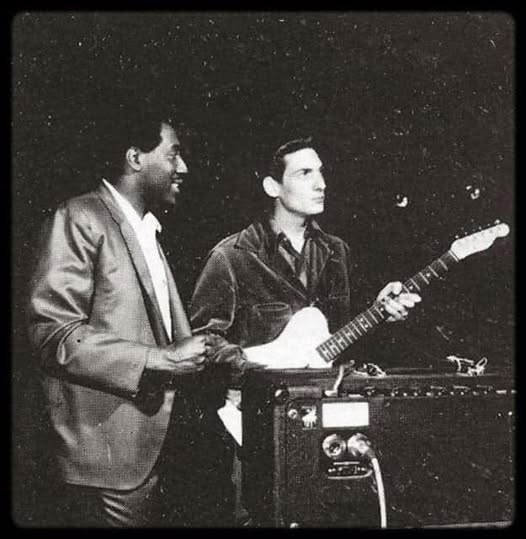
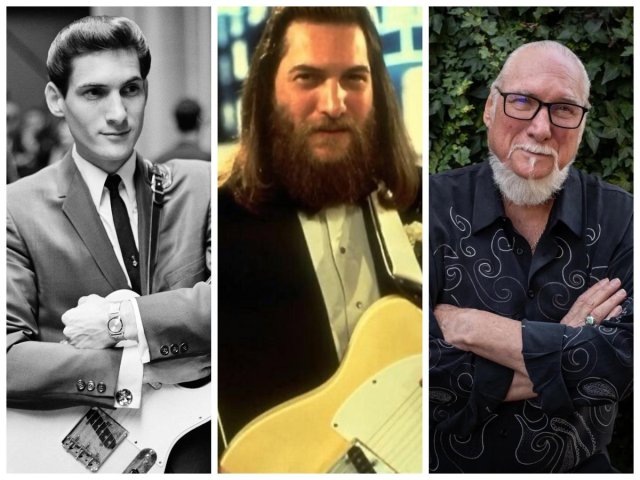
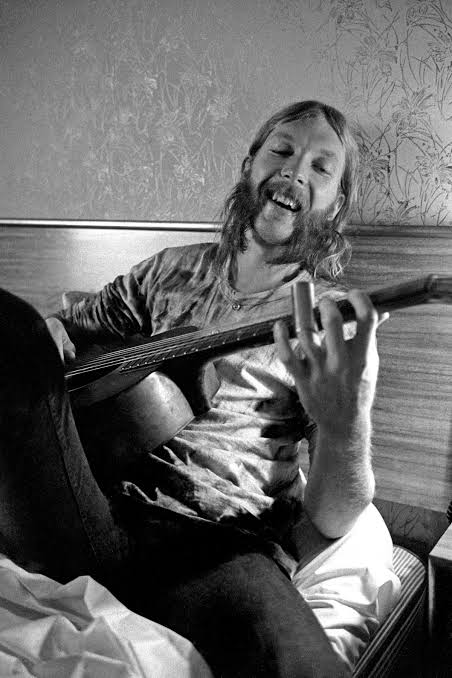
Singer, songwriter & musician Bill Withers released his debut album, Just As I Am, 55 years ago on May 1, 1971. Only four months later the record-produced by Stax star musician Booker T. Jones & featuring Stephen Stills on guitar-reached #39 on the Billboard 200 while the first single peaked at #3 at the same time. It became Withers’ signature song, a classic R&B staple and put him center stage in the genre. The then 32 year old airline mechanical assembler wrote 10 of the 12 songs with two covers included, a Beatles track (“Let It Be”) and a song from a movie (“Everybody’s Talkin'” from 1969’s “Midnight Cowboy”).

Withers’ second album, Still Bill, was released a year later in May 1972. It gave him his first #1 song, “Lean On Me”, which reached the top spot for three consecutive weeks two months later.

(Image found online.  Original source unknown.)
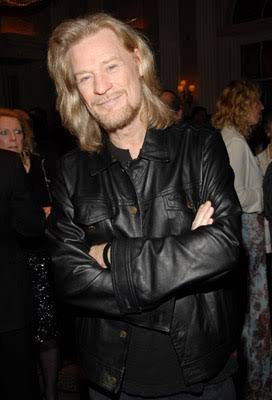
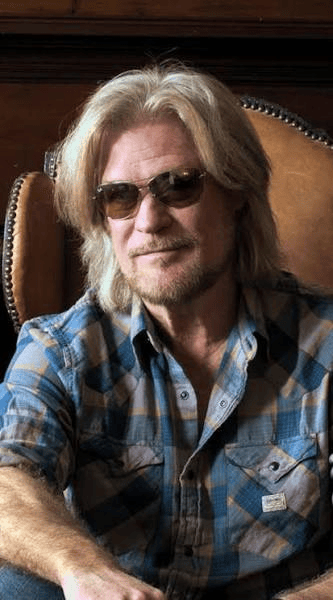
Elvin Bishop’s sixth studio album, Struttin’ My Stuff was released at the end of 1975. Fifty years ago, it peaked at #18 in May 1976, the same month the first single peaked at #3 on Billboard’s Hot 100. It became an instant classic rock powerhouse and introduced us to vocalist Mickey Thomas who sang lead on the song. I have been enthralled with this track from the first note and my obsession shows no signs of waning any time soon. I first outlined my adoration for this song on Day 36 of my Lockdown Countdown:

It was written by Elvin Bishop, a guitarist who was an original member of the Paul Butterfield Blues Band in the 1960’s.  He left to form his own group in 1968 and played alongside such notable acts as the Allman Brothers Band, the Grateful Dead and John Lee Hooker.  Bishop also sang but when he was recording his 1975 album, Struttin’ My Stuff, he did not think his voice was polished enough to record today’s song.  So he asked one of his backup singers, Mickey Thomas, to do it.  The result was epic.

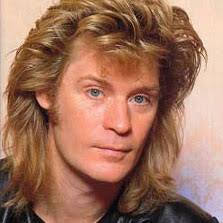
His vocal delivery, the soul in his voice and the power behind it were as close to perfect as one could hope for.  And added to Bishop’s guitar riffs, great lyrics and sublime arrangement, it turned this song into a powerhouse hit of the 1970’s.  It went on to become a rock classic and earned Thomas the lead singer spot with Jefferson Starship after original member Marty Balin’s departure.  Thomas may not be as well known as other blue eyed soul greats like Michael McDonald and Daryl Hall, but there is no denying the contribution he made with this song.  I truly believe a great soulful rock vocal does not get much better than this.

(Image found online.  Original source unknown.)
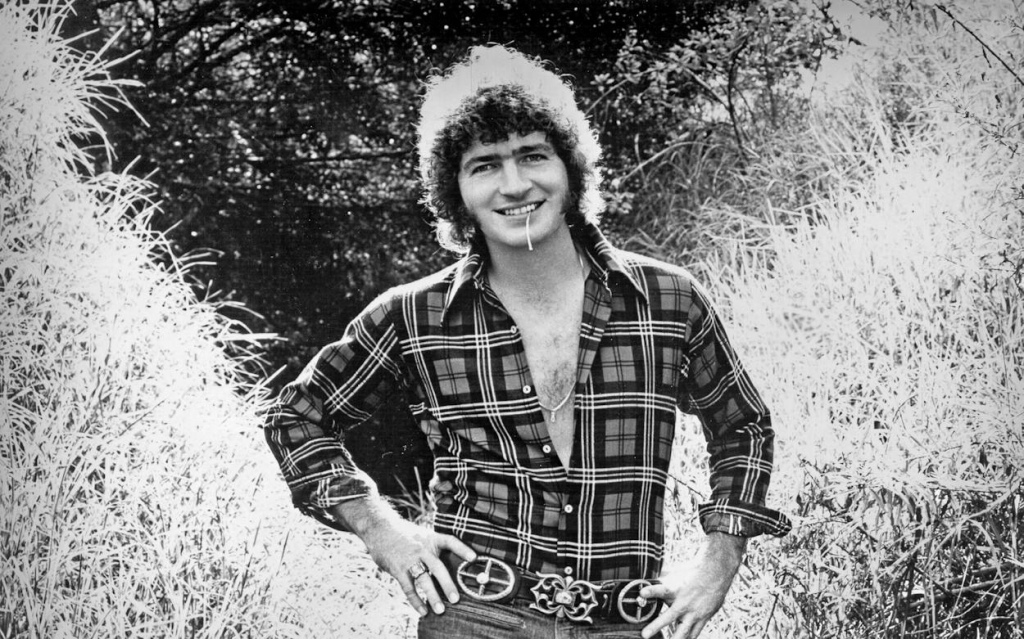
Elvin Bishop (L) and Mickey Thomas (R) in an undated photo. (Image found online.  Original source unknown.)
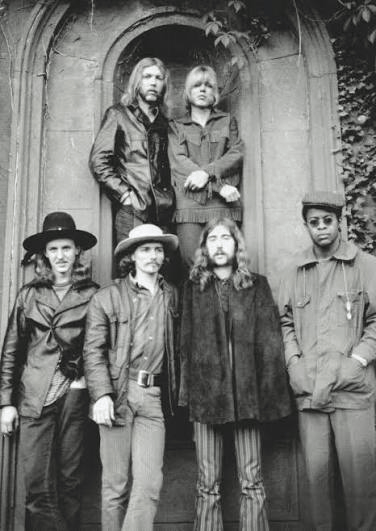
In March 1991 another singer, songwriter & musician-Marc Cohn-released his self-titled debut album. The first single is a wonderful autobiographical tale of a pilmigrage he made to one of Tennessee’s most famous cities. It became a Top 20 hit that remains a popular track 35 years after its debut. It was nominated for Song Of The Year & helped earn Cohn the Best New Artist Award at the 34th Annual Grammy Awards in 1992.

(Image found online.  Original source unknown.)
Bill Withers: “Ain’t No Sunshine” (1971, written by Bill Withers).

Elvin Bishop: “Fooled Around And Fell In Love” (1975, written by Elvin Bishop).

Marc Cohn: “Walking in Memphis” (1991, written by Marc Cohn).

Stay safe & well.
Music Monday: May 4, 2026

Hi, everyone. Welcome to this week’s edition of Music Monday.

#musicmonday #musicblog #musicandlyrics

(Image found online.  Original source unknown.)

Last week marked the 90th birth anniversary for one of the most provacative & distinctive voices in early rock & roll ballads. Singer, songwriter & musician Roy Kelton Orbison was born April 23, 1936 in Hendersonville, Tennessee. He was signed to Sun Records in 1956 by the label’s owner, Sam Phillips. But it was Orbison’s move to Monument Records in 1960 that brought him success beginning with his first single, “Only The Lonely”, released in May 1960. It reached #2 two months later. It was included on his debut album, Lonely and Blue, which premiered in January1961. Ten Top 10 songs followed in his career including two #1 records: “Running Scared” for one week in June 1961 and “Oh, Pretty Woman” for one week in September 1964.

Roy Orbison from his official Facebook page. (Image found online.  Original source unknown.)

The 1970’s proved to be challenging for him both personally and professionally. The next decade was better thanks to a couple of successful covers of his songs (including Don McLean’s version of “Crying” which reached the Top Ten in 1981, a full 20 years after Orbison released it in 1961). He also re-recorded the song as a duet with country singer k.d. lang for the movie, “Hiding Out”, released in 1987.

Earlier that year he was inducted into The Rock & Roll Hall Of Fame. I wrote about that on Day 22 of my Lockdown Countdown:

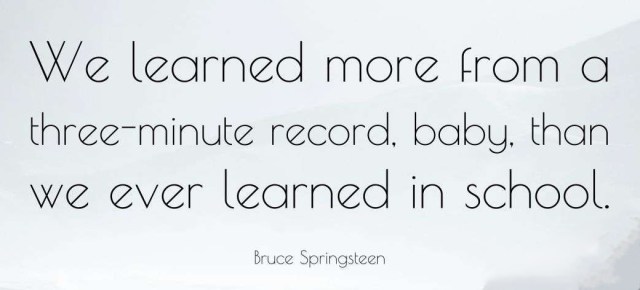
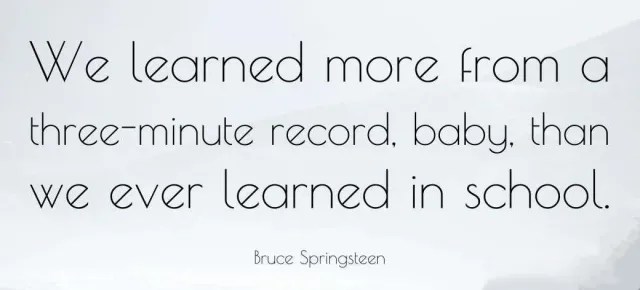
When Bruce Springsteen was inducting today’s singer into the Rock & Roll Hall Of Fame in 1987, he said, “I wanted to sing like Roy Orbison. Now, everybody knows that nobody sings like Roy Orbison.” If there was ever one voice so completely recognizable from the very first note he sang, it was Orbison’s. It sounded almost operatic with his smooth and rich delivery, earning him the nickname “the Caruso of Rock”. Even when he was singing with the likes of Bob Dylan, George Harrison and the other Traveling Wilburys in the late 1980’s, Orbison’s sound took center stage.

Orbison (L) on stage with Bruce Springsteen (R) in January 1987. (Image found online.  Original source unknown.)

In January 1988, the broadcast of Roy Orbison and Friends: A Black and White Night gave the world a look at the plethora of artists he inspired, from Springsteen to Tom Waits to Elvis Costello to J.D. Souther to Jackson Browne and so many more. Later that year Orbison became a member in the definitive musical supergroup who released their self-titled album that October, Traveling Wilburys Vol. 1. He completed his 22nd solo album, Mystery Girl, the following month. It was released in January 1989, just one month after his death at age 52.

Roy Kelton Orbison: April 23, 1936 – December 6, 1988.

The Traveling Wilburys circa 1988 (L-R: Jeff Lynne, Orbison, Bob Dylan, George Harrison and Tom Petty. (Image found online.  Original source unknown.)

Roy Orbison: “Running Scared” (March 1961, written by Roy Orbison).

Roy Orbison: “Crying” (July 1961, written by Joe Melson and Roy Orbison).

Roy Orbison: “Oh, Pretty Woman” (1964, written by Bill Dees and Roy Orbison).

Roy Orbison & Friends: “Dream Baby (How Long Must I Dream)” (Live performance from “Roy Orbison and Friends: A Black and White Night” broadcast in January 1988. Originally released in 1962. Written by Cindy Walker).

The Traveling Wilburys: “Handle with Care” (1988, written by The Traveling Wilburys: Bob Dylan, George Harrison, Jeff Lynne, Roy Orbison and Tom Petty.

Roy Orbison: “You Got It” (1989, written by Jeff Lynne, Roy Orbison and Tom Petty).

Stay safe & well.
Music Monday: April 27, 2026  

Hi, everyone. Welcome to this week’s edition of Music Monday.

#musicmonday #musicblog #musicandlyrics

(Image found online.  Original source unknown.)

Billy Squier’s sophmore album, Don’t Say No, was released 45 years ago on April 13, 1981. A record with a heavy rock sound featuring strong guitar licks and catchy choruses was perfectly timed to become a hit all on its own. But when it collided with the other musical benchmark of the decade-the premiere of MTV four months later on August 1, 1981-it put Squier front and center to become one of its earliest stand out artists. His simple performance videos showed us all how his sound looked. And as a young Gen Xer at the time, I can attest that Squier was not bad on the eyes, which only added to his MTV appeal.

By September 1981, the album peaked at #5 on the Billboard 200. It stayed on the chart for over two years, an astounding 111 weeks. The record produced four big songs, one of which became a Top 20 hit, and was featured in the 2007 comedy, “Blades of Glory”, during Chazz Michael Michaels’ “tsunami of swagger”.

On Day 68 of my Lockdown Countdown, I shared my love for Squier-a Wellesley, Massachusetts native-who will celebrate birthday #76 on May 12. He has released nine studio throughout his career but it is his second album that remains a classic rock staple and a tremendous moment in music history when seeing the music mattered as much as hearing it.

(Image found online.  Original source unknown.)

My 45 of my favorite Squier song. (Image by me.)

Another album released 45 years ago in April 1981 is Dedication by Gary U.S. Bonds. He co-produced it along with Bruce Springsteen, Steven Van Zandt & Rob Parissi. The record consisted of 10 songs with three written by Bruce including the first single, one written by Van Zandt, two co-written by Bonds, a Cajun traditional song, a Beatles cover (It’s Only Love”), a Dylan cover (“From A Buick 6”) & a Jackson Browne cover.

This was a labor of love for Springsteen and Van Zandt who were fans of Bonds from his early rock & roll hits like “New Orleans”, “School’s Out” and “Quarter To Three” which was released 65 years ago in May 1961. It was performed by Springsteen at the 1979 NYC “No Nukes” concerts and featured in the 1980 film by the same name.

Bonds-born Gary Levone Anderson on June 6, 1939 in Jacksonville, Florida-enjoyed a career resurrgence with Dedication, which peaked at #27 on the Billboard 200 in 1981. It also gave him a Top Twenty hit with the first single, the opportunity to duet with Springsteen for the second single and a chance to collaborate with The E Street Band. They all joined forces together again on Bonds’ next album, On The Line, released in June 1982.

(Image found online.  Original source unknown.)

The E Street Band, Bruce Springsteen & Gary U.S. Bonds (L to R): Garry Tallent, Max Weinberg, Springsteen, Bonds, Clarence Clemons, Miami Steve Van Zandt, Roy Bittan and Danny Federici circa 1981. (Image found online.  Original source unknown.)

My own 45 of the album’s first single. (Image by me.)

I also own the second single. (Image by me.)

I still have my mom’s 45 of Bonds’ 1961 hit. (Image by me.)

Journey released two albums in 1981. Captured-the band’s first live record-was released in January of that year. It was co-founder & keyboard player Gregg Rolie’s final album with the band. My favorite track & the only single released is the only song recorded in the studio which was written by lead singer, Steve Perry.

Seven months later Escape was released July 1981. Rolie’s successor, keyboardist & songwriter Jonathan Cain left the English band, The Babys, to join Journey. He co-wrote all 10 tracks on the album which produced five singles, including two of the band’s biggest songs, “Don’t Stop Believing” and “Open Arms”. My favorite song by the band is the first single which I wrote about in my October 7 2024 post.

(Image found online.  Original source unknown.)

(Image found online.  Original source unknown.)

I still have the 45 of my favorite Journey song. (Image by me.)

The 45’s flip side. (Image by me.)

Billy Squier:  “In The Dark” (1981, written by Billy Squier).

Billy Squier: “The Stroke” (1981, written by Billy Squier).

Billy Squier: “Lonely Is The Night” (1981, written by Billy Squier).

Gary U.S. Bonds: “This Little Girl” (1981, written by Bruce Springsteen).

Gary U.S. Bonds: “Jole Blon” (1981, traditional; arranged by Moon Mullican).

Gary U.S. Bonds: “The Pretender” (1981, written by Jackson Browne).

Journey: “The Party’s Over (Hopelessly in Love)” (1981, written by Steve Perry).

Journey: “Who’s Crying Now” (1981, written by Jonathan Cain and Steve Perry).

Stay safe & well.

Music Monday: April 20, 2026

Hi, everyone. Welcome to this week’s edition of Music Monday.

(Image found online.  Original source unknown.)

Albert Leornes Greene, known professionally as Al Green, celebrated birthday #80 last week. Born April 13, 1946 in Forrest City, Arkansas, the man who would become one of the world’s most acclaimed R&B and soul artisits started singing in a family group before he was a teenager. Eventually his love of secular music by Elvis Presley, Jackie Wilson and Wilson Pickett led to a falling out with Greene and his religious father, sending his young son out on his own. His debut album, Back Up Train, was released nearly 60 years ago in March 1967. Soon after he met musician, bandleader and record producer Willie Mitchell who hired Greene as a vocalist & eventually signed the singer to a recording contract after modifying his last name to Green.

And 55 years ago he released his third album, Al Green Gets Next to You, in March 1971 which included a cover of The Doors’ #1 hit from 1967. In November of the same year, the title track from Green’s fourth album was released. It became his signature song & a top seller, reaching the #1 spot for one week in February 1972.

A string of hits followed along with some personal issues that led Green to become a minister and open the Full Gospel Tabernacle church in Memphis. He released several gospel albums in the 1980’s and appeared on Broadway with Patti LaBelle in “Your Arms Too Short To Box With God” in 1982. Green returned to secular music in 1988 with a duet with Annie Lennox, “Put A Little Love In Your Heart”, for the movie, “Scrooged”.

In January 1995 Green was inducted into the Rock & Roll Hall Of Fame and performed at its opening concert in Cleveland that September. He has received a number of awards and accolades throughout his career, including a Kennedy Center Honor in 2014. He continues to make music while holding services each Sunday at his Tennessee church. That role was immortalized 35 years ago in Marc Cohn’s 1991 hit, “Walking In Memphis”:

They’ve got catfish on the table
They’ve got gospel in the air
And Reverend Green be glad to see you
When you haven’t got a prayer
But boy you’ve got a prayer in Memphis
“.

Al Green circa 1971. (Image found online.  Original source unknown.)

Green (L) performed with The Queen Of Soul, Aretha Franklin (R), at the 1995 Rock & Roll Hall Of Fame Concert in Cleveland. (Image found online.  Original source unknown.)

Green was a 2014 Kennedy Centers Honoree. (Image found online.  Original source unknown.)

Sixty years ago, The Doors became the house band at the Whisky a Go Go in West Hollywood from May 23 to August 21, 1966. The were fired due to a performance of “The End” but their residency at the club led to their recording contract with Elektra. And that song appears as the closing track on the band’s debut album, released just five months later in January 1967.

Their sixth album, L.A. Woman, was released 55 years ago on April 19, 1971. It was the last album before Jim Morrison’s death three months later on July 3, 1971. The recording sessions for The Doors final album together began in November 1970 after a tumultuous period for the band which began with Jim Morrison’s arrest at their March 1969 concert in Miami. It essentially blacklisted them from radio airplay & further live shows. It also led to Morrison’s conviction for profanity and indecent exposure in September 1970 (he was posthumourly pardoned in 2010 by Florida’s then Govenor Charlie Crist).

The band’s meteoric rise to international stardom from the moment their first album was released had taken its toll on Morrison, who was only 23 at the time. The mesmerizing & enigmatic lead singer & main songwriter for The Doors struggled with the attention, the industry demands and the fame. It increased his experimentation and dependence on drugs and alcohol which fueled the Miami incident.

But other opportunities presented themselves for the band during their touring hiatus. In April 1969 they appeared on the PBS television show, Critique. It aired two months later, just ahead of the July 1970 release date for their fourth album, The Soft Parade. The show includes performances of several songs & an interview with the band by host & Village Voice writer, Richard Goldstein.

This signified my favorite era for Morrison. The longer hair, the beard, the extra weight turned him from a good looking guy into an absolutely beautiful man. I know his addictions were getting worse but to me, he never sounded or looked better than this period of time. And L.A. Woman was another step forward for him to put the legal problems behind him so he & the band could get back to their purpose of creating some of the greatest rock music ever recorded. And even with the period of controversy, the band had a remarkable run of success in under five years with six studio albums, two #1 songs and an unwavering amount of sophisticated talent that made them one of the early architects of the classic rock sound.

(Image found online.  Original source unknown.)

The Doors on the “Critique” soundstage in April 1969 (L to R): Ray Manzarek (organ/keyboards), Jim Morrison (lead vocals), John Densmore (drums) and Robby Krieger (guitar). (Image found online.  Original source unknown.)

Al Green: “Tired of Being Alone” (1971, written by Al Green).

Al Green: “Light My Fire” (1971, written by The Doors: John Densmore, Ray Krieger, Ray Manzarek and Jim Morrison).

Al Green: “Let’s Stay Together” (Live performance on “The Late Show With David Letterman” on January 13, 1995. Originally recorded in 1971, written by Al Green, Al Jackson Jr. and Willie Mitchell).

Al Green: “Love and Happiness” (1972, written by Al Green and Mabon Lewis “Teenie” Hodges).

AL Green: “A Change Is Gonna Come” (Live performance at The Rock & Roll Hall Of Fame concert on September 2, 1995, at Cleveland Municipal Stadium, Cleveland, Ohio. Written by Sam Cooke).

The Doors: “Love Her Madly” (1971, written by The Doors: John Densmore, Robby Krieger, Ray Manzarek and Jim Morrison).

The Doors: “L.A. Woman” (1971, written by The Doors: John Densmore, Robby Krieger, Ray Manzarek and Jim Morrison).

The Doors: “Hyacinth House” (1971, written by The Doors: John Densmore, Robby Krieger, Ray Manzarek and Jim Morrison).

The Doors: “Riders On The Storm” (1971, written by The Doors: John Densmore, Robby Krieger, Ray Manzarek and Jim Morrison).

Stay safe & well.
Music Monday: April 13, 2026

Hi, everyone. Welcome to this week’s edition of Music Monday.

(Image found online.  Original source unknown.)

Last week we celebrated how successful Otis Redding was in 1966. Not only did he release two albums that year, he also made his debut at the Whisky A Go Go on the Sunset Strip in West Hollywood, California. He performed seven shows during his three night engagement which took place on Friday April 8, Saturday April 9 and Sunday April 10, 1966.

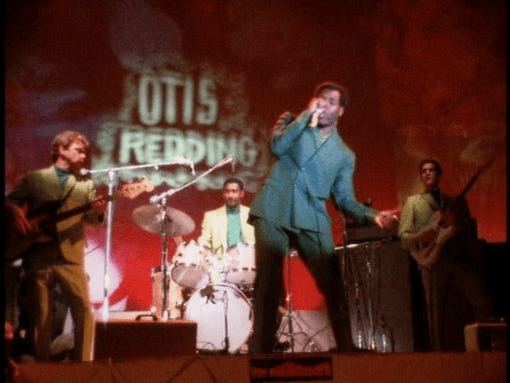
Photo of Otis Redding (center) on stage at The Whisky A Go Go from his Facebook page. (Image found online.  Original source unknown.)

The now legendary Whisky-which opened in January 1964 & continues to operate today-welcomed many bands and artists over the last six decades & Redding’s shows were one of the first to feature a soul music artist. His shows took place a month before The Doors became the house band which opened for all the performers that played at the venue from May 23 to August 21, 1966 (more on that next week). But how incredibly sublime would it have been to have them & Redding on the same stage on the same night?

His live shows were his secret weapon. While the passion he exuded in his recordings was palpable, it was in full view when he was on stage. And it was infectious. That energy and Redding’s immense talent made him a standout at the The Monterey International Pop Festival a year later in June 1967, a career defining moment that became his breakthough to the American audience. But The Whisky is where California welcomed him first.

An album featuring that performance-In Person at the Whisky a Go Go-was released October 1968, 10 months after Redding’s death in December 1967.

(Image found online.  Original source unknown.)

A second album, Good to Me: Live at the Whisky a Go Go, Vol. 2, was released in 1993.

(Image found online.  Original source unknown.)

In honor of the 50th anniversary of Redding’s appearances at the club, all seven performances were released on Live at the Whisky a Go Go: The Complete Recordings, on October 21, 2016. It won writer Lynell George the Grammy Award for Best Album Notes at the 60th Annual Grammy Awards in 2018. A playlist for all the songs from this recording are available on Redding’s YouTube channel.

(Image found online.  Original source unknown.)

Otis Redding: “I Can’t Turn You Loose” (1966, written by Otis Redding).

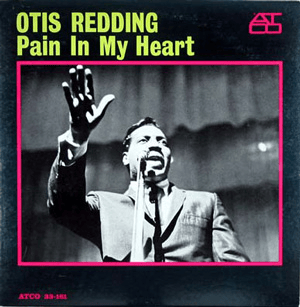
Otis Redding: “Pain In My Heart” (1966, written by Naomi Neville a/k/a Allen Toussaint).

Otis Redding: “Mr. Pitiful” (1966, written by Steve Cropper and Otis Redding).

Otis Redding: “(I Can’t Get No) Satisfaction” (1966, written by Mick Jagger and Keith Richards).

Otis Redding: “These Arms of Mine” (1966, written by Otis Redding).

Otis Redding: “Chained and Bound” (1966, written by Otis Redding).

Otis Redding: “A Hard Day’s Night” (1966, written by John Lennon and Paul McCartney).

Stay safe & well.
Music Monday: April 6, 2026

Hi, everyone. Welcome to this week’s edition of Music Monday.

(Image found online.  Original source unknown.)

1966 was a big year for Stax Records & Otis Redding and Steve Cropper-the label’s resident musical designated hitter-had a lot to do with that. He joined the label in 1961 as an A&R man before establishing his musical talent as a songwriter & as a supberbly skilled guitar player in the group he co-founded, Booker T & The M.G.’s, the house band for Stax. Cropper eventually became an in-house producer as well and saw success in that role, especially with the 1965 album, Otis Blue/Otis Redding Sings Soul.

Otis Redding (L) with Steve Cropper (R) circa 1967. (Image found online.  Original source unknown.)

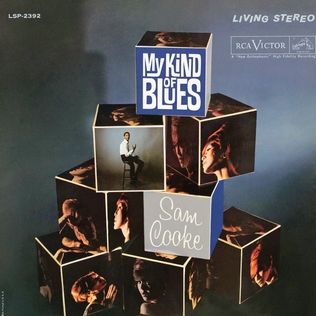
The next year started with the release of a song written by Cropper and Eddie Floyd, played on by the house band and sung by Wilson Pickett. He took it to #1 on Billboard’s Hot Rhythm & Blues Singles Chart for seven consecutive weeks in the spring of 1966 (It peaked at #13 on the Billboard Hot 100 chart in March 1966). The track also featured backing vocals by Patti LaBelle and the Bluebelles. A month later, the same song was covered by Redding on The Soul Album, which Cropper co-produced & played on with the house band. The record also includes another track co-written by Floyd (“Everybody Makes a Mistake”) as well as a great take on a Sam Cooke song.

(Image found online.  Original source unknown.)

In June 1966 Sam & Dave had their own #1 hit on the R&B chart for one week with “Hold On, I’m Comin'”, with Cropper & the rest of Booker T & The M.G.’s performing on the song. In July another track he co-wrote with Floyd-“Knock On Wood”-was released, this time with Floyd on lead vocal. It reached #1 for one week in November on the same R&B chart while also reaching #28 on Billboard’s Hot 100 singles chart.

Redding released a second album 60 years ago. Complete & Unbelievable: The Otis Redding Dictionary of Soul, which came out in October 1966, also featured Booker T & The M.G.’s as the house band, with Cropper contributing as a co-writer on two tracks. On their own, he & Redding were two musical powerhouses that helped put Stax & soul music on the map. Together, they created a sound so original that 60 years later, it still defines the genre.

(Image found online.  Original source unknown.)

Wilson Pickett: “634-5789 (Soulsville, U.S.A.)” (1966, written by Steve Cropper and Eddie Floyd).

Otis Redding: “634-5789 (Soulsville, U.S.A.)” (1966, written by Steve Cropper and Eddie Floyd).

Otis Redding: “Chain Gang” (1966, written by Sam Cooke).

Otis Redding: “Try A Little Tenderness” (1966, written by Jimmy Campbell, Reginald Connelly and Harry M. Woods).

Otis Redding: “Day Tripper” (1966, written by John Lennon and Paul McCartney).

Otis Redding: “My Lover’s Prayer” (1966, written by Otis Redding).

Stay safe & well.
Music Monday: March 30, 2026

Hi, everyone. Welcome to this week’s edition of Music Monday.

(Image found online.  Original source unknown.)

Darrell George Crofts, known professionally as Dash Crofts, died last week at age 87. He was one half of the musical duo, Seals & Crofts, formed in 1969. The peak of their success took place in the 1970’s with three Top Ten hits.

He and Jim Seals-who died at age 80 in 2022-were both Texas natives who met in the 1950’s through local bands. They were also both multi-instramentalists who played guitar & mandolin, with Seals also adept on the volin and sax while Crofts played drums. They released their self-titled debut album in 1969. Their fourth record proved to be their breakthrough, with the title track reaching #6 in 1972. After a decade of success, the duo broke up in 1981 & reunited in 2004 for their final album, Traces.

As soon as I heard Crofts died, I did what so many of us do these days-I went to YouTube to reclaim the part of my childhood that had just been taken away. Once I heard the familiar opening notes of “Summer Breeze”, I was instantly transported back to my wonder years when I went to sleep with the radio on, reliving the feeling of unbelievable comfort I had from the song’s soothing melody and the beautiful harmonies that would follow. I also remember finding the 45″ of “Get Closer” in my cousins’ record collection because their dad loved that song so much. To this day, I think of my uncle whenever I hear that song. Despite that deep nostalgia, Seals & Crofts still ended up on my periphery. I don’t know why and that is my loss.

Those evocative memories aside, I was today years old when I found out that Seals & Crofts are considered a soft rock sound. I totally get it & see it from my grown up perspective now, but at the time I thought of them more as a sophisticated pop duo that I thoroughly enjoyed. Whatever category you place them in, they earned their place in the sountrack of this thing we call life.

Darrell George “Dash” Crofts: August 14, 1938 – March 25, 2026 

Dash Crofts (L) and Jim Seals (R) circa 1978. (Image found online.  Original source unknown.)

At the end of 2025 I rediscovered a song I loved that was released as a single in 2000. The very first time I heard it then, I thought it was by Celine Dion. But the more I listened, the more I second guessed myself. Eventually I discovered the singer was Lara Fabian.

Lara Fabian’s self-titled 1999 album. (Image found online.  Original source unknown.)

What I did not know then was that the co-writer of the song was David Allen Loggins (November 10, 1947 – July 10, 2024). Yes, he is related to Kenny Loggins (they are cousins) and Dave is best known for his own song, “Please Come To Boston”, which peaked at #5 in August 1974. The track earned him a place in the singer-songwriter genre which was immensely popular in that decade.

Dave Loggins on The Midnight Special in July 1974. (Image found online.  Original source unknown.)

Dave wrote several tunes for country artists and two reached #1 on Billboard’s Hot Country Songs chart-one in October 1985 by Juice Newton (“You Make Me Want to Make You Mine”) and the second 40 years ago in January 1986 by Kenny Rogers (“Morning Desire”). Dave sang on a country song in 1984-a duet with Anne Murray-that reached the #1 spot on the country chart in December of that year. That track helped the two singers win the Vocal Duo of the Year prize at the Country Music Association (CMA) Awards in 1985. (Fun fact: That same year the song appeared on Whitney Houston’s self-titled debut album as a duet with Jermaine Jackson).

Another fun fact: Murray (who turned 80 in 2025, born June 20, 1945 in Nova Scotia, Canada) had two hit songs in the 1970’s that were written by Dave’s cousin, Kenny Loggins: “Danny’s Song” (a Top 10 hit in April 1973) and “A Love Song” (a Top 20 hit in 1974). Those three artists are connected in another great example of musical symmetry.

Dave Loggins (L) and Anne Murray (R) circa 1984. (Image found online.  Original source unknown.)

Seals & Crofts: “Summer Breeze” (1972, written by Dash Crofts and James Seals).

Seals & Crofts: “We May Never Pass This Way Again” (1973, written by Dash Crofts and James Seals).

Seals & Crofts featuring Carolyn Willis: “Get Closer” (1976, written by Dash Crofts and James Seals).

Dave Loggins: “Please Come To Boston” (Performed on “The Midnight Special” TV show broadcast on July 19, 1974. Written by Dave Loggins).

Anne Murray with Dave Loggins: “Nobody Loves Me Like You Do” (1984, written by James Dunne and Pamela Phillips).

Lara Fabian: “Love By Grace” (1999, written by Dave Loggins and Wayne Tester).

Stay safe & well.
Music Monday: March 23, 2026

Hi, everyone. Welcome to this week’s edition of Music Monday.

(Image found online.  Original source unknown.)

This year will mark the 85th birth anniversary for a singer & songwriter best known for songs made famous by others. Tim Hardin was born December 23, 1941 in Eugene, Oregon. His father played bass in an Army jazz band and his mother played violin in the Portland Symphony Orchestra. Hardin learned guitar while he was in high school before he quit to enlist in the Marines where he served in Asia. He honed his musical skills during that time, so when he was discharged in 1961, he moved to NYC and began playing in small clubs. Two years later he moved to Boston where he was approached by Columbia Records. Unfortunately, they did not move forward with his demos.

In 1965 he relocated to California and by July 1966, he released his first record, Tim Hardin 1, on Verve Records. One of the tracks, “Reason To Believe”, was the first single from Rod Stewart’s 1971 breakthrough album, Every Picture Tells A Story. When the B-side, “Maggie May”, started receiving more air play, it catapulted the double-sided single to the #1 spot in the country for five consecutive weeks in the fall of 1971. Over two decades later, Stewart included “Reason” as part of his MTV “Unplugged” performance and the song became a hit again, reaching the Top 20 in October 1993.

In November 1966, Bobby Darin’s recording of Hardin’s song, “If I Were A Carpenter”, peaked at #8. He included his own version on his second album, Tim Hardin 2, released in 1967. He also sang it live during his Woodstock performance in August 1969.

Hardin released nine albums in his lifetime before his death in 1980 from an accidental overdose of heroin, an addiction he struggled with since he was introduced to it during his military years in Asia. His 10th album, Unforgiven, was released posthumously in 1981. His music has been covered by many artists including Johnny Cash, Glen Campbell, Roger Daltrey, Robert Plant, The Four Tops, The Carpenters and Don McLean.

My favorite album of Hardin’s-Bird On A Wire-was released 55 years ago in June 1971. The title track is my favorite vocal performance by him.

James Timothy Hardin: December 23, 1941 – December 29, 1980

Tim Hardin circa 1968. (Image found online.  Original source unknown.)

 Hardin’s 1971 album. (Image found online.  Original source unknown.)

Another artist we lost too soon was English musician Paul Kosoff. Last year marked his 75th birth anniversary (born Sept 14, 1950) and March 19 marked the 50th anniversaryof his death in 1976 at age 25. He was the lead guitarist & co-founder of the rock band, Free.

He studied classical guitar from the ages of 9 to 15, at which time he decided to pursue a career in music after attending a show by John Mayall & the Bluesbreakers. In 1966 Kosoff was in the band Black Cat Bones with drummer Simon Kirke. Two years later they co-founded Free with vocalist Paul Rodgers and bassist Andy Fraser. Their debut album, Tons Of Sobs, was released in March 1969.

They found their greatest success from their third album-Fire and Water, released in June 1970-thanks to the their breakthrough single, “All Right Now”. It is one of the greatest rock anthems in music history. I have been obsessed with this track since I was a kid and a century later I still cannot get enough of it. Four standout performances by each member of the band combined together to make an intensely masterful and sublime track.

Free initially disbanded in 1971 due to internal tensions but came together a year later to record Free at Last. That was followed by Fraser’s departure, reportedly due in part to Kosoff’s undependability because of his growing substance abuse issues. The band broke up for good in 1973 and later that year, Kosoff released his solo debut, Back Street Crawler. He was set to be on a double billed tour with Rodgers’ & Kirke’s new band, Bad Company, beginning in April 1976. Sadly, Kosoff died from a pulmonary embolism a month before.

Paul Francis Kossoff: September 14, 1950 – 19 March 19, 1976

Paul Kosoff circa 1974 (L) and 1970 (R). (Images found online.  Original sources unknown.)

(L-R): Andy Fraser, Paul Rodgers, Kosoff & Simon Kirke. (Image found online.  Original source unknown.)

Tim Hardin: “Reason To Believe” (1966, written by Tim Hardin).

Tim Hardin: “If I Were A Carpenter” (1967, written by Tim Hardin).

Tim Hardin: “Bird On A Wire” (1971, written by Leonard Cohen).

Free: “Moonshine” (1969, written by Paul Kossoff’ and Paul Rodgers).

Free: “Oh I Wept” (1970, written by Paul Kossoff’ and Paul Rodgers).

Free: “All Right Now” (1970, written by Andy Fraser and Paul Rodgers).

Stay safe & well.
Music Monday: March 16, 2026

Hi, everyone. Welcome to this week’s edition of Music Monday.

(Image found online.  Original source unknown.)

Boz Scaggs’ Silk Degrees was released 50 years ago in February 1976. Seven months later, it peaked at #2 on the Billboard 200. It produced four singles, one that peaked at #2 and another which was a Top 20 hit. This was Scaggs’ seventh solo album and proved to be his breakthrough record.

The blues/R&B/rock singer-born William Royce Scaggs on June 8, 1944 in Canton, Ohio-started his singing career in 1959 as the lead singer for The Marksmen, which was guitarist’s Steve Miller’s first band. Scaggs was a member of The Steve Miller Band as well from 1967-1968, then pursued a solo career. Eight years later, the two former bandmates would meet on the music charts when Miller’s Fly Like An Eagle album was released in May 1976, three months after Silk Degrees.

(Image found online.  Original source unknown.)

Boz Scaggs circa 1972. (Image found online.  Original source unknown.)

Scaggs on stage during an October 2021 show in Florida. (Image courtesy of his official Facebook page. Original source unknown.)

One of the funniest films ever made just turned 30 years old. “The Birdcage”-based on the 1978 French-Italian film, “La Cage aux Folles”, which was based on the 1973 play by Jean Poiret-was released March 8, 1996. The stellar cast was led spectacularly by Robin Williams and Nathan Lane as a gay couple trying to hide their relationship from their son’s ultra conservative future in-laws, played to perfection by Gene Hackman and Dianne Wiest. Dan Futterman & Calista Flockhart play the young couple trying to merge the two polar opposite worlds.

Lane-who turned 70 last month-turned shrieking into an art form in the movie. He was on “Conan O’Brien Needs A Friend” last year & discussed how Mike Nichols cast him in the role of Albert opposite Williams as Armand. Lane tells a great story, full of laughs, insight & interesting information such as Williams was originally slated to play Albert opposite Steve Martin as Armand. As much as I adore Martin, I cannot picture anyone in the roles better than Lane & Williams. The movie is still one of my go-to’s whenever I need an intense laugh.

The official movie poster. (Image found online.  Original source unknown.)

A still from the dinner scene (L-R): Calista Flockhart, Gene Hackman, Nathan Lane, Dan Futterman and Dianne Wiest. (Image found online.  Original source unknown.)

Lane and Hackman in mid-song, with Williams in the background at the piano. (Image found online.  Original source unknown.)

Boz Scaggs: “Lowdown” (1976, written by David Paich and Boz Scaggs).

Boz Scaggs: “Lido Shuffle” (1976, written by David Paich and Boz Scaggs).

Boz Scaggs: “We’re All Alone” (1976, written by Boz Scaggs).

The Cast Of “The Birdcage”: “I Could Have Danced All Night” (1996, written by Alan Jay Lerner and Frederick Loewe. Cast in order of appearance: Dianne Wiest, Robin Williams, Nathan Lane, Gene Hackman, Calista Flockhart, Dan Futterman and Hank Azaria).

Stay safe & well.
Music Monday: March 9, 2026

Hi, everyone. Welcome to this week’s edition of Music Monday.

(Image found online.  Original source unknown.)

Bad Company’s third studio album, Run With The Pack, was released 50 years ago in January 1976. The supergroup had cemented their place in classic rock with their debut album in 1974, and by this third album in as many years they were known for the intensity of their live shows as well.
Run peaked at #5 on the Billboard 200 in 1976 and produced three singles: the title track, “Young Blood” which peaked at #20-and was a Lieber & Stoller cover originally recorded by The Coasters in 1957-and “Honey Child” which peaked at #59. The album is one of my top picks by the band as it features three of my all time favorite songs by them.

Bad Company circa 1975 (L to R): Simon Kirke, Mick Ralphs, Boz Burrell and Paul Rodgers. (Image found online.  Original source unknown.)

(Image found online.  Original source unknown.)

Speaking of the great songwriting team of Jerry Leiber and Mike Stoller-who gave us so many of the songs Elvis made famous-I recently discovered another one of their tracks during an “Ally McBeal” rewatch.

Near the end of S1 E2, Vonda Shepard starting singing a song that was unfamiliar to me. After a quick Google search of the lyrics, I found the original recording from 1977. It is by English singer Elkie Brooks who I never heard of before but what a discovery. She has an incredibly soulful voice with a hint of rasp that gives Rod Stewart vibes. I cannot find Shepard’s version on line but she did a fabulous job on it, as she did on most of the songs she covered on the show.

Elkie Brooks circa 1975. (Image found online.  Original source unknown.)

Another new-to-me song from my “Ally” rewatch is from Gladys Knight & The Pips. It was written by singer, songwriter & Mississippi native, Jim Weatherly (March 17, 1943 – February 3, 2021). He wrote five songs for their 1973 album, Imagination, their first release for Buddah Records, the label they landed at after leaving Motown. The group’s two biggest hits-“Midnight Train To Georgia”, which was #1 for two weeks in October 1973 and “Neither One Of Us (Wants To Be The First To Say Goodbye)”, a #2 hit in April 1973-were also written by Weatherly. A year later, the group took yet another one of his compositions, “Best Thing That Ever Happened To Me”, to the #3 spot in April 1974.

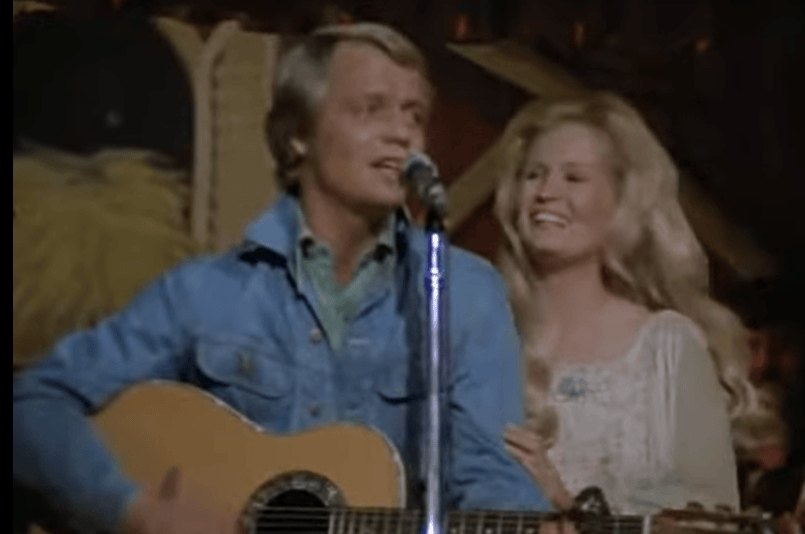
He was a quarterback for the Ole Miss Rebels from 1962-1964 while he was a student at the University of Mississippi. After graduation he pursued music which included his own contract from Buddah after the success of “Midnight Train”. Weatherly released 11 albums between 1972 and 2008. He was inducted into the Nashville Songwriters Hall of Fame 20 years ago in 2006 and into the Songwriters Hall of Fame in 2014. His songs were also recorded by Glen Campbell, Kenny Rogers and Neil Diamond, amongst others.

Jim Weatherly circa 1973. (Image found online.  Original source unknown.)

(Image found online.  Original source unknown.)

Bad Company: “Simple Man” (1976, written by Mick Ralphs).

Bad Company: “Love Me Somebody” (1976, written by Paul Rodgers).

Bad Company: “Silver, Blue & Gold“(1976, written by Paul Rodgers).

Elkie Brooks: “Pearl’s A Singer” (1977, written by Ralph Dino, Jerry Leiber, John Sembello and Mike Stoller).

Gladys Knight & The Pips: “Where Peaceful Waters Flow” (1973, written by Jim Weatherly).

Jim Weatherly: “Where Peaceful Waters Flow” (1973, written by Jim Weatherly).

Stay safe & well.