Hi, everyone. Welcome to this week’s edition of Music Monday.
(Image found online. Original source unknown.)
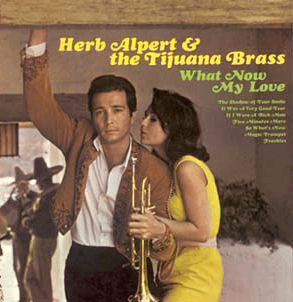
What Now My Love, the sixth album by Herb Alpert & The Tijuana Brass, was released 60 years ago on May 9, 1966. It reached the #1 spot in the country that year for eight consecutive weeks, from May 28-July 22 & returned to the top spot for one more week on September 3. It was Alpert’s third #1 album for the year, added to 1965’s Whipped Cream & Other Delights in the top spot for the first week of 1966 & again for two weeks in February. The follow up album to that one-Going Places, also released in 1965-was #1 for one week in March 1966 and again for five consecutive weeks from April 16-May 20. The only other act that had three #1 albums in 1966 were The Beatles with Rubber Soul, Yesterday And Today and Revolver.
(Image found online. Original source unknown.)
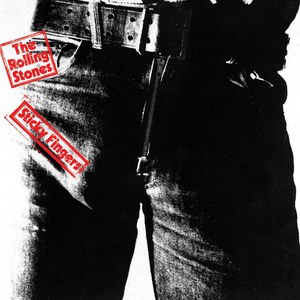
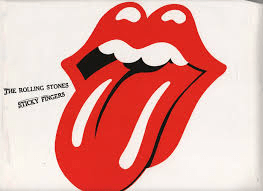
Sticky Fingers by the Rolling Stones was released 55 years ago in April 1971. By May 22, it hit the top of the Billboard 200 chart where it stayed for four consecutive weeks. One of their biggest albums not only for its musical content (“Brown Sugar” was the #1 song in the country for two consecutive weeks in the spring of 1971) but for the cover art as well. It featured a photo by artist Andy Warhol of a man’s crotch area clad in jeans with an actual working zipper. And the album’s inner sleeve introduced the world to what would become the band’s signature lips & tongue logo.
A year before the album’s 45th anniversary, a deluxe & a super deluxe edition was released, with the later disc featuring the band’s live 1971 performance at University of Leeds.
(Image found online. Original source unknown.)
(Image found online. Original source unknown.)
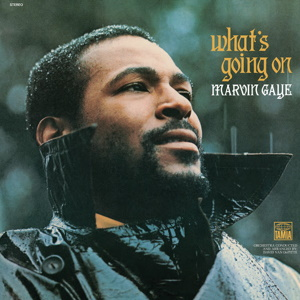
On January 21, 1971 the song, “What’s Going On”, was released as a single. By April, it reached the #2 spot in the country. It was the title track of the album released 55 years ago on May 21, 1971. It would peak in the #6 position two months later. More than five decades later, it is still considered the pinnacle of Marvin Gaye’s career. I featured this album & its impact on Gaye’s life & his musical direction five years ago on Day 431 of my Lockdown Countdown:
“Fifty years ago today-May 21, 1971-Marvin Gaye released his masterpiece, What’s Going On. This album was an expression of the angst he was feeling between 1969 & 1970 due to the state of the world-the Vietnam War, the effect of pollution on the environment, racial injustice, poverty-and what was happening in his own world: the break-up of his first marriage, the death of his friend, Tammi Terrell, the trials his brother, Frankie, faced in service to our country & as a veteran returning home from the war to little support in how to rejoin society; Gaye’s inability to break free of the confines of his Motown contract to make the music he wanted to make, his strained relationship with label owner Berry Gordy and Gaye’s money troubles with the IRS due in part to his cocaine addiction.
He co-wrote all nine songs on the album & produced it as well, his first time in that role. Motown’s house band, The Funk Brothers, helped Gaye find the perfect sound for each song. Upon its release, it was hailed as a landmark album not only for the singer but for music as well. It was critically acclaimed as a concept record, a first for Motown, and was considered an important statement for black music, too. The album produced three Top Ten hits.
If Marvin Gaye only gave us his recording of “Grapevine” what a contribution that would have been all by itself. But the legacy of What’s Going On defines not only his talent but his heart, soul, intellect, empathy, strength & compassion for the world around him as well. His was one of the first voices I remember hearing and I have absolutely adored it ever since. The soulfulness, the passion, the intensity & the four octave range of his deep rich baritone to tenor voice, it is a truly beautiful & remarkable instrument. I miss him every single day. Happy anniversary to one of the greatest records ever made by one of the greatest artists who ever lived.“
(Image found online. Original source unknown.)
Herb Alpert & The Tijuana Brass: “Spanish Flea” (1965, written by Julius Wechter).
Herb Alpert & The Tijuana Brass: “It Was A Very Good Year” (1966, written by Ervin Drake).
Herb Alpert & The Tijuana Brass: “The Shadow of Your Smile” (1966, written by Johnny Mandel and Paul Francis Webster).
The Rolling Stones: “Brown Sugar” (1971, written by Mick Jagger and Keith Richards).
The Rolling Stones: “Wild Horses” (1971, written by Mick Jagger and Keith Richards).
The Rolling Stones: “Street Fighting Man” (Live performance in 1971 at the University of Leeds. Originally released in 1968. Written by Mick Jagger and Keith Richards).
Marvin Gaye: “What’s Going On” (1971, written by Renaldo Benson, Al Cleveland and Marvin Gaye).
Marvin Gaye: “Mercy Mercy Me (The Ecology)” (1971, written by Marvin Gaye).
Marvin Gaye: “Inner City Blues (Make Me Wanna Holler)” (1971, written by written by Marvin Gaye and James Nyx Jr.).
Stay safe & well.