Music Monday: June 29, 2026

Hi, everyone. Welcome to this week’s edition of Music Monday.
#musicmonday #musicblog #musicandlyrics

(Image found online.  Original source unknown.)

American record mogul, producer & talent executive Clive Davis died last week at age 94. He held tenures at several record labels in his career but is probably best known as the founder and president of Arista Records.

Born April 4, 1932 in Brooklyn, New York, he started his professional life as a lawyer after receiving a full scholarship to Harvard Law School which he graduated from in 1956. He become assistant counsel for Columbia Records four years later & by 1967, he became the president of the label. He held that position until 1973 and in that time he signed multiple artists to the label including Janis Joplin with Big Brother and the Holding Company, Blood, Sweat & Tears, Carlos Santana, Chicago, Aerosmith and Bruce Springsteen, to name a few.

After being dismissed from Columbia, Davis founded Arista Records in 1974 and was its president until 2000. He is credited with launching the careers of Barry Manilow, Patti Smith, The Grateful Dead, Whitney Houston and many more. Davis also signed The Queen of Soul, Aretha Franklin, after she spent over a decade at Atlantic Records. Her first album for Davis was released in 1980.

Barry Manilow was one of the first big artists for Arista. He was signed to Bell Records in 1969 & released two albums with them. Once that label shut down, everything was transferred to Arista & they re-released his first two albums. Manilow had the first #1 record for the company, which was also his first top selling song. It reached the #1 spot in the country in January 1975 for one week. The first album he recorded directly for Arista was released 50 years ago in August 1976, This One’s for You.

Clive Jay Davis: April 4, 1932 – June 22, 2026.

Aretha Franklin (L), Clive Davis (center) and Barry Manilow (R) circa 2017. (Image found online.  Original source unknown.)

Melvin James Brooks turned 100 years old yesterday. A New York native, he was born June 28, 1926 in Brooklyn. Who amongst us does not list one of his movies as one of the funniest they have ever seen? My personal favorites are “Young Frankenstein” (1974) and “High Anxiety” (1977), but his list of credits also includes “Blazing Saddles” (1974), “Silent Movie” (1976), “History of the World, Part I”(1981), “Spaceballs” (1987) and “Robin Hood: Men in Tights” (1993), to name a few. Brooks wrote & directed the 1967 movie, “The Producers”, which earned him the Academy Award for Best Original Screenplay at the 1969 Oscars ceremony. Thank you, Mel, for so many incredible belly laughs.
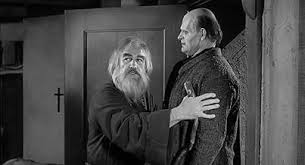
Gene Hackman (L) and Peter Boyle (R) in 1974’s “Young Frankenstein”. (Image found online.  Original source unknown.)
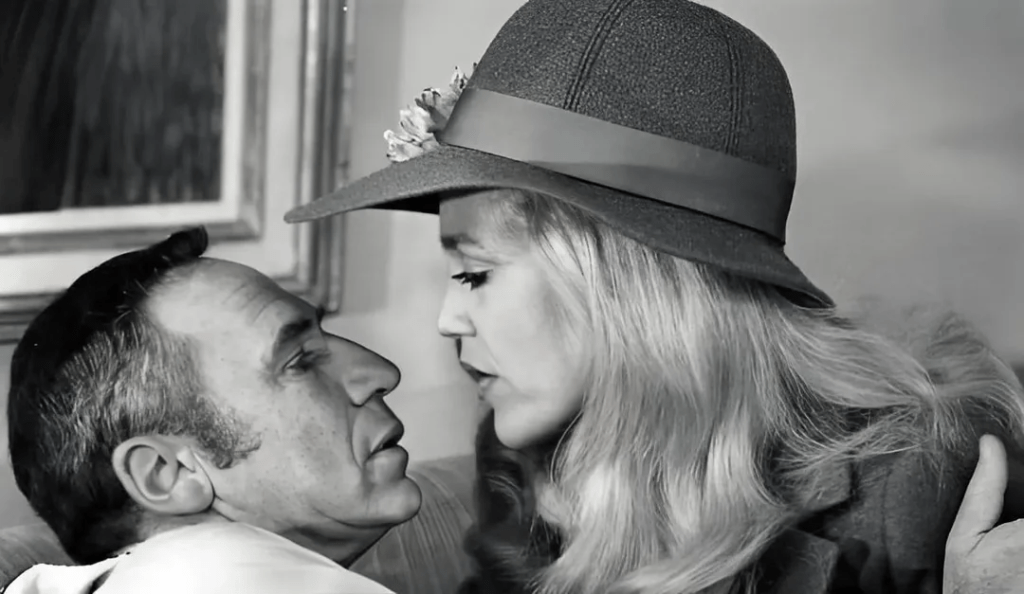
Mel Brooks (L) and Madeline Kahn (R) in 1977’s “High Anxiety”. (Image found online.  Original source unknown.)

In April 1971 Ringo Starr-who turns 86 on July 7-released a non-album single. He wrote the song himself and it was produced by his former bandmate-George Harrrison-who also played guitar on the track. Two members of a band on the Beatles’ Apple label, Badfinger-Pete Ham and Tom Evans-contributed backing vocals. By June 1971 the song peaked at #4, giving Starr his first solo hit.
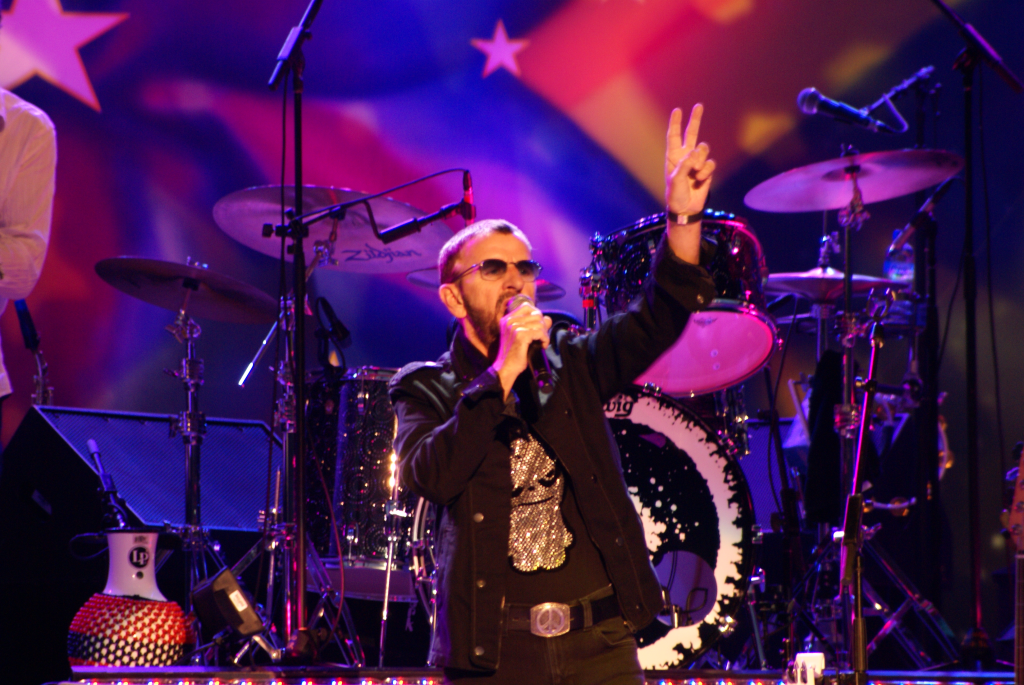
Photo by me copyright 2012. (Image found online.  Original source unknown.)

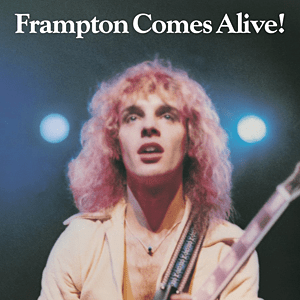
Frampton Comes Alive is celebrating its 50th anniversary this year. Released in January 1976, it became a massive hit that year, staying at the #1 spot on the Billboard 200 for 10 consecutive weeks beginning in April. It remained on that chart for a total of 97 weeks.

All three singles from the album became hits as well. Two reached the Top Ten, one reached the Top 20, with two of the songs featuring the distinctive sound of a talk box which only added to their appeal. All of that put Frampton front & center as a singer, songwriter & guitarist in the middle of an era that celebrated that genre. The record also helped to offer more credence to the power of a live recording by conveying the energy an audience can bring to the performance.

It was recorded at four shows in 1975-two in California (San Francisco’s Winterland Ballroom and Marin Veterans’ Memorial Auditorium in San Rafael) and two in New York ( Long Island Arena, Commack and the State University of New York (SUNY) at Plattsburgh campus). Five decades later, the album remains one of the best selling live records of all time.
Kenny Rogers released the album, Share Your Love, 45 years ago in June 1981. The most well-known song from that record is “Through The Years”, which was the final single & a Top Twenty hit in March 1982. But my favorite track was the first single. It was the #1 song on the country chart for two consecutive weeks in August 1981, the same month it peaked at #3 on the Billboard Hot 100 chart.

It was written by singer-songwriter Rick Christian who recorded it himself in 1978. His track is a simple, somewhat stark arrangement which really showcases the lyrics & a truly lovely string accompaniment. Harry Nilsson did a really nice cover of the song for his 1980 album, Flash Harry, but that was not released in the U.S. until 2013. Rogers’ version is probably my favorite in his catalog, just ahead of his 1983 duet with Dolly Parton (“Islands In The Stream”) and his 1968 song with The First Edition featured in “The Big Lebowski” (“Just Dropped In (To See What Condition My Condition Was In)”.
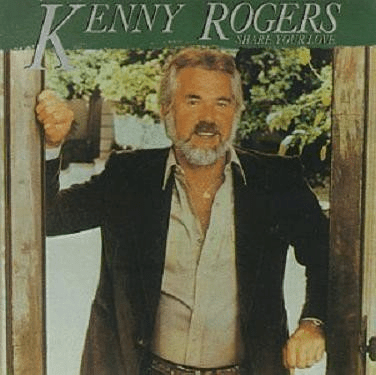
(Image found online.  Original source unknown.)

Barry Manilow: “Mandy” (1974, written by Scott English and Richard Kerr).

Barry Manilow: “Weekend In New England” (1976, written by Randy Edleman).

Aretha Franklin: “I Can’t Turn You Loose” (1980, written by Otis Redding).

Mel Brooks: “High Anxiety” (1977, written & performed by Mel Brooks for the 1977 movie of the same name).

Ringo Starr: “It Don’t Come Easy” (1971, written by Richard Starkey).

Peter Frampton: “Show Me The Way” (1976, written by Peter Frampton).

Peter Frampton: “Baby I Love Your Way” (1976, written by Peter Frampton).

Peter Frampton: “Do You Feel Like We Do” (1976, written by Peter Frampton, Mick Gallagher, John Siomos and Rick Wills).

Kenny Rogers: “I Don’t Need You” (1981, written by Rick Christian).

Stay safe & well.

Let’s Take A Moment Day 252

Hi everyone.  Hope you are all well and continue to stay that way during this global health crisis we are facing.  But in addition to protecting your physical wellness, what are you doing to stay mentally healthy today?

kurt v

(Image found online.  Original source unknown.)

I know we are in a serious situation, but I need a break from the gloom, doom and bullying by way of hoarding. Music has always been my refuge and watching those beautiful Italians singing to each other from their balconies reaffirmed my belief that music is the answer. So until the old normal returns, I am going to share a song I listen to that helps me escape the current state of things, if only for a few minutes each day.  And if this helps anyone else, even better.

A few days before starting my last year of junior high, I went shopping with a friend to buy a new pair of shoes for the school year. My dad gave me the money to buy them and decided I was now old enough to go on my own for this yearly tradition. As my friend and I were walking through the mall, I spotted a newly opened record store. I think you know what happened next.

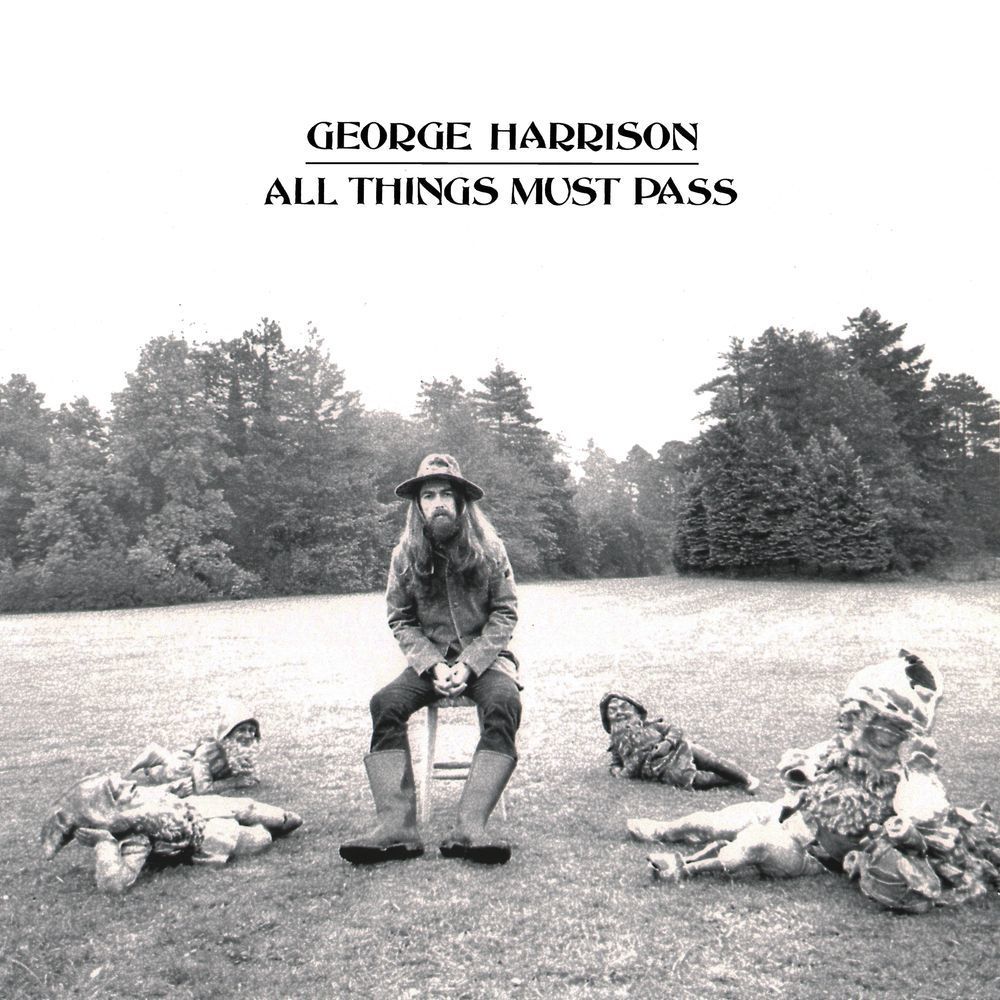
I went in “just to look” & inhale the fabulous rows upon rows of vinyl records in a store five times the size of the one I usually shopped in near my house. My friend grew concerned, however, when she noticed my glassy eyed stare as I flipped through the H bin and found, in all of its magnificent glory, George Harrison’s 1970 three album boxed set solo masterpiece, “All Things Must Pass”. This record had eluded me for years because each time I went to buy it either it was sold out or too expensive. And the only way I could buy it that day was to use my shoe money. My friend reminded me of the wrath and possible body cast that I would get from my father if I made such a reckless choice. But to me it was a no brainer and clearly worth the risk, so I bought the album. I could figure a way out of the hole I dug myself into later. For now, I was on a high that even my friend’s look of sheer horror could not shake me from.

She still had to buy her own shoes so off to that store we went. As I sat next to her while she tried on multiple pairs, I got lost in the reverie of my first boxed set as I read through the song listings and the liner notes. But my friend kept asking my opinion on her options so I left my happy place to offer my help. I liked her final choice and decided when I came back, I would buy the same pair. I also decided I should try them on then & there so it would save me some time on my next trip. But they did not have any size that fit me as that summer my feet turned into cruise ships. The clerk told me he could order a bigger size and it would take about a week to come in. The music gods had smiled on me. My dad would tell me to hold onto the money to pick up the shoes when they came in and with a steady babysitting gig I could earn back the cash I had spent on the album. Win win.

That night I bathed in the glory of The Quiet Beatle, The Spiritual Beatle, The Youngest Beatle. Both versions of “Isn’t It A Pity” were glorious as was the title track, “Beware Of Darkness”, the cover of Dylan’s “If Not For You”, the track he wrote with Harrison, “I’d Have You Any Time” and today’s song. It was the album’s first single released 50 years ago today November 23, 1970. It featured an array of guest performers including former Beatle Ringo Starr on drums & percussion, Billy Preston on piano and five musicians on acoustic guitar in addition to Harrison: Eric Clapton, Peter Frampton and three members of the first band signed to The Beatles’ Apple label, Badfinger (Pete Ham, Tom Evans & Joey Molland). But it was Harrison’s vocal & slide guitar arrangement that put the song over the top. And the love for the tune was universal as it went to #1 in the US, the UK and 15 other countries. This was the record that told the world that as great as he was in The Beatles, Harrison was a star all on his own.

I really want to see you
Really want to be with you
Really want to see you Lord
But it takes so long, my Lord

All_Things_Must_Pass_BW

(Image found online.  Original source unknown.)

George Harrison: “My Sweet Lord” (1970, written by George Harrison).

I do not own the rights to anything.  I am just sharing what I love and how I am coping with you.

Stay well.

Let’s Take A Moment Day 133

Hi everyone.  Hope you are all well and continue to stay that way during this global health crisis we are facing.  But in addition to protecting your physical wellness, what are you doing to stay mentally healthy today?

Thoreau music quote

(Image found online.  Original source unknown.)

I know we are in a serious situation, but I need a break from the gloom, doom and bullying by way of hoarding. Music has always been my refuge and watching those beautiful Italians singing to each other from their balconies reaffirmed my belief that music is the answer. So until the old normal returns, I am going to share a song I listen to that helps me escape the current state of things, if only for a few minutes each day.  And if this helps anyone else, even better.

In 1962 trumpeter, songwriter, vocalist and bandleader Herb Alpert founded A&M Records with his business partner, Jerry Moss.  The name of the label came from the first letter of both men’s last names.  It took six years for the record company to have its first number one record when today’s song by Alpert hit the top spot in June 1968 for four straight weeks.  It was also his first number one song and the first for the songwriters, Burt Bacharach and Hal David.  After that the record company and all three men were off for a fabulous ride.  By 1972 the label was one of the most successful in the world.

It was sold in 1999, but during its 37 year run it was home to diverse artists such as Billy Preston, The Carpenters, Peter Frampton, Procol Harum, Cat Stevens (n/k/a Yusuf), Quincy Jones, Carole King, Barry White and a host of others.  But Alpert remains one of my top favorites thanks to his 1965 album, “Whipped Cream & Other Delights”, and today’s song thanks to his soft easy vocal and the absolutely lovely lyrics by Hal David.

My hands are shakin’ don’t let my heart keep breaking ’cause
I need your love, I want your love
Say you’re in love, in love with this guy
If not I’ll just die“.

Herb Alpert circa 1965 (R) and that year’s album cover for “Whipped Cream & Other Delights.  (Images found online.  Original sources unknown.)

Herb Alpert:  “This Guy’s In Love With You” (1968, written by Burt Bacharach and Hal David).

I do not own the rights to anything.  I am just sharing what I love and how I am coping with you.

Stay well.