Music Monday: September 28, 2026

Hi, everyone. Welcome to this week’s edition of Music Monday.
#musicmonday #musicblog #musicandlyrics

(Image found online.  Original source unknown.)

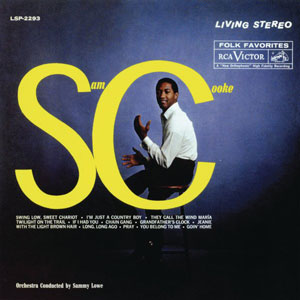
Sixty-five years ago in 1961, Sam Cooke released two albums, both produced by Brill Building songwriters & producers, Hugo Peretti & Luigi Creatore (their most well known hit is Elvis Presley’s “Can’t Help Falling In Love”, also released in 1961).

Swing Low, Cooke’s sixth studio album, was released February 1961. The first single-a song he wrote himself-was released in July 1960 and peaked at #2 three months later that October. Of Cooke’s four career Top Ten hits, this song was his highest charting single. The other three were “Twistin’ The Night Away” (peaked at #9 in March 1962), “Another Saturday Night” (reached #10 in May 1963) and “Shake” (peaked at #7 in February 1965). Cooke’s first hit, “You Send Me” reached #1 for two weeks in December 1957.

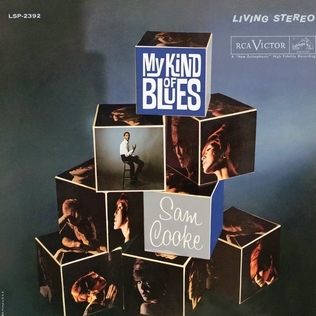
His seventh album, My Kind of Blues, was released in October 1961. Nearly all 12 tracks were covers of mostly standards by songwriters like Rodgers & Hart, the Gershwin brothers and Irving Berlin.
(Image found online.  Original source unknown.)
(Image found online.  Original source unknown.)

Several albums by Stevie Wonder are celebrating milestone anniversaries this year, including his 1976 masterpiece which produced two of his ten #1 hits in his nearly 65 year career (he also has 28 Top Ten hits to date).

Sixty years ago he released two albums. His fifth, Up-Tight, which features the title track and a Bob Dylan cover amongst the 12 tracks, came out on May 4, 1966.
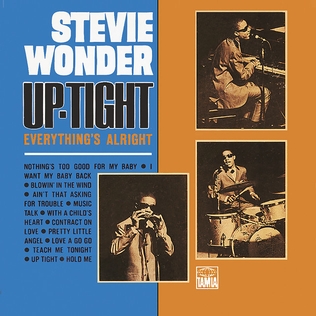
(Image found online.  Original source unknown.)

Later that year on November 16, 1966, Wonder released his sixth album, Down To Earth, featuring the hit he co-wrote (“Hey Love”), the Holland-Dozier-Holland penned “My World Is Empty Without You” and another Dylan cover.
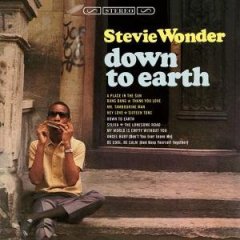
(Image found online.  Original source unknown.)

On April 9, 1971 Wonder’s 13th album, Where I’m Coming From, was released. Her co-wrote all of the songs with his first wife, Syreeta Wright.
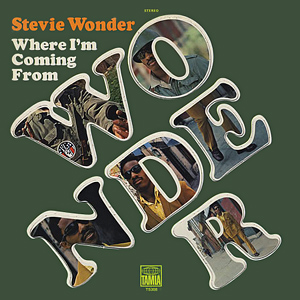
(Image found online.  Original source unknown.)

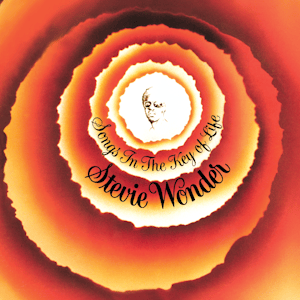
His 1976 triple album, Songs in the Key of Life, was released 50 years ago on September 28, 1976. It was Wonder’s 18th studio album and included the hits “I Wish” (#1 for one week in January 1977) and “Isn’t She Lovely” which was about the birth of his daughter, Aisha Morris. My favorite lyric is from “Sir Duke” (#1 for three weeks in May 1977):

“Music is a world within itself with a language we all understand“.
(Image found online.  Original source unknown.)

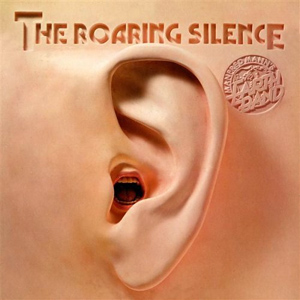
Manfred Mann’s Earth Band, the English rock band formed in 1971, released their seventh studio album, The Roaring Silence, 50 years ago in August 1976. The first single-a cover of a Bruce Springsteen song from his debut album, Greetings From Asbury Park, N.J.-reached the #1 spot on the Billboard Hot 100 for one week on February 19, 1977. It was the second of three songs MMEB covered by Springsteen & all three songs were taken from his first album. Their 1975 release, Nightingales & Bombers, has a cover of “Spirit In The Night” (altered to “Spirits In The Night”) while their 1980 album, Chance, has a cover of “For You”.
(Image found online.  Original source unknown.)

Sam Cooke: “Chain Gang” (1961, written by Sam Cooke).

Sam Cooke: “But Not for Me” (1961, written by George Gershwin and Ira Gershwin).

Sam Cooke: “Since I Met You Baby” (1961, written by Ivory Joe Hunter).

Stevie Wonder with Clarence Paul: “Blowin’ in the Wind” (1966, written by Bob Dylan).

Stevie Wonder: “Uptight (Everything’s Alright)” (1966, written by Henry Cosby, Sylvia Moy and Stevie Wonder).

Stevie Wonder: “A Place In The Sun” (1966, written by Ron Miller and Bryan Wells).

Stevie Wonder: “Hey Love” (1966, written by Morris Broadnax, Clarence Paul and Stevie Wonder).

Stevie Wonder: “If You Really Love Me” (1971, written by Stevie Wonder and Syreeta Wright).

Stevie Wonder: “Sir Duke” (1976, written by Stevie Wonder).

Stevie Wonder: “I Wish” (1976, written by Stevie Wonder).

Manfred Mann’s Earth Band: “Blinded By The Light” (1976, written by Bruce Springsteen).

Stay safe & well.

Music Monday: September 21, 2026

Hi, everyone. Welcome to this week’s edition of Music Monday.

#musicmonday #musicblog #musicandlyrics

(Image found online.  Original source unknown.)

Both of my parents loved music. Luckily, they shared that passion with me. Since I spent more time as a child with my mother when my dad was at work, I remember her influence during my younger years with much more clarity and a melancholy that makes me long for a home I no longer have.

I specifically remember about a dozen songs, most of which we had as 45’s which my mom played on repeat during that time. September 29 will mark her 87th birth anniversary, so I decided to go through her favorite songs during my childhood which are still indelible in my mind. Despite hearing them some days over & over for hours at a time, I never ever got sick of them. To this day, they are some of my favorite tunes that I can still sing along with word for word.

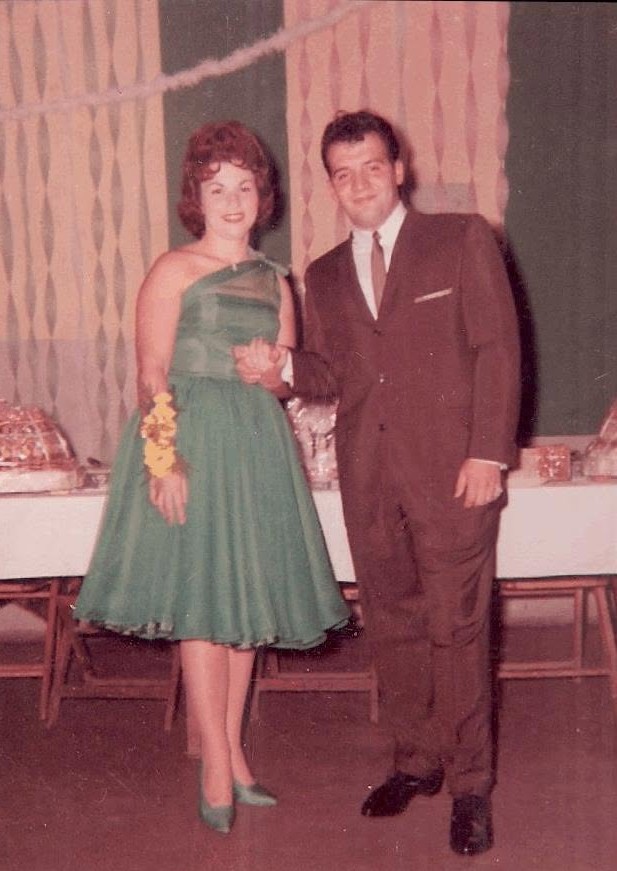
My parents in 1961 at their engagement party. (Image found online.  Original source unknown.)

These songs have followed me my whole life, popping up in some unexpected moments, TV shows and movies as a reminder to that remarkable time when all was perfect in my world & perhaps as a sign that my mother is always present, even when I ache to feel her. I have listed the songs below in chronological order by release date:

1970:

The Poppy Family: “Which Way You Goin’ Billy” (released March 1970, written by Terry Jacks).

The writer of this song-Terry Jacks-had a #1 hit for three consecutive weeks in March 1974 with “Seasons In The Sun”.

Vanity Fare: “Hitchin’ a Ride” (released March 1970, written by Mitch Murray and Peter Callander).

Just a fun song with a great beat, featured in the 1995 movie, “Now & Then”.

Bread: “Make It With You” (released May 1970, written by David Gates).

This is the one that stops me dead in my tracks whenever I hear it. It is my favorite on the list & was probably my mom’s second fave, just behind The Bee Gees’ #1 song from 1971 (see below). It is Bread’s only #1 song, hitting the top spot for one week in August 1970. There are elements of Gates’ song (especially at the 2:12 mark) that remind me of Burt Bacharach’s tune, “Nikki” (written in 1966 for his newborn daughter, released in 1971) which was used as the “ABC Movie Of The Week” theme starting in the 1970’s (at the 0:52 second mark you can clearly hear the music used in the bumper, which just transports me back to my wonder years from the very first note).

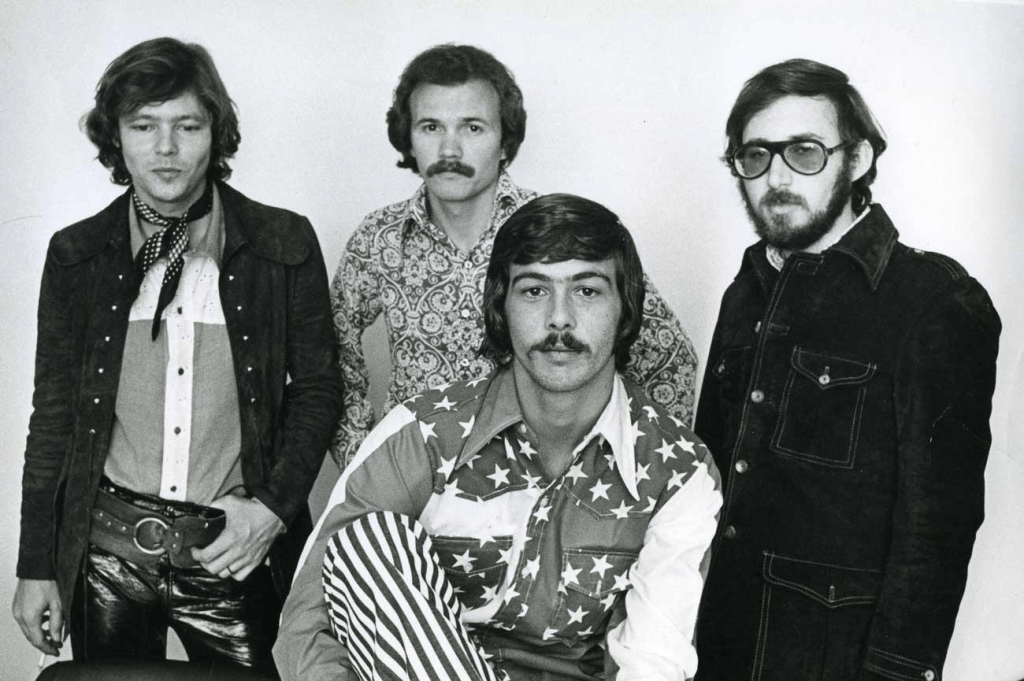
Bread (circa 1970, L-R): Jimmy Griffin, , David Gates, Mike Botts (seated) and Robb Royer. (Image found online.  Original source unknown.)

B.J. Thomas: “I Just Can’t Help Believing” (released June 1970, written by Barry Mann and Cynthia Weil).

EXTRA: My mom’s great musical love, Elvis Presley, released his own version in November 1970.

Tony Orlando & Dawn: “Candida” (released July 1970, written by Irwin Levine and Toni Wine).

This one popped up during a “hootenanny” in one of my absolute favorite TV shows of all time-“Lost”-in an episode entitled “LaFleur” (S5 E8) which aired on March 4, 2009.

Lynn Anderson: “(I Never Promised You A) Rose Garden” (released October 1970, written by Joe South).

This was a #1 country song for Anderson (September 26, 1947 – July 30, 2015) for five consecutive weeks beginning December 26, 1970 which crossed over as a hit on the pop charts around the same time, peaking at #3 on the Hot 100 in February 1971.

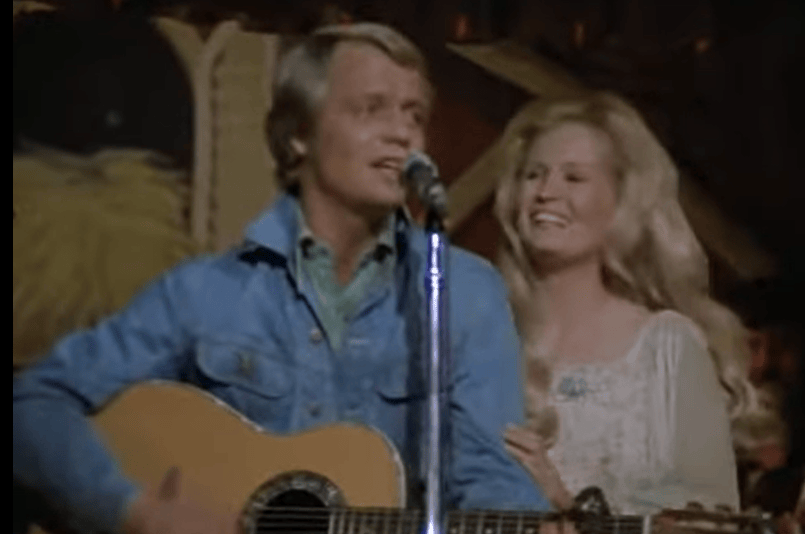
In March 1977 she appeared in an episode of one of my favorite shows-“Starsky & Hutch” (S2 E23, “Long Walk Down a Short Dirt Road”) as a country singer being stalked by an unstable former DJ. At the end of the episode she sang “Loving Arms” with David Soul (Hutch).

David Soul (L) with Lynn Anderson (R) in “Starsky & Hutch” in March 1977. (Image found online.  Original source unknown.)

1971:

The Bee Gees: “How Do You Mend A Broken Heart” (1971, written by Barry Gibb and Robin Gibb).

This is the quintessential song that makes me think of my mother. Her love for this one was particularly fierce. Co-written & sung by Barry Gibb who turned 80 earlier this month, born September 1, 1946 in Douglas, Isle of Man. I may never forgive him for The Bee Gees’ disco years, but there is no denying the fact that he & his brothers have been a part of my life since the first time my mother heard this track. It was The Brothers Gibb first #1 song, a spot they held for four consecutive weeks, nearly the entire month of August 1971 (August 7-September 3).

EXTRA: Soul singer extraordinaire Al Green did an exceptional cover of this song on his 1972 album, Let’s Stay Together. Slow, soulful and oh-so smooth. Definitely worth your consideration.

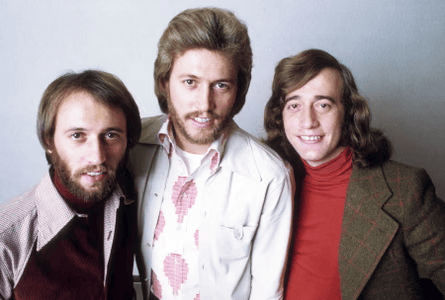
The Bee Gees circa 1970 (L-R): Maurice, Barry and Robin Gibb. (Image found online.  Original source unknown.)

1972:

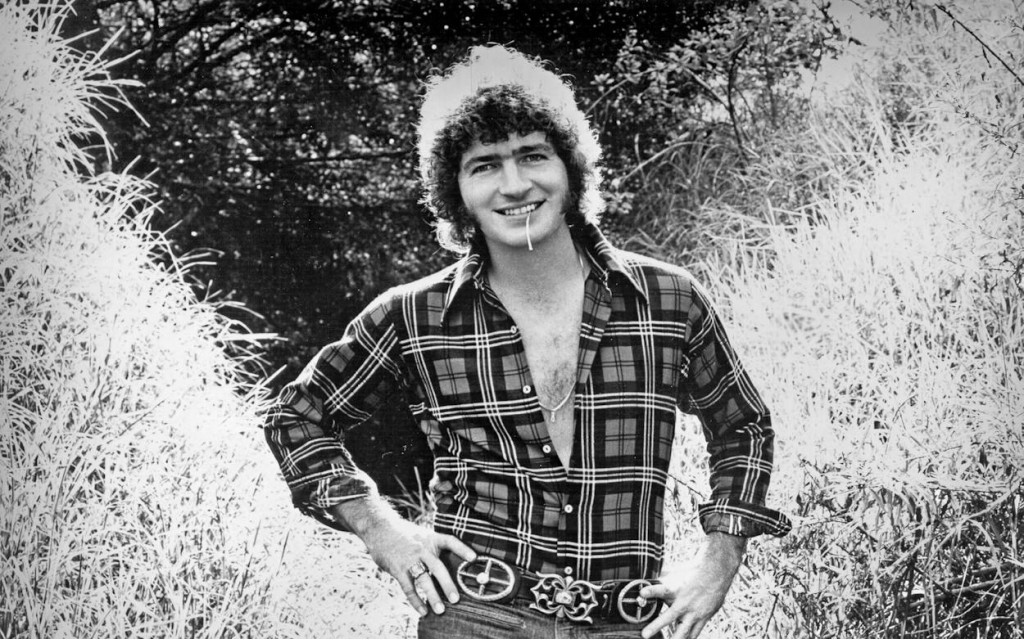
Mac Davis: “Baby Don’t Get Hooked On Me” (released July 1972, written by Mac Davis: January 21, 1942 – September 29, 2020).

Spectaculary mocked in a November 1995 episode of “Roseanne” (S8 E7, “The Getaway, Almost”) where she & Jackie are talking about songs that did not send positive messages to women. Roseanne quotes the line “I’ll just use you then I’ll set you free” to which she quips, “Use me, I’ll set you on fire, you b&stard!”.

Mac Davis circa 1974. (Image found online.  Original source unknown.)

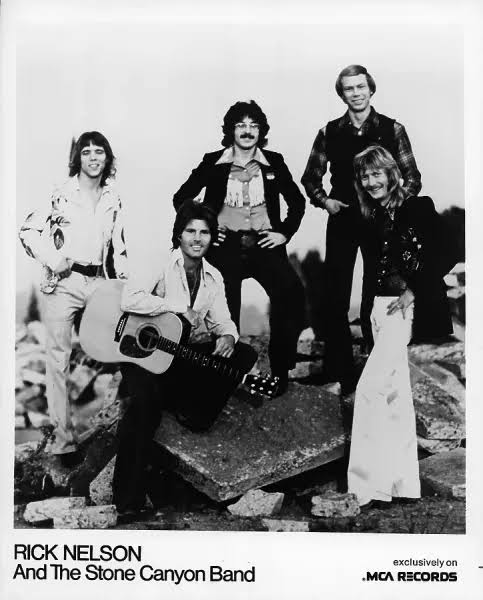
Rick Nelson & The Stone Canyon Band: “Garden Party” (released July 1972, written by Rick Nelson: May 8, 1940 – December 31, 1985 ).

Years after its release as I was discovering my own musical tastes, I was pleasantly surprised to learn a few of Nelson’s lyrics referenced two of The Beatles who attended the show that inspired this song (they were there as fans, not performers). They were mentioned in the lines “Yoko brought a Walrus” (about John Lennon and his wife Yoko) and “Mr. Hughes hid in Dylan’s shoes wearing his disguise” (about George Harrison, as Hughes was supposedly Harrison’s alias and he was rumored to be making an album of all Bob Dylan songs at that time).

Rick Nelson (seated, with guitar) and his band circa 1969. (Image found online.  Original source unknown.)

1976 (BONUS):

Paul Anka: In January 1976 his song, “Times Of Your Life” (written by Bill Lane and Roger Nichols) hit #1 on the Easy Listening chart for one week. It was a Top Ten hit on the Hot 100 chart, peaking at #7 in February 1976. Despite the song’s sweet nostalgic sentiment, I must admit I never found it to be overly sappy but rather on point, especially the lines:

“For memories are time that you borrow
To spend when you get to tomorrow
“

The track became the theme song for camera & film giant Kodak’s advertising campaign in the mid 1970’s. The song was also highlighted in the AMC “Mad Men” series finale promos in 2015.

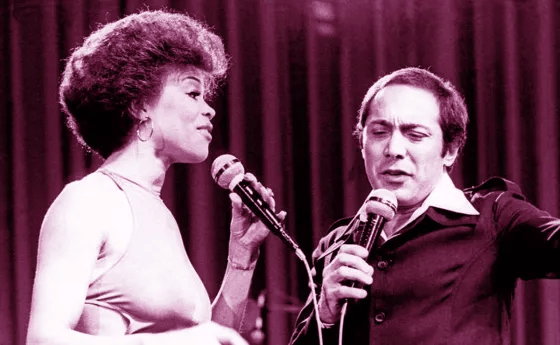
One of my most cherished memories with my mother was the night we stayed up to watch Anka on “The Midnight Special”, a story I shared on Day 523 of my Lockdown Countdown. During that show he sang one of his #1 hits, “(You’re) Having My Baby” (a duet with Odia Coates). It reached the top spot for three consecutive weeks beginning in August 1974. Have to say, I found this song a little cringe when I was a child, but somehow I find it more cringe today as an adult (sorry, mom).

Odia Coates (L) with Paul Anka (R) circa 1974. (Image found online.  Original source unknown.)

Anka, who was a teen idol in the late 1950’s, had his first #1 hit in July 1959 for four weeks with “Lonely Boy”. He had a total of Ten Top 10 hits in his career to date and wrote a number of high profile songs including “Diana” (1957), “Put Your Head On My Shoulder” (1959), “Puppy Love” (1960) along with the English lyrics to the song that became Frank Sinatra’s signature tune, “My Way”.

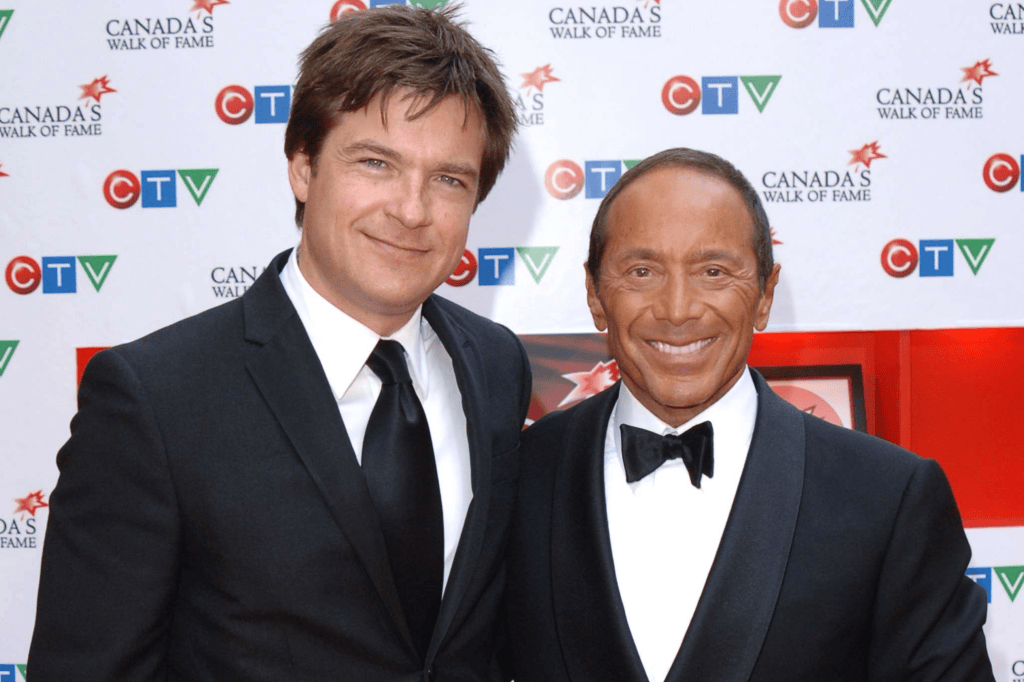
Pop culture mentions: Anka is the father-in-law of actor Jason Bateman, who married Amanda Anka in 2001. In September 2005 in the S6 E2 of The Gilmore Girls, Lorelai adopted a dog she named Paul Anka. He appeared as himself the same season in E18, which aired in April 2006.

Jason Bateman (L) with Anka (R) circa 2015. (Image found online.  Original source unknown.)

Stay safe & well.

Music Monday: September 14, 2026

Hi, everyone. Welcome to this week’s edition of Music Monday.

#musicmonday #musicblog #musicandlyrics

(Image found online.  Original source unknown.)

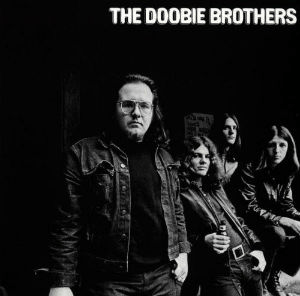
It has been 55 glorious years of music from The Doobie Brothers. They formed in San Jose, California in 1970 and released their self-titled debut album in April 1971. Two #1 hits, five Top Ten hits, 16 studio albums, 6 live albums, a huge catalog of great music and millions of fans across the globe later and they remain one of the most beloved bands in the classic rock genre. They started as a quartet-including two guitarists, singers and songwriters Tom Johnston and Patrick Simmons-along with bassist Dave Shogren and drummer John Hartman.

(Image found online.  Original source unknown.)

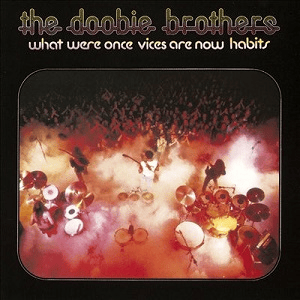
During the recording of their second album-Toulouse Street, which was released July 1972-Shogren left and was replaced by Tiran Porter. A second drummer-Michael Hossack-was added to the line-up as well. By the time the band’s third album was released-The Captain and Me in March 1973-Keith Knudsen was added as a second drummer. What Were Once Vices Are Now Habits was released in March 1974 and six months later, pedal steel guitarist Jeff “Skunk” Baxter became the sixth Doobie Brother. After the release of Stampede in April 1975, Johnston left the band for health reasons.

(Image found online.  Original source unknown.)

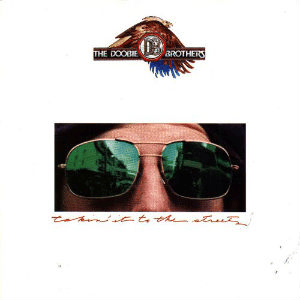
His departure opened the door to the second phase of the band which started with their sixth studio album-Takin’ It to the Streets-released 50 years ago in March 1976. It was the first to feature keyboard player, singer & songwriter Michael McDonald. He wrote the title song & three other tracks while adding a blue eyed soul sound to the rock band and moving them away from guitar driven tracks.

(Image found online.  Original source unknown.)

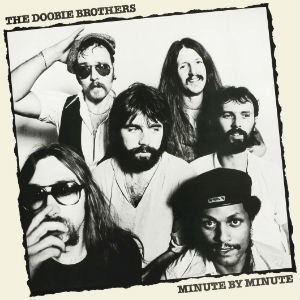
By the time 1978’s Minute By Minute album was released on December 1, 1978-and went on to be the #1 album in the country for five consecutive weeks beginning in April 1979-the band had their second #1 hit the same month for one week courtesy of the first single, a song written by McDonald and his friend, fellow musician & songwriter, Kenny Loggins. It also won two of the top Grammy Awards in 1980-Record Of The Year (for the band performance) & Song Of The Year (to the songwriters). The title track-which earned the band the Grammy Award for Best Pop Performance By A Duo Or Group With Vocals in 1980-peaked at #14 in June 1979 while the third single-a McDonald/Simmons collaboration-reached #25 in October of the same year.

It was also this record that led to Baxter exiting the band for creative differences and his replacement was multi-instrumentalist John McFee. Hartman also left and was replaced by Chet McCracken. The band broke up three years later, with a farewell concert held in Berkeley in September 1982.

(Image found online.  Original source unknown.)

Several members of The Doobie Brothers joined forces in 2020 during the pandemic to release two updated “Live In Isolation” versions of their first #1 song, “Black Water”-complete with fan participation videos included in the performance-and “Listen To The Music“. That iconic tune was the final song of my Lockdown Countdown-Day 550-five years ago on September 17, 2021. That was the year four former members-Johnston, Simmons, McDonald and McFee-reunited for a tour to celebrate the 50th anniversary of the band. They kept going after that with more tours and new music including their most recent album, Walk This Road, released in June 2025.

Most importantly to me, however, is that they hold the distinction as the very first concert I ever attended in my life which was at the Nassau Coliseum in Hempstead, NY. Being in the same arena as that incredible band & singing along to every song they played, is still indelible in my mind. The Doobie Brothers are one of the most definitive members in the soundrack of my life.

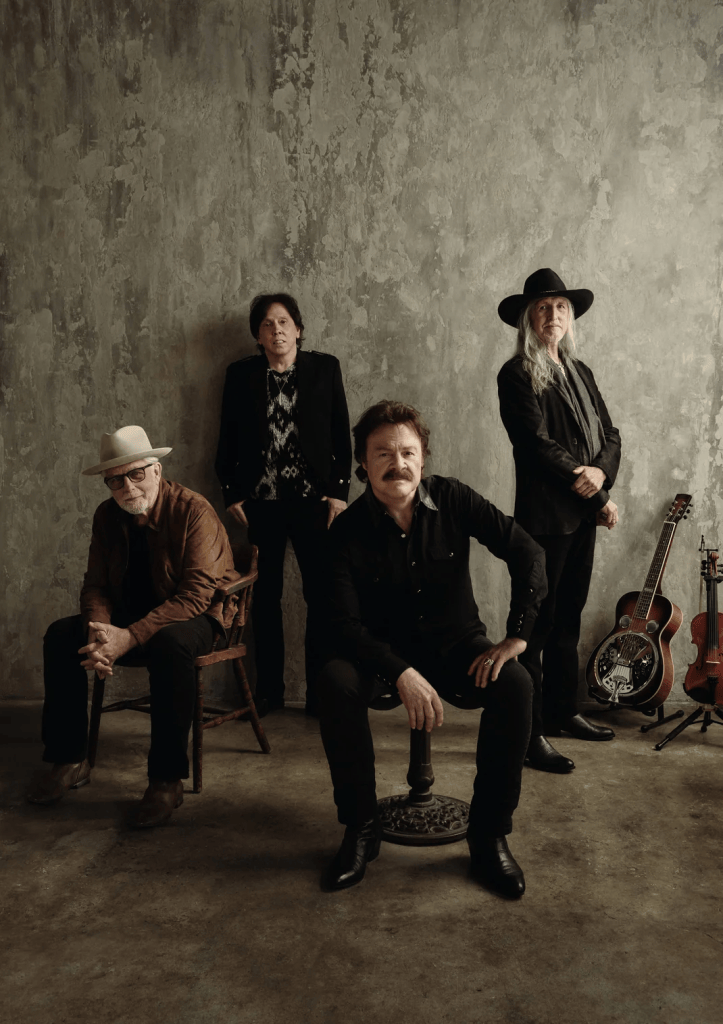
The Doobie Brothers circa 2025 (L-R): Michael McDonald (seated), John McFee, Tom Johnston (seated) and Patrick Simmons. (Image found on the band’s website. Original source unknown.)

Special shoutout to the TV series, “Star Trek” which premiered 60 years ago on September 8. 1966. No, I am not a Trekkie (although I did see several of the original episodes especially the ones featuring Captain Pike (“The Menagerie: Part I & II” (S1 E11 & 12) and “The Trouble with Tribbles” (S2 E15). But that series gave us William Shatner as Captain James T. Kirk (1966-1969) and for that I am eternally thankful because that role eventually led to “Denny Crane” in “Boston Legal” (2004-2008), one of the MOST hilarious characters in television history. My world would have been woefully sad without him and nobody could have played that particular brand of lawyer in the genius way Shatner did.

Some other roles I loved him in over the years include Frank O’Hara, Juliette’s dad on “Psych” (2011-2012), the Ghost Of Christmas Present in “A Carol Christmas” (2003), the emcee in “Miss Congeniality” (2000) & the 2005 sequel (“Miss Congeniality 2: Armed and Fabulous”), “T.J. Hooker” in the 1980’s, “Barbary Coast” for one season (1975-1976) and too many other shows & movies to name during his 75 year career. He turned 95 this year (born March 22. 1931) and recently completed a two year course of treatment for stage 4 metastatic melanoma (skin cancer) he was diagnosed with in June 2023.

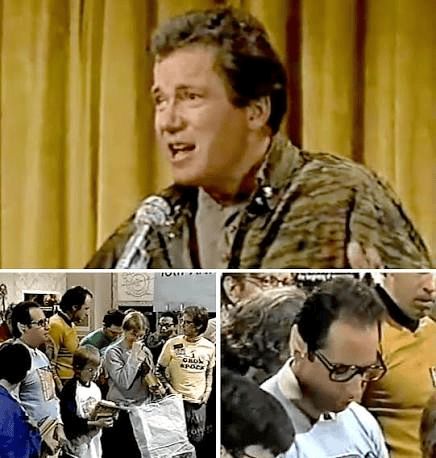
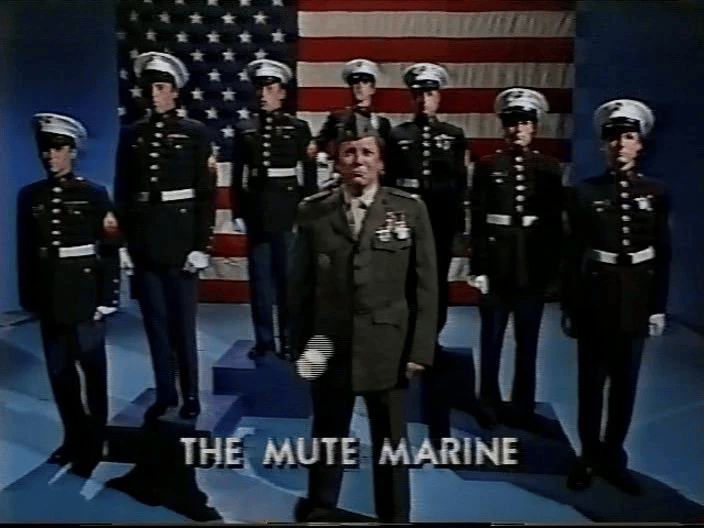
I must add that he was in one of the most comical SNL shows ever which aired 40 years ago during S12 on December 20, 1986, even poking fun at his Star Trek character (during a fan convention show skit no less) and Oliver North.

(Image found online.  Original source unknown.)

(Image found online.  Original source unknown.)

The Doobie Brothers: “Nobody” (1971, written by Tom Johnston).

The Doobie Brothers: “Listen To The Music” (1971, written by Tom Johnston and Patrick Simmons).

The Doobie Brothers: “Black Water” (1974, written by Patrick Simmons).

The Doobie Brothers: “Take Me in Your Arms (Rock Me a Little While)” (1975, written by Brian Holland, Lamont Dozier and Eddie Holland).

The Doobie Brothers: “Takin’ it to the Streets” (1976, written by Michael McDonald).

The Doobie Brothers: “It Keeps You Running” (1976, written by Michael McDonald).

The Doobie Brothers: “What A Fool Believes” (1978, written by Kenny Loggins and Michael McDonald).

The Doobie Brothers: “Minute By Minute” (1978, written by Lester Abrams and Michael McDonald).

The Doobie Brothers: “Dependin’ on You” (1978, written by Michael McDonald and Patrick Simmons).

Theme from “Star Trek” (1966, written by Alexander Courage. Vocalization by Loulie Jean Norman).

Stay safe & well.

September 11: 25 Years Later

“Oh say, can you see
By the dawn’s early light
What so proudly we hailed
At the twilight’s last gleaming?

Whose broad stripes and bright stars
Through the perilous fight
O’er the ramparts we watched
Were so gallantly, yeah, streaming?

And the rockets’ red glare
The bombs bursting in air
Gave proof through the night
That our flag was still there

O say, does that star-spangled banner yet wave
O’er the land of the free and the home of the brave”.

Photo by Thomas E. Franklin.

For our country. For our flag. For all those who were lost. For all those left behind. For all those who still remember.

Never forget.

#september11 #25years #neverforget
#nyc# dcpentagon #shanksville

Music Monday: September 7, 2026

Hi, everyone. Welcome to this week’s edition of Music Monday.

#musicmonday #musicblog #musicandlyrics

(Image found online.  Original source unknown.)

Today is Labor Day 2026. It is the day America honors the hardworking people who keep our country running.

According to the U.S. Department of Labor website, Congress officially made Labor day a federal holiday in 1894, designating “the first Monday in September of each year a legal holiday”. However, many states began celebrating it on their own years earlier. Eventually the momentum spread to nearly half the country which made the holiday finally become an official part of the calendar.

Whatever work you do to contribute to this great nation of ours, thank you.

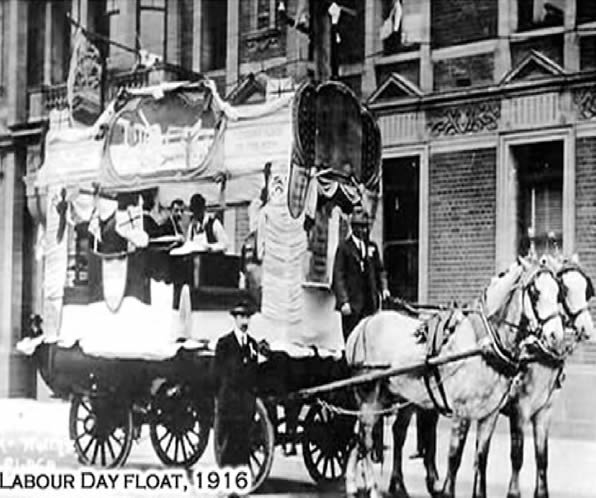
A Labor Day float from 110 years ago in 1916. (Image found on the United States Department of Labor website. Original source unknown.)

This week will mark soul and r&b giant Otis Redding’s 85th birth anniversary. He was born on September 9, 1941 in Dawson, Georgia and grew up nearby in Macon. He started singing in church and by the time he was a teenager, he was competing in a local talent show. After winning the $5 prize 15 consecutive times, he was barred from competing again.

In 1958 he joined a local group, Johnny Jenkins & The Pinetoppers. It was on a trip to Stax Records with Johnny in 1962 that led to Redding’s big break. The label’s co-founder, Jim Stewart, let Redding record a few tracks with Johnny’s remaining studio time. One of those songs-“These Arms Of Mine”-became Redding’s first hit. His debut album followed in 1964. His seminal recording, Otis Blue/Otis Redding Sings Soul, was released in 1965. He became a success in Europe first but after his earth shattering performance at the Monterey International Pop Festival in June 1967, Redding’s popularity in America was sealed. Six months later, he died in a plane crash in Madison, Wisonsin. In his impossibly short 26 years on this earth, the man changed music forever and became The King Of Soul.

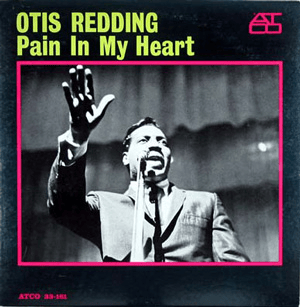
Otis Redding’s debut album was released in March 1964. (Image found online.  Original source unknown.)

Five years ago during the Lockdown Countdown we celebrated Redding’s 80th birthday anniversary on Day 542. As of this writing, the official video of his biggest selling song-“(Sittin’ On) The Dock Of The Bay”-has amassed 160 million views on YouTube.

Over the last 40 years, Stax has released a lot of Redding’s material the public had not heard before, including two alternate takes on that incredible song. I have included both below for you today. At the end of Take 1, there are a few seconds of banter between Redding and some others in the studio, even mentioning one by name-Steve-as in Cropper, famed guitarist for Booker T & The MG’s and co-writer of the song. He was the person tasked with finishing the record from those takes after Redding’s death. By March 1968, it was the #1 song in the country for four consecutive weeks.

His voice is still one of the ones I love most in the universe. Thank you, Otis, for every single second of every single note.

Otis Ray Redding Jr.: September 9, 1941 – December 10, 1967.

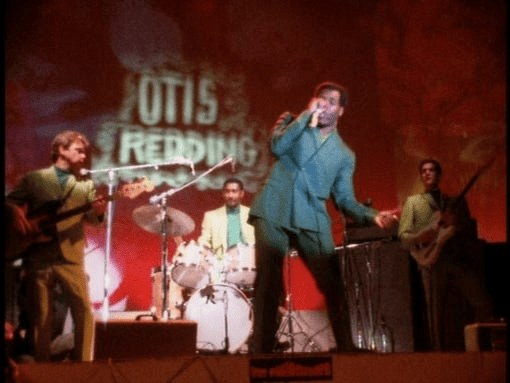
Otis Redding (center) on stage at The Monterey International Pop Festival in June 1967 with Booker T & The MG’s as his backing band (L-R): Donald “Duck” Dunn on bass, Al Jackson Jr. on drums and Steve Cropper on guitar (off camera: Booker T. Jones on organ/keyboards). (Image found online.  Original source unknown.)

Bruce Springsteen: “Factory” (1978, written by Bruce Springsteen).

Otis Redding: “These Arms Of Mine” (1962, written by Otis Redding).

Otis Redding: “You Send Me” (1964, written by Sam Cooke).

Otis Redding: “Mr. Pitiful” (1965, written by Steve Cropper and Otis Redding).

Otis Redding: “I’ve Been Loving You Too Long” (1965, written by Jerry Butler and Otis Redding).

Otis Redding and Carla Thomas: “Tramp” (1967, written by Lowell Fulson and Jimmy McCracklin).

Otis Redding: “(Sittin’ On) The Dock Of The Bay” (1968, written by Steve Cropper and Otis Redding).

Otis Redding: “(Sittin’ On) The Dock Of The Bay (Take 1)” (1968, written by Steve Cropper and Otis Redding).

Otis Redding: “(Sittin’ On) The Dock Of The Bay (Take 2)” (1968, written by Steve Cropper and Otis Redding).

Stay safe & well.