Music Monday: May 11, 2026

Hi, everyone. Welcome to this week’s edition of Music Monday.
#musicmonday #musicblog #musicandlyrics

(Image found online.  Original source unknown.)

Singer, songwriter & musician Bill Withers released his debut album, Just As I Am, 55 years ago on May 1, 1971. Only four months later the record-produced by Stax star musician Booker T. Jones & featuring Stephen Stills on guitar-reached #39 on the Billboard 200 while the first single peaked at #3 at the same time. It became Withers’ signature song, a classic R&B staple and put him center stage in the genre. The then 32 year old airline mechanical assembler wrote 10 of the 12 songs with two covers included, a Beatles track (“Let It Be”) and a song from a movie (“Everybody’s Talkin'” from 1969’s “Midnight Cowboy”).

Withers’ second album, Still Bill, was released a year later in May 1972. It gave him his first #1 song, “Lean On Me”, which reached the top spot for three consecutive weeks two months later.
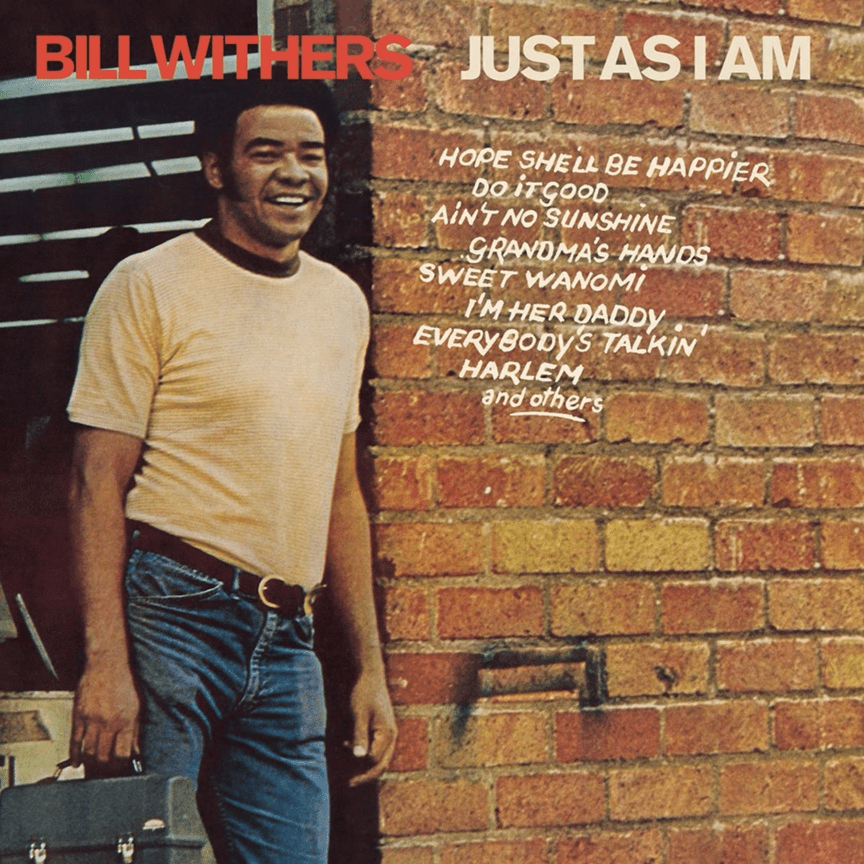
(Image found online.  Original source unknown.)

Elvin Bishop’s sixth studio album, Struttin’ My Stuff was released at the end of 1975. Fifty years ago, it peaked at #18 in May 1976, the same month the first single peaked at #3 on Billboard’s Hot 100. It became an instant classic rock powerhouse and introduced us to vocalist Mickey Thomas who sang lead on the song. I have been enthralled with this track from the first note and my obsession shows no signs of waning any time soon. I first outlined my adoration for this song on Day 36 of my Lockdown Countdown:

It was written by Elvin Bishop, a guitarist who was an original member of the Paul Butterfield Blues Band in the 1960’s.  He left to form his own group in 1968 and played alongside such notable acts as the Allman Brothers Band, the Grateful Dead and John Lee Hooker.  Bishop also sang but when he was recording his 1975 album, Struttin’ My Stuff, he did not think his voice was polished enough to record today’s song.  So he asked one of his backup singers, Mickey Thomas, to do it.  The result was epic.

His vocal delivery, the soul in his voice and the power behind it were as close to perfect as one could hope for.  And added to Bishop’s guitar riffs, great lyrics and sublime arrangement, it turned this song into a powerhouse hit of the 1970’s.  It went on to become a rock classic and earned Thomas the lead singer spot with Jefferson Starship after original member Marty Balin’s departure.  Thomas may not be as well known as other blue eyed soul greats like Michael McDonald and Daryl Hall, but there is no denying the contribution he made with this song.  I truly believe a great soulful rock vocal does not get much better than this.
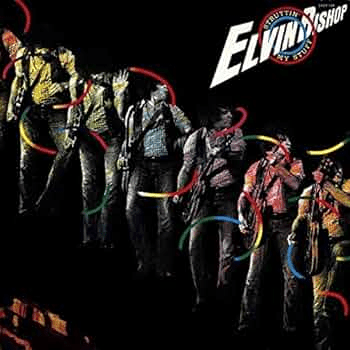
(Image found online.  Original source unknown.)
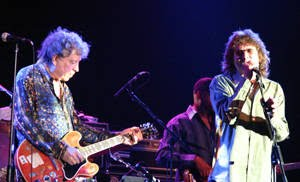
Elvin Bishop (L) and Mickey Thomas (R) in an undated photo. (Image found online.  Original source unknown.)

In March 1991 another singer, songwriter & musician-Marc Cohn-released his self-titled debut album. The first single is a wonderful autobiographical tale of a pilmigrage he made to one of Tennessee’s most famous cities. It became a Top 20 hit that remains a popular track 35 years after its debut. It was nominated for Song Of The Year & helped earn Cohn the Best New Artist Award at the 34th Annual Grammy Awards in 1992.
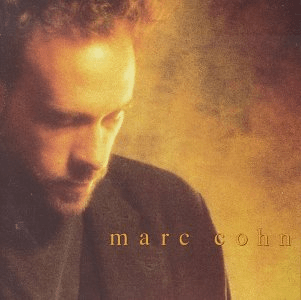
(Image found online.  Original source unknown.)

Bill Withers: “Ain’t No Sunshine” (1971, written by Bill Withers).

Elvin Bishop: “Fooled Around And Fell In Love” (1975, written by Elvin Bishop).

Marc Cohn: “Walking in Memphis” (1991, written by Marc Cohn).

Stay safe & well.

Music Monday: May 4, 2026

Hi, everyone. Welcome to this week’s edition of Music Monday.

#musicmonday #musicblog #musicandlyrics

(Image found online.  Original source unknown.)

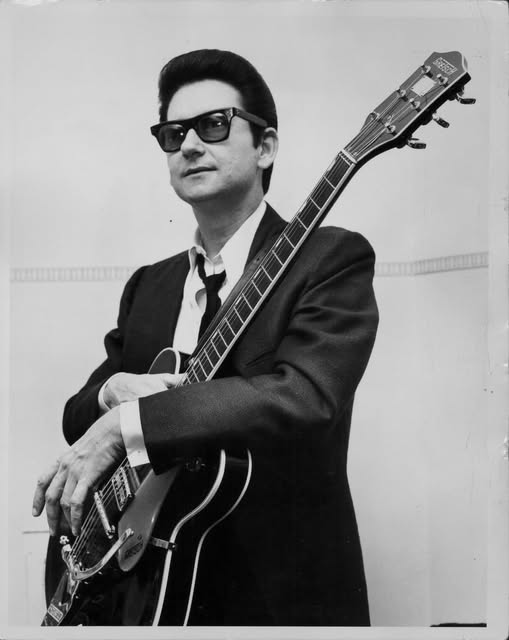
Last week marked the 90th birth anniversary for one of the most provacative & distinctive voices in early rock & roll ballads. Singer, songwriter & musician Roy Kelton Orbison was born April 23, 1936 in Hendersonville, Tennessee. He was signed to Sun Records in 1956 by the label’s owner, Sam Phillips. But it was Orbison’s move to Monument Records in 1960 that brought him success beginning with his first single, “Only The Lonely”, released in May 1960. It reached #2 two months later. It was included on his debut album, Lonely and Blue, which premiered in January1961. Ten Top 10 songs followed in his career including two #1 records: “Running Scared” for one week in June 1961 and “Oh, Pretty Woman” for one week in September 1964.

Roy Orbison from his official Facebook page. (Image found online.  Original source unknown.)

The 1970’s proved to be challenging for him both personally and professionally. The next decade was better thanks to a couple of successful covers of his songs (including Don McLean’s version of “Crying” which reached the Top Ten in 1981, a full 20 years after Orbison released it in 1961). He also re-recorded the song as a duet with country singer k.d. lang for the movie, “Hiding Out”, released in 1987.

Earlier that year he was inducted into The Rock & Roll Hall Of Fame. I wrote about that on Day 22 of my Lockdown Countdown:

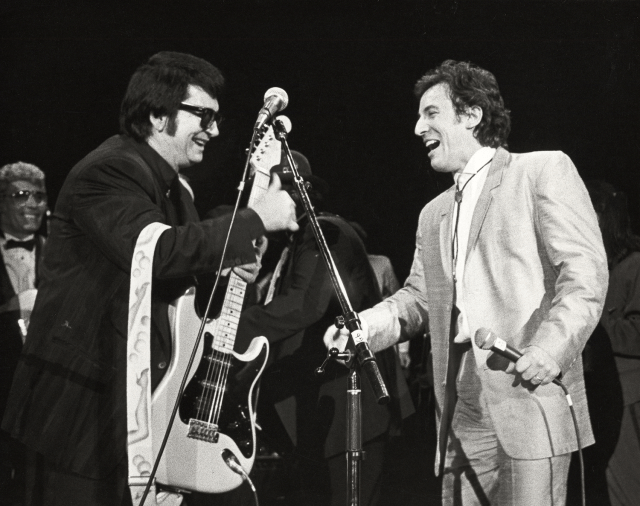
When Bruce Springsteen was inducting today’s singer into the Rock & Roll Hall Of Fame in 1987, he said, “I wanted to sing like Roy Orbison. Now, everybody knows that nobody sings like Roy Orbison.” If there was ever one voice so completely recognizable from the very first note he sang, it was Orbison’s. It sounded almost operatic with his smooth and rich delivery, earning him the nickname “the Caruso of Rock”. Even when he was singing with the likes of Bob Dylan, George Harrison and the other Traveling Wilburys in the late 1980’s, Orbison’s sound took center stage.

Orbison (L) on stage with Bruce Springsteen (R) in January 1987. (Image found online.  Original source unknown.)

In January 1988, the broadcast of Roy Orbison and Friends: A Black and White Night gave the world a look at the plethora of artists he inspired, from Springsteen to Tom Waits to Elvis Costello to J.D. Souther to Jackson Browne and so many more. Later that year Orbison became a member in the definitive musical supergroup who released their self-titled album that October, Traveling Wilburys Vol. 1. He completed his 22nd solo album, Mystery Girl, the following month. It was released in January 1989, just one month after his death at age 52.

Roy Kelton Orbison: April 23, 1936 – December 6, 1988.

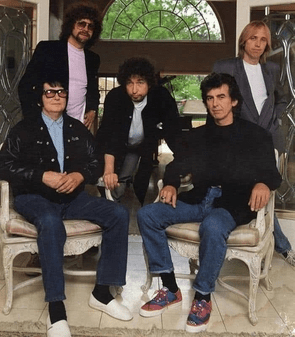
The Traveling Wilburys circa 1988 (L-R: Jeff Lynne, Orbison, Bob Dylan, George Harrison and Tom Petty. (Image found online.  Original source unknown.)

Roy Orbison: “Running Scared” (March 1961, written by Roy Orbison).

Roy Orbison: “Crying” (July 1961, written by Joe Melson and Roy Orbison).

Roy Orbison: “Oh, Pretty Woman” (1964, written by Bill Dees and Roy Orbison).

Roy Orbison & Friends: “Dream Baby (How Long Must I Dream)” (Live performance from “Roy Orbison and Friends: A Black and White Night” broadcast in January 1988. Originally released in 1962. Written by Cindy Walker).

The Traveling Wilburys: “Handle with Care” (1988, written by The Traveling Wilburys: Bob Dylan, George Harrison, Jeff Lynne, Roy Orbison and Tom Petty.

Roy Orbison: “You Got It” (1989, written by Jeff Lynne, Roy Orbison and Tom Petty).

Stay safe & well.

Music Monday: April 27, 2026  

Hi, everyone. Welcome to this week’s edition of Music Monday.

#musicmonday #musicblog #musicandlyrics

(Image found online.  Original source unknown.)

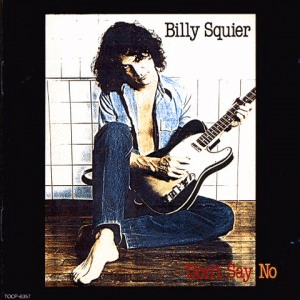
Billy Squier’s sophmore album, Don’t Say No, was released 45 years ago on April 13, 1981. A record with a heavy rock sound featuring strong guitar licks and catchy choruses was perfectly timed to become a hit all on its own. But when it collided with the other musical benchmark of the decade-the premiere of MTV four months later on August 1, 1981-it put Squier front and center to become one of its earliest stand out artists. His simple performance videos showed us all how his sound looked. And as a young Gen Xer at the time, I can attest that Squier was not bad on the eyes, which only added to his MTV appeal.

By September 1981, the album peaked at #5 on the Billboard 200. It stayed on the chart for over two years, an astounding 111 weeks. The record produced four big songs, one of which became a Top 20 hit, and was featured in the 2007 comedy, “Blades of Glory”, during Chazz Michael Michaels’ “tsunami of swagger”.

On Day 68 of my Lockdown Countdown, I shared my love for Squier-a Wellesley, Massachusetts native-who will celebrate birthday #76 on May 12. He has released nine studio throughout his career but it is his second album that remains a classic rock staple and a tremendous moment in music history when seeing the music mattered as much as hearing it.

(Image found online.  Original source unknown.)

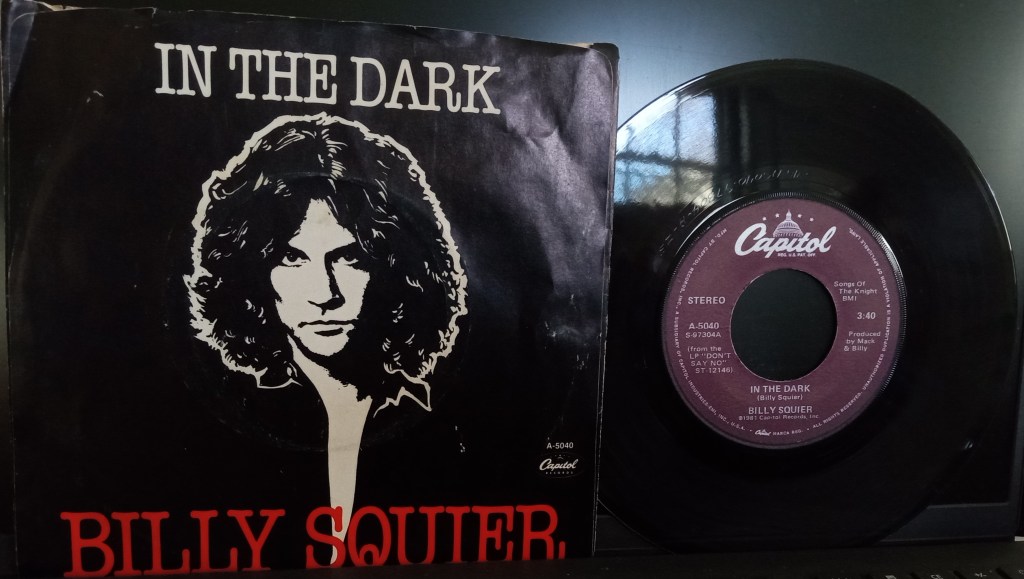
My 45 of my favorite Squier song. (Image by me.)

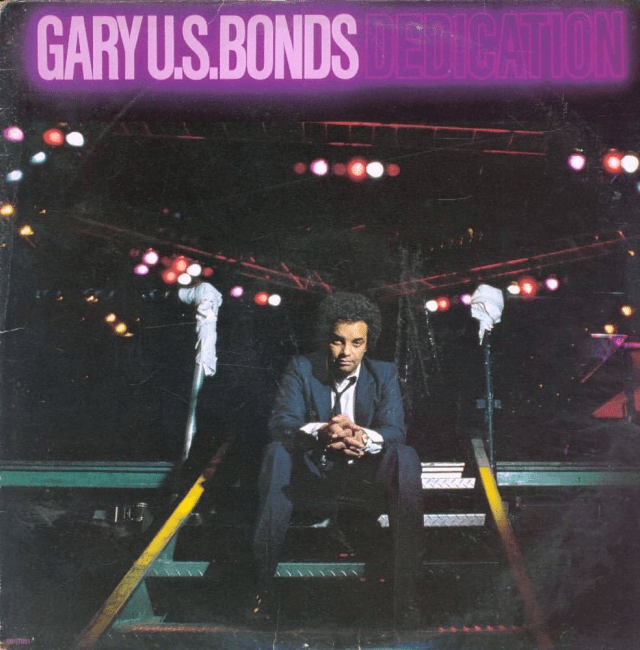
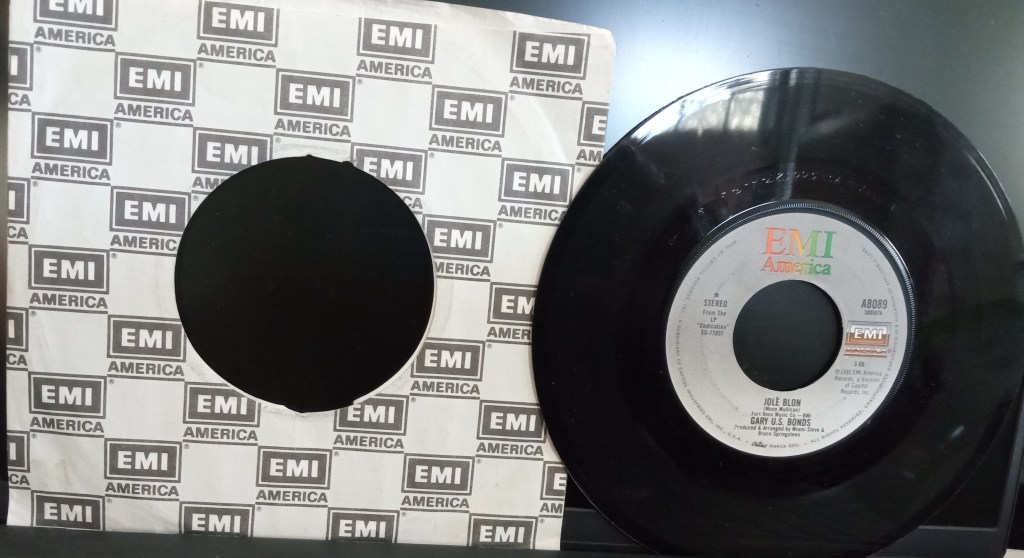
Another album released 45 years ago in April 1981 is Dedication by Gary U.S. Bonds. He co-produced it along with Bruce Springsteen, Steven Van Zandt & Rob Parissi. The record consisted of 10 songs with three written by Bruce including the first single, one written by Van Zandt, two co-written by Bonds, a Cajun traditional song, a Beatles cover (It’s Only Love”), a Dylan cover (“From A Buick 6”) & a Jackson Browne cover.

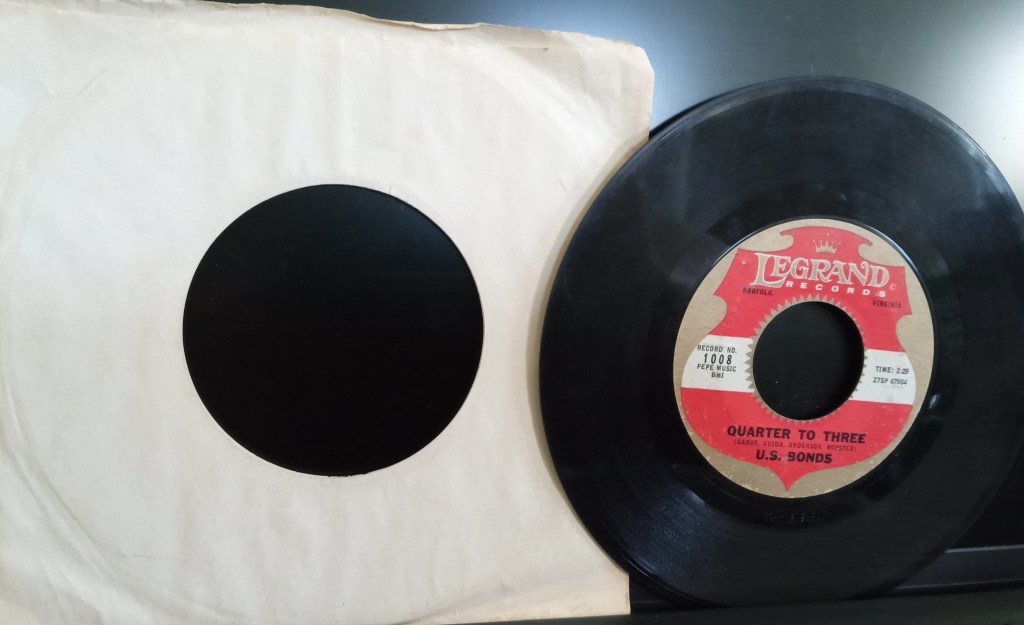
This was a labor of love for Springsteen and Van Zandt who were fans of Bonds from his early rock & roll hits like “New Orleans”, “School’s Out” and “Quarter To Three” which was released 65 years ago in May 1961. It was performed by Springsteen at the 1979 NYC “No Nukes” concerts and featured in the 1980 film by the same name.

Bonds-born Gary Levone Anderson on June 6, 1939 in Jacksonville, Florida-enjoyed a career resurrgence with Dedication, which peaked at #27 on the Billboard 200 in 1981. It also gave him a Top Twenty hit with the first single, the opportunity to duet with Springsteen for the second single and a chance to collaborate with The E Street Band. They all joined forces together again on Bonds’ next album, On The Line, released in June 1982.

(Image found online.  Original source unknown.)

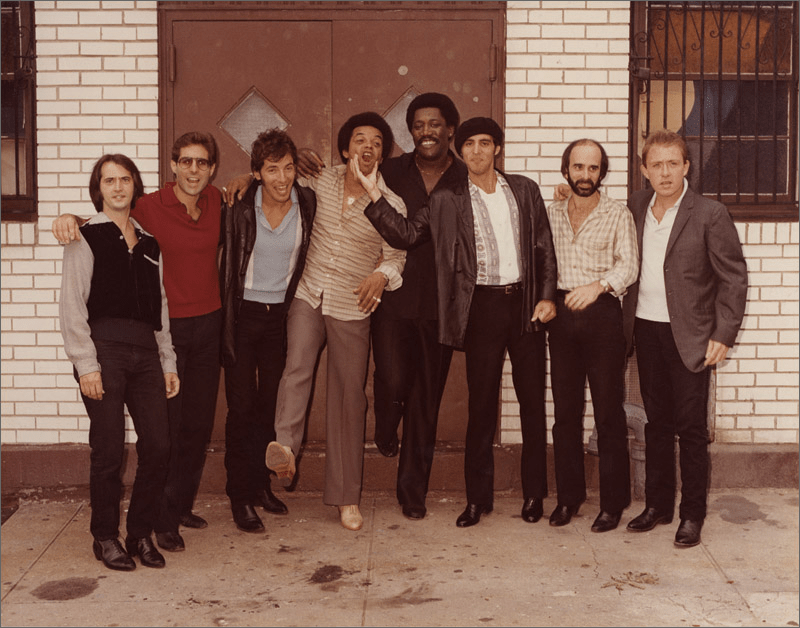
The E Street Band, Bruce Springsteen & Gary U.S. Bonds (L to R): Garry Tallent, Max Weinberg, Springsteen, Bonds, Clarence Clemons, Miami Steve Van Zandt, Roy Bittan and Danny Federici circa 1981. (Image found online.  Original source unknown.)

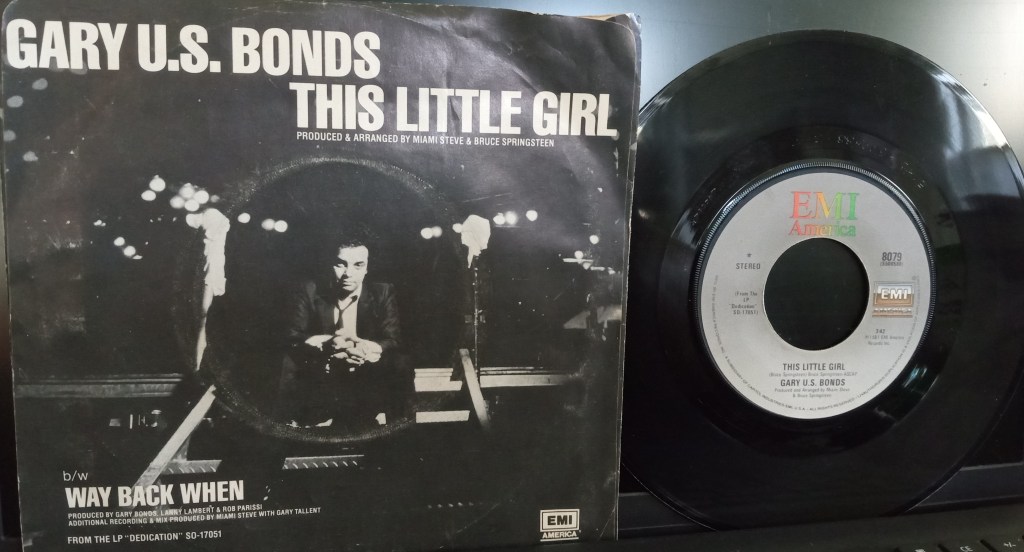
My own 45 of the album’s first single. (Image by me.)

I also own the second single. (Image by me.)

I still have my mom’s 45 of Bonds’ 1961 hit. (Image by me.)

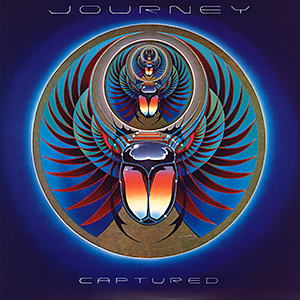
Journey released two albums in 1981. Captured-the band’s first live record-was released in January of that year. It was co-founder & keyboard player Gregg Rolie’s final album with the band. My favorite track & the only single released is the only song recorded in the studio which was written by lead singer, Steve Perry.

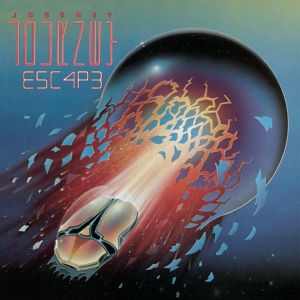
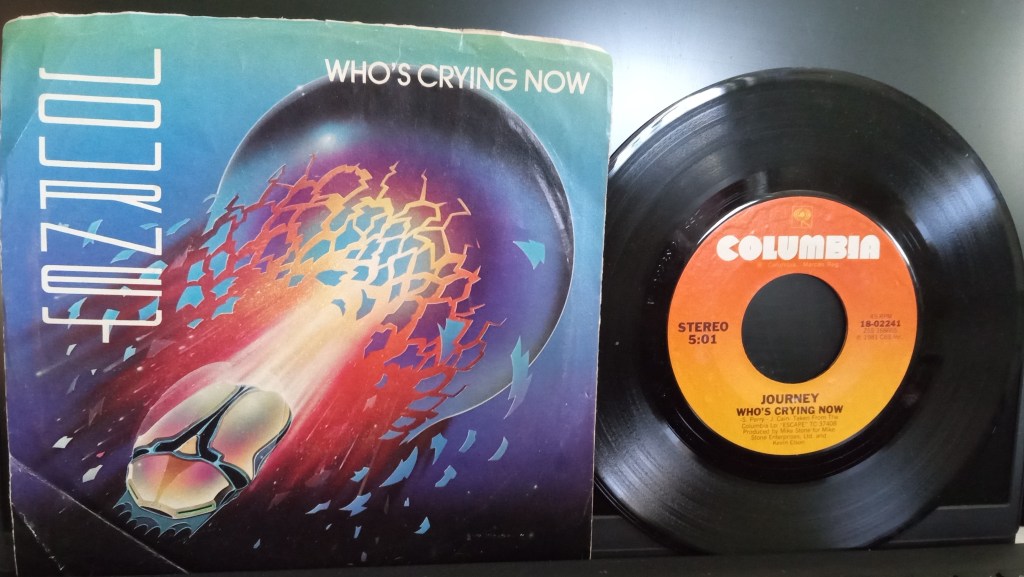
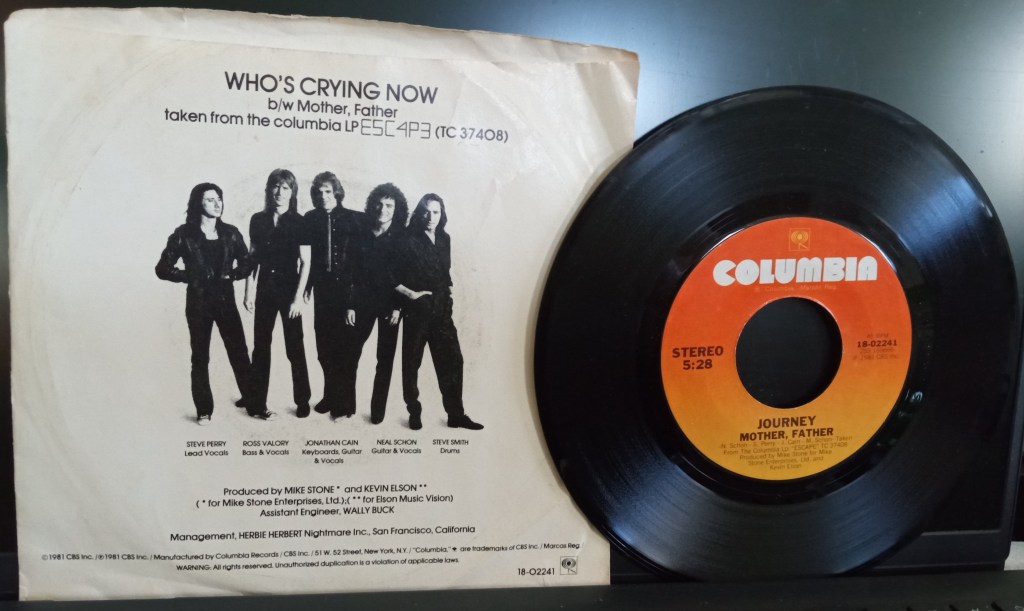
Seven months later Escape was released July 1981. Rolie’s successor, keyboardist & songwriter Jonathan Cain left the English band, The Babys, to join Journey. He co-wrote all 10 tracks on the album which produced five singles, including two of the band’s biggest songs, “Don’t Stop Believing” and “Open Arms”. My favorite song by the band is the first single which I wrote about in my October 7 2024 post.

(Image found online.  Original source unknown.)

(Image found online.  Original source unknown.)

I still have the 45 of my favorite Journey song. (Image by me.)

The 45’s flip side. (Image by me.)

Billy Squier:  “In The Dark” (1981, written by Billy Squier).

Billy Squier: “The Stroke” (1981, written by Billy Squier).

Billy Squier: “Lonely Is The Night” (1981, written by Billy Squier).

Gary U.S. Bonds: “This Little Girl” (1981, written by Bruce Springsteen).

Gary U.S. Bonds: “Jole Blon” (1981, traditional; arranged by Moon Mullican).

Gary U.S. Bonds: “The Pretender” (1981, written by Jackson Browne).

Journey: “The Party’s Over (Hopelessly in Love)” (1981, written by Steve Perry).

Journey: “Who’s Crying Now” (1981, written by Jonathan Cain and Steve Perry).

Stay safe & well.