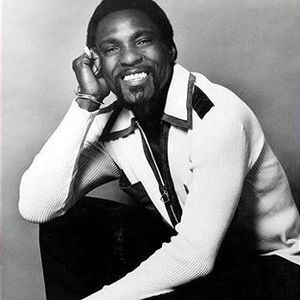
Hi, everyone. Welcome to this week’s edition of Music Monday.

(Image found online. Original source unknown.)
Songwriter extraordinaire Jimmy Layne Webb turned 80 this year. He was born August 15, 1946 in Elk City, Oklahoma and grew up in Laverne, OK where he first started playing piano and organ at his father’s baptist church.
When Webb was 19 years old, he received a publishing contract from singer Johnny Rivers, who recorded “By The Time I Get To Phoenix” 60 years ago on his 1966 album, Changes. A year later the song became the title track & lead single from Glen Campbell’s seventh studio album released 59 years ago in November 1967. The song peaked at #26 in December 1967 and it was nominated for Record Of The Year in 1968. It was also the first country record to win the Album Of The Year Grammy Award in 1969.
Campbell-who was born 90 years ago on April 22, 1936-also put Webb’s most beloved and iconic tune-“Wichita Lineman”on the map when he released it in 1968. It peaked at #3 in January 1969 and was nominated for Record Of The Year as well. He and Webb gave us some of the best collaborations in music and he went on to become one of America’s greatest songwriters while Campbell became a musical superstar.
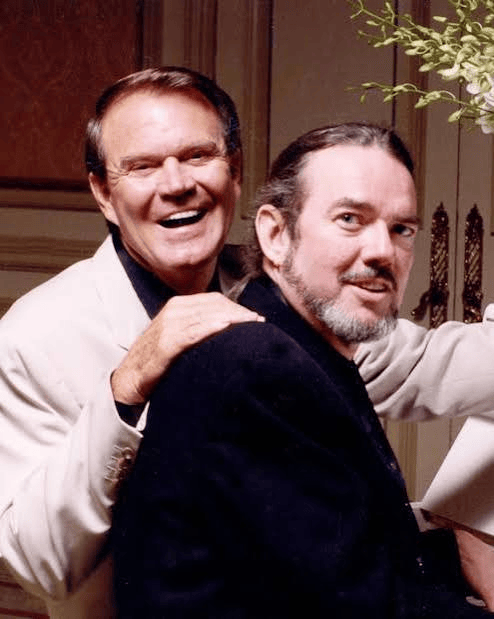
Glen Campbell (L) and Jimmy Webb (R) circa 2000. (Image found online. Original source unknown.)
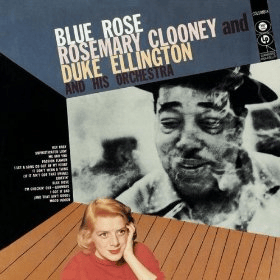
Rosemary Clooney’s debut album Blue Rose was released 70 years ago in 1956. The album was a collaboration with Duke Ellington who wrote or co-wrote ten of the eleven tracks. His words and music gave the illustrious girl singer a platform to showcase her vocal skills from jazz to ballads and everything in between.
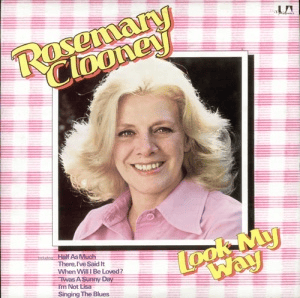
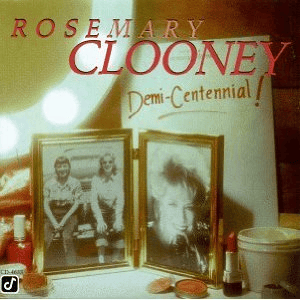
Five years later in 1961 she released Rosie Solves the Swingin’ Riddle!, another collaboration with a big band leader, this time with Nelson Riddle. After an 11 year hiatus she released Look My Way 50 years ago in 1976. It included a stirring cover of Jessi Colter’s 1975 hit. Clooney released many more albums over the years including 1981’s With Love, 1986’s Rosemary Clooney Sings the Music of Jimmy Van Heusen, 1991’s For the Duration and 1995’s Demi-Centennial which featured a cover of a Jimmy Webb’s “Time Flies”.
(Image found online. Original source unknown.)
(Image found online. Original source unknown.)
(Image found online. Original source unknown.)
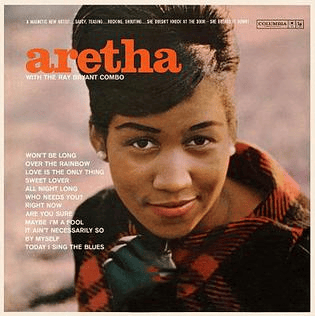
The Queen Of Soul-Aretha Franklin-released her self-titled debut album 65 years ago in February 1961. The self-taught pianist who started singing at age 10 began touring with various gospel acts under her father’s management two years later. When she was 18, she decided to pursue secular music like her friend and mentor, Sam Cooke. She was discovered by Columbia Records’ talent executive John Hammond.
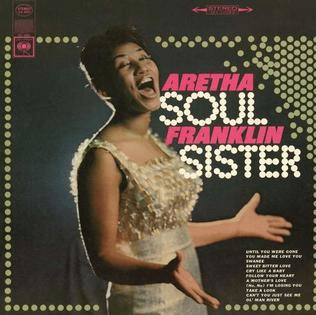
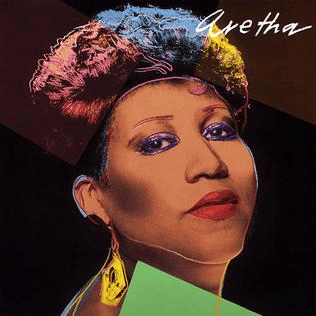
The first album with the label featured The Ray Bryant Combo, a jazz trio also signed to Columbia by Hammond. The songs were covers of mostly pop standards to emphasize Franklin’s range. Five years later in 1966 she released her eigth album, Soul Sister (It was the record just before her breakthrough, 1967’s I Never Loved a Man the Way I Love You featuring her signature tune, “Respect”). Fast forward to 1986 and Franklin releases another self-titled album, this one featuring a Rolling Stones’ cover that we did not know we needed.
(Image found online. Original source unknown.)
(Image found online. Original source unknown.)
(Image found online. Original source unknown.)
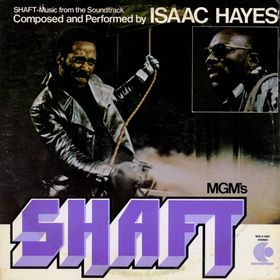
1971 was a spectacular year for Isaac Hayes. In July he released the double album Shaft named for the theme song for the movie of the same name starring Richard Roundtree in the title role. But the soundtrack song was as much a main character as Roundtree was. The song reached the #1 spot on the Billboard Hot 100 on November 20, 1971 for two consecutive weeks. The soundtrack became the #1 album in the country for one week that month as well. Five months later on April 10, 1972 Hayes made history as the first black composer to win an Oscar when the track won Best Original Song at the 44th Academy Awards ceremony.
In a 1995 episode of one of my favorite TV series, “Newsradio” (S1 E5, “Big Day”), one of the most talented souls to ever grace this planet-Phil Hartman-quoted the lyrics in an absolutely brilliant way to mock a co-worker’ ‘s fear of getting “the shaft” during a round of upcoming yearly bonuses (and yes, that is Joe Rogan and Andy Dick in the scene with Hartman).
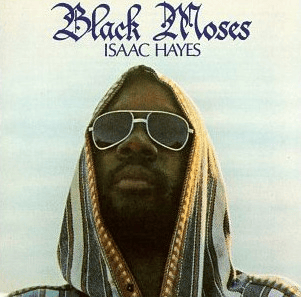
Hayes followed up the sountrack album with Black Moses, released 55 years ago on Nov 1, 1971. Categorized as “progressive soul”, he took several well known songs written by Burt Bacharach and Hal David, Toussaint McCall and Curtis Mayfield, amongst others and combined them with a Stax sound for unique & incredibly evocative interpretations of each track. The album reached the #1 spot on Billboard’s R&B album chart in January 1972 where it stayed for seven consecutive weeks.
(Image found online. Original source unknown.)
(Image found online. Original source unknown.)
Johnny Rivers: “By The Time I Get To Phoenix” (1966, written by Jimmy Webb).
Glen Campbell: “Wichita Lineman” (1967, written by Jimmy Webb).
Jimmy Webb: “Jimmy Webb: “If These Walls Could Speak” (1996, written by Jimmy Webb).
Rosemary Clooney: “Sophisticated Lady” (1956, written by Duke Ellington, Irving Mills and Mitchell Parish).
Rosemary Clooney: “I’m Not Lisa” (1976, written by Jessi Colter).
Rosemary Clooney: “Time Flies” (1995, written by Jimmy Webb).
Aretha Franklin: “Over The Rainbow” (1961, written by Harold Arlen and E.Y, Harburg).
Aretha Franklin: “You Made Me Love You (I Didn’t Want to Do It)” (1966, written by Joseph McCarthy and James V. Monaco).
Aretha Franklin: “Jumpin’ Jack Flash” (1986, written by Mick Jagger and Keith Richards).
Isaac Hayes: “Theme From Shaft” (1971, written by Isaac Hayes).
Isaac Hayes: “Never Gonna Give You Up” (1971, written by Jerry Butler, Kenneth Gamble and Leon Huff).
Isaac Hayes: “For The Good Times” (1971, written by Kris Kristofferson).
Stay safe & well.