Hi, everyone. Welcome to this week’s edition of Music Monday.
(Image found online. Original source unknown.)
This year will mark the 85th birth anniversary for a singer & songwriter best known for songs made famous by others. Tim Hardin was born December 23, 1941 in Eugene, Oregon. His father played bass in an Army jazz band and his mother played violin in the Portland Symphony Orchestra. Hardin learned guitar while he was in high school before he quit to enlist in the Marines where he served in Asia. He honed his musical skills during that time, so when he was discharged in 1961, he moved to NYC and began playing in small clubs. Two years later he moved to Boston where he was approached by Columbia Records. Unfortunately, they did not move forward with his demos.
In 1965 he relocated to California and by July 1966, he released his first record, Tim Hardin 1, on Verve Records. One of the tracks, “Reason To Believe”, was the first single from Rod Stewart’s 1971 breakthrough album, Every Picture Tells A Story. When the B-side, “Maggie May”, started receiving more air play, it catapulted the double-sided single to the #1 spot in the country for five consecutive weeks in the fall of 1971. Over two decades later, Stewart included “Reason” as part of his MTV “Unplugged” performance and the song became a hit again, reaching the Top 20 in October 1993.
In November 1966, Bobby Darin’s recording of Hardin’s song, “If I Were A Carpenter”, peaked at #8. He included his own version on his second album, Tim Hardin 2, released in 1967. He also sang it live during his Woodstock performance in August 1969.
Hardin released nine albums in his lifetime before his death in 1980 from an accidental overdose of heroin, an addiction he struggled with since he was introduced to it during his military years in Asia. His 10th album, Unforgiven, was released posthumously in 1981. His music has been covered by many artists including Johnny Cash, Glen Campbell, Roger Daltrey, Robert Plant, The Four Tops, The Carpenters and Don McLean.
My favorite album of Hardin’s-Bird On A Wire-was released 55 years ago in June 1971. The title track is my favorite vocal performance by him.
James Timothy Hardin: December 23, 1941 – December 29, 1980
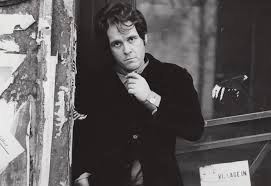
Tim Hardin circa 1968. (Image found online. Original source unknown.)
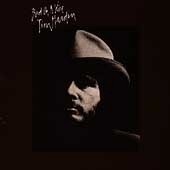
Hardin’s 1971 album. (Image found online. Original source unknown.)
Another artist we lost too soon was English musician Paul Kosoff. Last year marked his 75th birth anniversary (born Sept 14, 1950) and March 19 marked the 50th anniversaryof his death in 1976 at age 25. He was the lead guitarist & co-founder of the rock band, Free.
He studied classical guitar from the ages of 9 to 15, at which time he decided to pursue a career in music after attending a show by John Mayall & the Bluesbreakers. In 1966 Kosoff was in the band Black Cat Bones with drummer Simon Kirke. Ttwo years later they co-founded Free with vocalist Paul Rodgers and bassist Andy Fraser. Their debut album, Tons Of Sobs, was released in March 1969.
They found their greatest success from their third album-Fire and Water, released in June 1970-thanks to the their breakthrough single, “All Right Now”. It is one of the greatest rock anthems in music history. I have been obsessed with this track since I was a child and a century later I still cannot get enough of it. Four standout performances by each member of the band combined together to make an intensely masterful and sublime track.
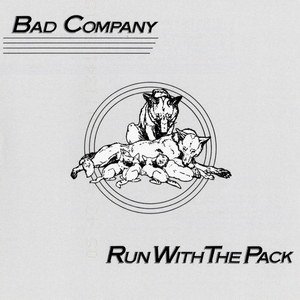
Free initially disbanded in 1971 due to internal tensions but came together a year later to record Free at Last. That was followed by Fraser’s departure, reportedly due in part to Kosoff’s undependability because of his growing substance abuse issues. The band broke up for good in 1973 and later that year, Kosoff released his solo debut, Back Street Crawler. He was set to be on tour with Rodgers’ & Kirke’s new band, Bad Company, beginning in April 1976. Sadly, Kosoff died from a pulmonary embolism a month before.
Paul Francis Kossoff: September 14, 1950 – 19 March 19, 1976
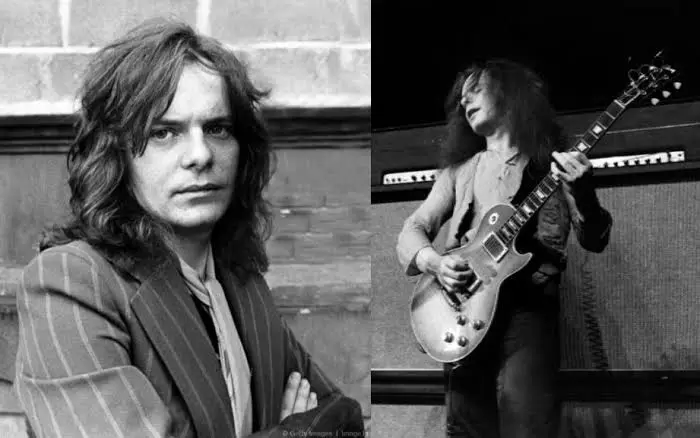
Paul Kosoff circa 1974 (L) and 1970 (R). (Images found online. Original sources unknown.)
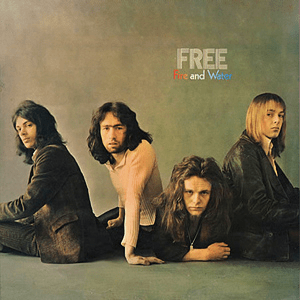
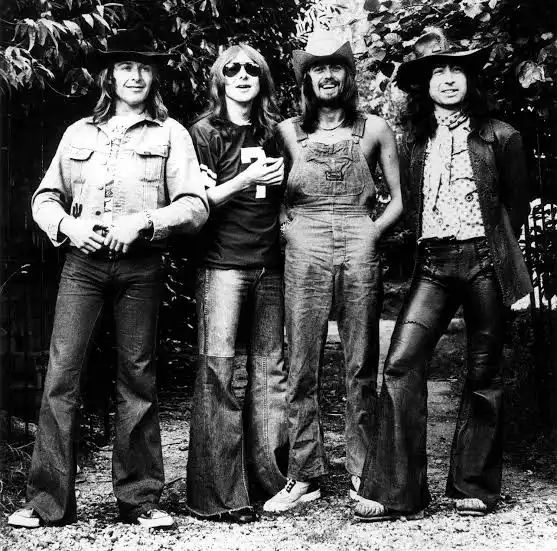
(L-R): Andy Fraser, Paul Rodgers, Kosoff & Simon Kirke. (Image found online. Original source unknown.)
Tim Hardin: “Bird On A Wire” (1971, written by Leonard Cohen).
Tim Hardin: “Hoboin’” (1971, written by John Lee Hooker and Joe Josea, arranged by Joe Zawinul).
Tim Hardin: “Georgia On My Mind” (1971, written by Hoagy Carmichael and Stuart Gorrell, arranged by Joe Zawinul).
Free: “Moonshine” (1969, written by Paul Kossoff’ and Paul Rodgers).
Free: “Oh I Wept” (1970, written by Paul Kossoff’ and Paul Rodgers).
Free: “All Right Now” (1970, written by Andy Fraser and Paul Rodgers).
Stay safe & well.













 Lilacs & Rust
