Music Monday: September 15, 2025

Hi, everyone. Welcome to this week’s edition of Music Monday.
(Image found online.  Original source unknown.)
Last month I celebrated the 50th anniversary of the most important album in my world. Today I am honoring the second one, released 60 years ago. Otis Blue/Otis Redding Sings Soul was released on September 15, 1965. This album is the one that helped me love this man for more than his posthumous #1 masterpiece, (“Sittin’ On The) Dock Of The Bay”.

Otis Blue featured eleven tracks including three songs written by Redding (with one of them co-written with soul singer Jerry Butler), a Jagger-Richards tune and three songs written by Sam Cooke, one of Redding’s idols. The album is resplendent with his signature achingly impassioned vocal in every note while the house band at Stax-also known as the incomparable Booker T & The MG’s-keeps up with his energy and drive. And the band’s virtuoso guitarist, Steve Cropper, along with label co-owner Jim Stewart (1930-2022), produced the album with renowned engineer Tom Dowd (1925-2002) who worked with dozens of artists including Aretha Franklin, Cream, The Allman Brothers Band and Eric Clapton.

Earlier in 1965-March to be exact-another album by Redding was released, The Great Otis Redding Sings Soul Ballads. The collection includes covers of Sam Cooke’s “Nothing Can Change This Love” and Jerry Butler’s “For Your Precious Love” along with the Redding-Cropper collaboration, “Mr. Pitiful”, amongst its 12 tracks.

Last week marked Redding’s 84th birth anniversary. He was born on September 9, 1941 in Dawson, Georgia and was raised in Macon. He started singing in church and later in talent shows. By 15 when he left school to help support his family, he was singing with Little Richard (who inducted Redding into the Rock & Roll Hall Of Fame in 1989). By 1962 he had recorded & released his first hit with Stax, “These Arms Of Mine”. Over the next impossibly short five years, he established himself as The King Of Soul with notable performances at The Apollo Theater in 1963, The Whisky a Go-Go in 1966 & The Monterey Pop Festival in 1967 before his death in a plane crash at the end of that year on December 10. Sixty years later, Otis Blue remains the pinnacle of Redding’s career.

Above: Otis Redding circa 1965. (Image found on OtisRedding.com. Original source unknown.)

(Image found online.  Original source unknown.)

Otis Redding: “Respect” (1965, written by Otis Redding).

Otis Redding: “A Change Is Gonna Come” (1965, written by Sam Cooke).

Otis Redding: “I’ve Been Loving You Too Long” (1965, written by Jerry Butler and Otis Redding).

Otis Redding: “Shake” (1965, written by Sam Cooke).

Otis Redding: “(I Can’t Get No) Satisfaction” (1965, written by Mick Jagger and Keith Richards).

Otis Redding: “You Don’t Miss Your Water” (1965, written by William Bell).

Stay safe & well.

Music Monday: September 8, 2025

Hi, everyone. Welcome to this week’s edition of Music Monday.

(Image found online.  Original source unknown.)

Before we get to the songs, I want to give a shout out to a couple of TV anniversaries close to my heart.

Two of my favorite TV cops-“Starsky & Hutch”-came to life in the show’s pilot which premiered on April 30, 1975. Due to its success, it was picked up for a series with the first episode broadcast 50 years ago on Sep 10, 1975. The two cops were not only partners but best friends who were dedicated to keeping the streets of their city safe. They had heart, smarts and great instincts and were adorable to watch, especially if you were a young girl experiencing her first real crushes. It was one of Aaron Spelling’s biggest hits in the early days of his TV empire. To me, David Soul and Paul Michael Glaser remain the best part of that universe.

David Soul (L) as Detective Ken “Hutch” Hutchinson and Paul Michael Glaser (R) as Detective David Starsky. (Image found online.  Original source unknown.)

A decade later, I met four women who I will adore for all of eternity. “The Golden Girls” premiered 40 years ago on September 14, 1985. They gave us seven seasons of fun, laughter, jokes, sarcastic quips and life lessons served up with a side of cheesecake. For many of us, they remain the best surrogate mothers to those of us who desperately need them. A very special thank you goes out to the show’s creator, Susan Harris (who will turn 85 next month, who also gave us the hilarious 1970’s series, “Soap” & is from my home state of New York), who took her vision of women in their second & third acts & turned it into one of the greatest shows ever made. The show was nominated six times for the Outstanding Comedy Series Emmy Award – it won two years in a row, 1986 & 1987 – and all four leading ladies won Emmy Awards for their work on the show. Thank you Estelle, Bea, Rue & Betty for making the wonderful world of Sophia, Dorothy, Blanche & Rose such a great place to be.

Four iconic women sharing a story & a laugh over a slice of cheesecake (L-R): Estelle Getty as Sophia Petrillo, Bea Arthur as her daughter, Dorothy Zbornak, Betty White as Rose Nylund and Rue McClanahan as Blanche Devereaux. (Image found online.  Original source unknown.)

Sir George Ivan “Van” Morrison OBE celebrated birthday #80 last month. Born August 31, 1945 in Belfast, Ireland, he grew up listening to his father’s extensive record collection, finding inspiration in artists like Ray Charles and Solomon Burke, among others. Morrison started playing guitar at age 11 and eventually would learn the harmonica & the saxophone as well. He was playing in bands by age 12 and by age 19, he was a member of the band, Them. The success of songs like “Gloria” and “Here Comes the Night” not only inspired the band, The Doors, but gave Morrison the push to start a solo career, which he did after quitting Them in 1966.

His debut album, Blowin’ Your Mind!, was released a year later and produced the Top Ten hit, “Brown Eyed Girl”. His sophomore album, Astral Weeks, came out in 1968 and that was followed by my personal favorite-Moondance-which was released 55 years ago in January 1970. Between the title track, “Crazy Love”, “Into The Mystic”, “These Dreams Of You” and other stand out songs, Morrison’s talents for songwriting, musicianship and vocals infused with a blend of rock, soul and rhythm & blues were irrefutable.

He released another album at the end of 1970-His Band and the Street Choir-which produced his second Top Ten hit, “Domino”. He has released nearly 50 albums in his career, some as collaborations (including 1988’s Irish Heartbeat with the Irish band The Chieftains & 2015’s Duets: Re-working the Catalogue) and some covering his favorite songs (2023’s Accentuate the Positive).

Morrison has received numerous accolades for his work including an Academy Award nomination in 2022 (for “Down To Joy” from “Belfast”), two Grammy Awards (1998-Best Pop Collaboration With Vocals with John Lee Hooker for “Don’t Look Back” and 1996-Best Pop Collaboration With Vocals with The Chieftains for “Have I Told You Lately That I Love You” ) and the Ivor Novello Award in 1995. Morrison’s music has been used on numerous movie soundtracks and he was a featured performed in The Band’s 1978 concert film, “The Last Waltz”. He has influenced artists like Rod Stewart, Elton John, John Mellencamp, Glen Hansard, Damien Rice and many others.

Van Morrison through the years, first circa 1968 (top), in the 1970’s (middle) and circa 2015 (bottom). (Images found online.  Original sources unknown.)

Rod Stewart’s sixth solo album, Atlantic Crossing, was released 50 years ago in August 1975. He recorded it in Muscle Shoals Sound Studio in Alabama & it includes covers of the Dobie Gray classic, “Drift Away”, The Isley Brothers’ “This Old Heart of Mine” (which Stewart would record again in 1989 as a duet with Ronald Isley) and Gavin Sutherland’s “Sailing”.

(Image found online.  Original source unknown.)

The movie “Fame” premiered 45 years ago on May 16, 1980. The film, directed by Alan Parker, follows a group of talented teenagers from their acceptance to the New York High School of Performing Arts and their subsequent life experiences over the next four years as they hone their drama, music & dance skills. The movie introduced us to Irene Cara who starred in the film & was the voice behind its theme song. And I was today years old when I discovered that another tune she performed in the film-my favorite track-was co-written by 60’s teen sensation/girl singer Lesley Gore (“It’s My Party”, “Judy’s Turn To Cry” & “You Don’t Own Me”).

(Image found online.  Original source unknown.)

David Soul: “Don’t Give Up On Us” ((1977, written by Tony Macaulay).

Bea Arthur (as Dorothy Zbornak): “What’ll I Do” (Written by Irving Berlin. From “The Golden Girls” S7 E18, “Journey to the Center of Attention”, broadcast on February 22, 1992).

Van Morrison: “Caravan” (1970, written by Van Morrison).

Van Morrison: “Jackie Wilson Said (I’m in Heaven When You Smile)” (1972, written by Van Morrison).

Van Morrison: “Hard Nose The Highway” (1973, written by Van Morrison).

Rod Stewart: “I Don’t Want To Talk About It” (1975, written by Danny Whitten).

Irene Cara: “Out Here On My Own” (1980, written by Lesley Gore and Michael Gore).

Stay safe & well.

Music Monday: September 1, 2025

Hi, everyone. Welcome to this week’s edition of Music Monday.

(Image found online.  Original source unknown.)

It is Labor Day on this Monday in the U.S. where we take a moment to celebrate the efforts of the American worker. Whatever the profession, whatever hours are worked and wherever that work takes place, working for a living is a status most of us share.

Today’s song tells the story of a couple of delivery men who imagine a much easier life if only they had “learned to play the guitar” instead of spending their days using physical labor and power tools.

This track was the #1 song in the country 40 years ago, hitting the top spot on Sept 21, 1985. It stayed in that position for three consecutive weeks & was the second single from the album, Brothers in Arms by Dire Straits, which was released in May 1985.

The tune also became the unofficial theme song for the channel every music lover wanted thanks to its battle cry, “I want my MTV!” And the video gave us some great-for-its-time animated storytelling and a cautionary tale about sweatbands.

We got to install microwave ovens
Custom kitchen deliveries
We got to move these refrigerators
We got to move these color TVs
“.

Top: Dire Straits circa 1985 (L-R): Keyboardists Alan Clark and Guy Fletcher, guitarist Jack Sonni, bassist John Illsley, lead guitarist, singer & primary songwriter Mark Knopfler (standing with guitar) and drummer Pick Withers. Bottom: A still of a worker “moving color TV’s” from the landmark video of today’s song. (Images found online.  Original sources unknown.)

Dire Straits: “Money For Nothing” (1985, written by Mark Mark Knopfler and Sting).

Stay safe & well.

Music Monday: August 25, 2025

Hi, everyone. Welcome to this week’s edition of Music Monday.

(Image found online.  Original source unknown.)

“The screen door slams
Mary’s dress waves
Like a vision she dances
Across the porch as the radio plays”
-Bruce Springsteen, “Thunder Road”, 1975.

Those lines opened the most important record of my life. And today that masterpiece of an album celebrates its 50th anniversary.

The iconic photo on the cover of the album was taken by Eric Meola.

Bruce Springsteen was 25 when it was released. During his performance on VH-1’s “Storytellers” in 2005, he said the album was “his big invitation to his audience, to himself, to anybody that was interested to a long earthly journey. Hopefully in the company of someone you love, people you love and in search of a home you can feel a part of.”  

So glad I went along for the ride. It was like taking the road less traveled and realizing it was the best one after all.  

I still remember the day I went to buy it. When I heard him on the radio, for some reason I did not wonder what Springsteen looked like. I did not think about that on my way to the record store, either. I’m not sure why. But one look at him on the cover of BTR-the long hair, the beard, the leather jacket, that smile…..sa-woon. But even with that physical swagger, it was his words that reached a place inside me so deep I did not think anything or anyone could touch.

The album’s back cover featured The Big Man (and his sax), Clarence Clemons. (Credit: Eric Meola).

As I have written before, “BTR is my heart. Springsteen’s masterpiece changed the trajectory of my life. I loved music before I heard this record, without question. But I became consumed by it because of BTR.

The musicianship, the poetry, the pageantry of his storytelling, the characters and his cautionary tales about life, loss, betrayal & the inevitable roads life will sometimes take us down all led to a phenomenal place I now know as home. This record brought light to the darkest place I knew, hope to replace despair, joy to remove unimaginable sadness and peace for a shattered heart. There are no words adequate enough to thank someone for all of that. Not to mention how great it was to find another person who loved the magic of the night just as much as I did.”

I will love Bruce forever.  He is home to me.  And that started with Born To Run

Thank you, Bruce.  

(Credit: Eric Meola.)

Bruce Springsteen: “Thunder Road” (1975, written by Bruce Springsteen).

Bruce Springsteen: “Tenth Avenue Freeze-Out” (1975, written by Bruce Springsteen).

Bruce Springsteen: “Backstreets” (1975, written by Bruce Springsteen).

Bruce Springsteen: “Born To Run” (1975, written by Bruce Springsteen).

Bruce Springsteen: “Jungleland” (1975, written by Bruce Springsteen).

Stay safe & well.

Music Monday: August 18, 2025

Hi, everyone. Welcome to this week’s edition of Music Monday.

(Image found online.  Original source unknown.)

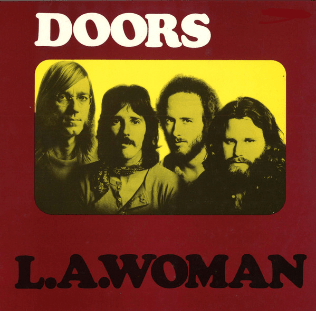
In this the year that marks the 60th anniversary of when The Doors were founded in Los Angeles, California in 1965, there is another milestone in their history: the 55th anniversary of their performance at the Isle of Wight Festival in England on August 30, 1970.

Their set was at 2AM in the morning & it was a different show than the ones making headlines in the U.S., especially after Morrison’s arrest in Miami, Florida in March 1969 for alleged lewd and lascivious behavior. His once expressive and animated onstage persona changed to a nearly motionless stance. And on that night in England, he did not stray from behind his mic stand. Rather, Morrison stood as a stoic figure who let the strength & power of his voice along with the lyrics convey the messages of the songs that were carried through the musical prowess of the band. The result was an incredibly passionate and dynamic performance.

Despite the legal headaches, this era for the band-and Morrison especially-was my favorite. In just over three years from when their debut album was released in January 1967, the group’s sound had continued to evolve into an undeniable force in music with songs that were evocative, complex and intense thanks to three masterfully gifted musicians & guided by an exquisitely beautiful, intelligent and incredibly talented singer, songwriter & poetic man.

Morrison especially had changed both physically & emotionally. He went from a thin clean-shaven young guy to a more mature, bearded man who was trying to come to terms with the the trappings & limitations of his rapid success. His substance experimentation was supposedly becoming more frequent and excessive while his need and desire to express his art on his terms was being scrutinized and dismissed by law enforcement. He was convicted on the outstanding charges a month after the Wight show which he appealed. But his death in July 1971 ended that process. However, in 2010, Florida Governor Charlie Crist & the state’s Clemency Board posthumously pardoned Morrison.

A CD & DVD of this concert-Live at the Isle of Wight Festival 1970-was finally released nearly five decades later in February 2018. If you are a fan of the Doors, it is a must have. But then again what part of their catalog isn’t?

Top: The cover to the Doors 2018 release of their August 1970 concert. Middle: Jim Morrison during the concert. Bottom: The band on stage during their performance. (Images found online.  Original sources unknown.)

Bobby Whitlock died on August 10, 2025 at age 77. He is most notably remembered as a founding member, pianist & songwriter for Derek & The Dominos. Six of the songs featured on their only album, 1970’s Layla and Other Assorted Love Songs, were co-written by him (including “Bell Bottom Blues” which Clapton formally acknowledged many years later after Whitlock relayed the story of how the song came to be) while one song was written just by him alone.

Whitlock was born in March 18, 1948 in Memphis, Tennessee. He began his career as a teenager hanging out in the hallowed halls of Stax Records where he befriended the members of Booker T & The MG’s and Albert King, among others. Whitlock was the first white artist signed to that label but when he met the husband & wife team of Delaney & Bonnie who invited the young singer and pianist to play in their band, Whitlock left Memphis to join them. That tour in 1969 introduced him to the three men who would help him form Derek & The Dominos: Eric Clapton, Jim Gordon and Carl Radle. But not before all four men played on George Harrison’s solo record, All Things Must Pass, which was released three weeks after the Layla album in November 1970.

After The Dominos broke up in 1971, Whitlock pursued a solo career which he ended in 1976, perhaps as an act of penance. In a 2006 interview with The Austin Chronicle, Whitlock confessed, ” You know I’m indirectly responsible for disco? [Clapton’s manger] Robert Stigwood took the Dominos’ money, used it to create RSO Records and record the Bee Gees. My deepest apologies to the entire music world.”

Whitlock started performing again in 1999. He married musician & singer CoCo Carmel in 2005 and together they used their YouTube channel to give fans a glimpse into their lives. In 2010, his autobiography, Bobby Whitlock: A Rock ‘n’ Roll Autobiography, was published.

Robert Stanley Whitlock: March 18, 1948 – August 10, 2025.

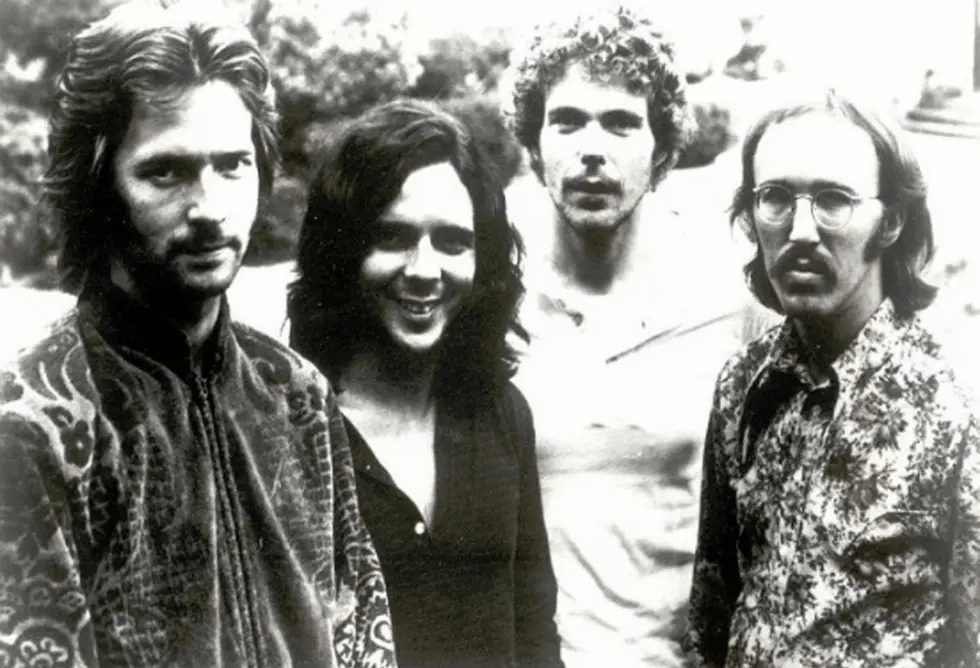
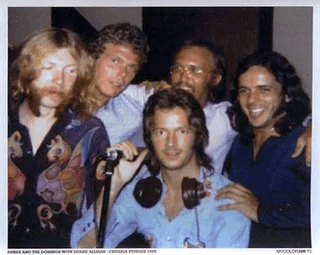
Top: Derek & The Dominos in 1970 (L-R): drummer Jim Gordon, bassist Carl Radle, pianist Bobby Whitlock and guitarist Eric Clapton. Middle: Whitlock and Clapton from Derek & The Dominos’ performance on “The Johnny Cash Show” filmed in November 1970. Bottom (L-R): Jools Holland, Whitlock and Clapton in 2000. (Images found online.  Original sources unknown.)

The Doors: “Back Door Man” (Recorded live August 1970 at The Isle Of Wight Concert in England. Originally released in 1967, written by Willie Dixon).

The Doors: “Roadhouse Blues” (Recorded live August 1970 at The Isle Of Wight Concert in England. Originally released in 1970, written by The Doors: John Densmore, Robby Krieger, Ray Manzarek and Jim Morrison).

The Doors: “Light My Fire” (Recorded live August 1970 at The Isle Of Wight Concert in England. Originally released in 1967, written by The Doors: John Densmore, Robby Krieger, Ray Manzarek and Jim Morrison).

Eric Clapton and Bobby Whitlock: “Bell Bottom Blues” (Performed live on “Later With Jools Holland”, broadcast in April 2000. Originally released in 1970 by Derek & The Dominos, written by Eric Clapton and Bobby Whitlock).

Stay safe & well.

Music Monday: August 11, 2025

Hi, everyone. Welcome to this week’s edition of Music Monday.

(Image found online.  Original source unknown.)

It was 60 years ago today that The Beatles’ second film, Help, was released in the U.S. on August 11, 1965. Categorized as a comedy adventure where the group is running from a cult trying to get their hands on a piece of jewelry stuck on Ringo’s finger, it also provided fans with an accompanying album which debuted a week earlier.

A second film for the group was no surprise as it followed their landmark career altering arrival in America in February 1964 which prompted the release of their first film, A Hard Day’s Night, on August 12, 1964.

(Image found online.  Original source unknown.)

As successful as a new movie & album were for the band, there was an even bigger milestone on the horizon for The Fab Four that year. This Friday marks the 60th anniversary of their historic concert at Shea Stadium in Queens, New York. At that time it was home to baseball’s NY Mets & football’s NY Jets, but on Sunday, August 15, 1965 the Beatles used it to become the first band to ever play a stadium concert. The music was inaudible over the screams of the majority of young girls in the audience of 55,600 attendees, but the band played their 12 song set anyway as follows:

  • “Twist & Shout”
  • “She’s A Woman”
  • “I Feel Fine”
  • “Dizzy Miss Lizzy”
  • “Ticket To Ride”
  • “Everybody’s Trying To Be My Baby”
  • “Can’t Buy Me Love”
  • “Baby’s In Black”
  • “Act Naturally”
  • “A Hard Day’s Night”
  • “Help”
  • “I’m Down”

The BBC made a 50 minute movie of the concert which was first broadcast in 1966, the same year The Beatles returned to Shea for another show which took place on August 23, 1966 as part of their final tour. The stadium was demolished in 2009 with Bill Joel holding the last concerts there a year earlier. Dubbed “The Last Play At Shea”, he welcomed several special guests to bid farewell to the place where The Beatles made history, including Sir Paul McCartney. He & Joel closed the final show with a performance of “Let It Be”.

It was also McCartney that played the first three inaugural concerts in July 2009 at the new stadium, Citi Field, which is located a few blocks from where Shea once stood. He included a song from the 1965 concert playlist, “I’m Down” and it can be heard on the live album set, Good Evening New York City, which McCartney released in November 2009.

In April of that year, Citi Field became the new home for the NY Mets. According to ESPN, the team will pay tribute to the historic Shea concert anniversary before their scheduled home game against the Seattle Mariners this Friday night.

(Image found online.  Original source unknown.)

(Image found online.  Original source unknown.)

(Image found online.  Original source unknown.)

(Image found online.  Original source unknown.)

(Image found online.  Original source unknown.)

(Image found online.  Original source unknown.)

Last week we said goodbye to American hero James Arthur Lovell Jr. The astronaut, test pilot, naval aviator and mechanical engineer died on August 7, 2025 in Lake Forest, Illinois at age 97. In 1968, he & two other men-Frank Borman (March 14, 1928 – November 7, 2023) and William Anders (October 17, 1933 – June 7, 2024)-became the first three astronauts to orbit the moon during the Apollo 8 mission. Then in 1970, Lovell commanded Apollo 13 and brought it back to Earth safely after an oxygen tank exploded in the service module 48 hours into the flight. Ron Howard’s film based on that mission was released 30 years ago on June 30, 1995 starring Tom Hanks as Lovell.

He was born March 25, 1928 in Cleveland, Ohio and attended the University of Wisconsin-Madison before graduating from the U.S. Naval Academy in 1952. A decade later, he was selected as an astronaut by NASA which issued this statement after his passing:

We are saddened by the passing of Jim Lovell, commander of Apollo 13 and a four-time spaceflight veteran,” the space agency said. “Lovell’s life and work inspired millions. His courage under pressure helped forge our path to the Moon and beyond—a journey that continues today.

Lovell and his wife, Marilyn Gerlach, were married 71 years before her death two years ago on August 27, 2023. The couple had four children.

James Arthur Lovell Jr.: March 25, 1928 – August 7, 2025.

Jim Lovell in 1969 (top) and circa 2015 (bottom). (Images found online.  Original sources unknown.)

The Beatles: “Help” (1965, written by John Lennon and Paul McCartney).

The Beatles: “You’ve Got To Hide Your Love Away” (1965, written by John Lennon and Paul McCartney).

The Beatles: “I’ve Just Seen A Face” (1965, written by John Lennon and Paul McCartney).

The Beatles: “I Feel Fine” (1964, written by John Lennon and Paul McCartney).

The Beatles: “Ticket To Ride” (1965, written by John Lennon and Paul McCartney).

The Beatles: “I’m Down” (1965, written by John Lennon and Paul McCartney).

Elton John: “Rocket Man” (1972, written by Elton John and Bernie Taupin).

Stay safe & well.

Music Monday: August 4, 2025

Hi, everyone. Welcome to this week’s edition of Music Monday.

(Image found online.  Original source unknown.)

Sweet Baby James is the second studio album by American singer-songwriter James Taylor, released on February 1, 1970. And 55 years later, it remains one of his most beloved records. The title track has always been one of my favorite songs by him. But it is the first track on side 2- which peaked at #3 in October 1970-which is probably his best known tune, along with “You’ve Got A Friend” which was released in 1971. That was the #1 song in the country on July 31, 1971 for one week.

(Image found online.  Original source unknown.)

John Barleycorn Must Die by Traffic was also released 55 years ago, making its debut in July 1970. The band formed in Birmingham, England three years earlier and featured Jim Capaldi (August 2, 1944 – January 28, 2005), Dave Mason, Steve Winwood and Chris Wood (June 24, 1944 – July 12, 1983) . Mason was not on the 1970 album as he left the band after the release of their debut album-1967’s Mr. Fantasy-but came back for their third album, 1969’s Last Exit. After that, Mason departed for good. Traffic released a total of eight albums together, with the last one coming in 1994 after years of the two primary songwriters-Capaldi and Winwood-writing together for solo projects. Traffic was inducted into The Rock & Roll Hall Of Fame in 2004.

(Image found online.  Original source unknown.)

Eric Clapton released his debut self-titled solo album in the U.S. on August 12, 1970. It was produced by Delaney Bramlett of Delaney & Bonnie & Friends, who were one of the opening acts for Clapton’s band, Blind Faith, in 1969. When they broke up, Clapton continued touring with the Friends’ band. Delaney’s wife, Bonnie Bramlett, co-wrote eight of the eleven songs on Clapton’s solo record. His collaborations with The Friends’ band led to his meeting with Bobby Whitlock, who along with Carl Radle and Jim Gordon would form Derek and the Dominos with Clapton that same year.

(Image found online.  Original source unknown.)

Forty years ago on August 5, 1985, John Cougar Mellencamp released his eighth studio album, Scarecrow. It was the follow-up to 1983’s Uh-Huh which produced three Top 20 hits (“Crumblin’ Down”, “Pink Houses” & “The Authority Song”). The 1985 record had three Top Ten hits including “R.O.C.K. in the U.S.A.” and “Lonely Ol’ Night”. In his career to date Mellencamp has 10 Top Ten songs & one #1 hit, “Jack & Diane”, which spent four consecutive weeks in the top spot in October 1982.

(Image found online.  Original source unknown.)

James Taylor: “Sweet Baby James” (1970, written by James Taylor).

James Taylor: “Fire and Rain” (1970, written by James Taylor).

Traffic: “Empty Pages” (1970. written by Jim Capaldi and Steve Winwood).

Eric Clapton: “Let It Rain” (1970, written by Bonnie Bramlett and Eric Clapton).

John Cougar Mellencamp: “Small Town” (1985, written by John Cougar Mellencamp).

Stay safe & well.

Music Monday: July 28, 2025

Hi, everyone. Welcome to this week’s edition of Music Monday.

(Image found online.  Original source unknown.)

We said farewell to another musical icon last week. John Michael “Ozzy” Osbourne died on July 22, 2025 at age 76. Born December 3, 1948 in the Marston Green village of the UK, he is best known as the original lead singer of Black Sabbath, the band credited with the invention of the heavy metal genre where he became known as “The Prince Of Darkness”.

They played their farewell show together 17 days earlier on July 5 in Birmingham, England & all the proceeds-reported to be 190 million dollars, the highest grossing charity concert of all time according to Billboard-were donated equally to three charities: Acorn Children’s Hospice, Birmingham Children’s Hospital and Cure Parkinson’s, the disease Osbourne struggled with for over 20 years. Despite that, his last performance was all him-no lip synching, no back tracks, just talent.  

Heavy metal was not a genre that spoke to me, but Sabbath’s “Paranoid”-released 55 years ago in the UK in September 1970 (and January 1971 in the U.S.)- was a staple on FM radio. I always found the guitar riffs & Osbourne’s vocals intensely captivating. He was fired from the band in 1979 for substance abuse issues. A year later he released his first solo album, Blizzard Of Ozz, led by the first single, “Crazy Train”. Twelve more solo studio albums followed over the next four decades along with his music festival, Ozzfest-an event he started in 1996 along with his wife & manager, Sharon-which was held nearly every year until 2018.

I became a fan of “The Osbournes” MTV reality show which ran from March 2002 to March 2005. The first season was the standout one for me & while I could have done without his wife in our faces for the next 20 years (or his daughter, Kelly), watching Ozzy doing regular life things like getting mad at the remote, taking out the garbage & cuddling with his dogs was both priceless and hilarious.

Ozzy was heavily affected by The Beatles and compared their arrival on the music scene like “going to bed in a black & white world and waking up in color”. In 2010 in honor of what would have been John Lennon’s 70th birthday, Ozzy paid tribute to him with a cover of the song, “How”. The accompanying video follows Osbourne walking through NYC and ends at the Central Park “Imagine” mosaic where he places a bouquet of flowers for the former Beatle. Respect.

John Michael “Ozzy” Osbourne: December 3, 1948 – July 22, 2025.

Top: Black Sabbath in 1970 (L-R): Geezer Butler, Tony Iommi, Bill Ward and Ozzy Osbourne. Middle: Ozzy Osbourne in the 1970’s. Bottom: The Prince Of Darkness on his throne at his last show with Black Sabbath on July 5, 2025 at at Villa Park in Aston, Birmingham, England. (Images found online.  Original sources unknown.)

Osbourne reunited with Black Sabbath 40 years ago to perform at the U.S. location of the Live Aid concerts. They were held on July 13, 1985 on two different continents: The show in America took place at the John F. Kennedy Stadium in Philadelphia, Pennsylvania while the European show was held at Wembley Stadium in London, England. If you had MTV, you had a front row seat to this extraordinary musical event. The concerts were held to raise money for famine relief in Ethiopia which was organized by musicians Bob Geldof and James “Midge” Ure. First they put together the UK charity single by Band Aid, “Do They Know It’s Christmas”, released in December 1984. Then a group of American artists formed USA For Africa and recorded, “We Are The World”, which was released in March 1985. Both songs closed out their respective concerts which reportedly raised over 100 million dollars collectively.

Some of the artists who performed at Live Aid in 1985 included David Bowie (top picture), Led Zeppelin (L-R: Robert Plant, John Paul Jones and Jimmy Page, middle picture) and Eric Clapton (bottom picture). (Images found online.  Original sources unknown.)

There were a number of standout moments at both locations, but even four decades later, Queen’s 21 minute set is still hailed as one of the greatest live performances of all time. Other exceptional Wembley moments include David Bowie, U2, The Who (despite experiencing technical issues) and Elton John, who performed “Don’t Let The Sun Go Down On Me” as a duet with George Michael for the first time. The pair collaborated on that song at the same venue during Michael’s March 1991 show and that version was released as a single. It became a #1 hit in both the UK & the U.S. (in December 1991 & February 1992, respectively).

For the American show, Phil Collins (who played at both concerts, using the Concord to fly from England to the U.S. venue) played drums for Eric Clapton & for the three surviving members of Led Zeppelin. Neil Young sang with Crosby, Stills & Nash, Ashford & Simpson performed with Teddy Pendergrass for his first performance after being paralyzed in a car crash in Philadelphia in 1982), Hall & Oates sang with former Temptations David Ruffin and Eddie Kendricks and Mick Jagger performed with Tina Turner. Motown and soul were represented, respectively, by The Four Tops and Patti LaBelle. YouTube has a Live Aid channel of videos from both shows.

Queen at Live Aid in 1985 (L-R): John Deacon, Freddie Mercury, Roger Taylor and Brian May. (Image found online.  Original source unknown.)

Black Sabbath: “Changes” (1972, written by Geezer Butler, Tony Iommi, Ozzy Osbourne and Bill Ward).

Ozzy Osbourne: “How” (2010, written by John Lennon).

Queen: ” We Are The Champions” (Live performance at the Live Aid Concert in London, Wembley Stadium on July 13, 1985. Originally released in 1977. Written by Freddie Mercury).

Paul McCartney: “Let It Be” (Live performance at the Live Aid Concert in London, Wembley Stadium on July 13, 1985. Joined by David Bowie, Alison Moyet, Pete Townshend and Bob Geldof. Originally released in 1970. Written by John Lennon and Paul McCartney).

The Four Tops: “It’s The Same Old Song” (Live performance at the Live Aid Concert in Philadelphia, PA on July 13, 1985. Originally released in 1965. Written by Brian Holland, Lamont Dozier and Eddie Holland).

Black Sabbath: “Paranoid” (Live performance at the Live Aid Concert in Philadelphia, PA on July 13, 1985. Originally released in 1970. Written by Geezer Butler, Tony Iommi, Ozzy Osbourne and Bill Ward).

Patti LaBelle: “Over The Rainbow” (Live performance at the Live Aid Concert in Philadelphia, PA on July 13, 1985. Originally released in 1966. Written by Harold Arlen and Edgar Yipsel “Yip” Harburg).

Stay safe & well.

Music Monday: July 21, 2025

Hi, everyone. Welcome to this week’s edition of Music Monday.

(Image found online.  Original source unknown.)

Concetta Rosa Maria Franconero, known professionally as Connie Francis, passed away on July 16, 2025 at age 87. Born December 12, 1937 in Newark, NJ, her career officially began in 1957 with her first hit record. According to Billboard, she was the first woman to have a #1 song on their newly established Hot 100 chart (which started in 1958) when “Everybody’s Somebody’s Fool” reached the top spot 65 years ago on July 2, 1960. She had 15 Top Ten songs in her career along with three #1 records.

While my maternal grandmother introduced me to Italian male singers like Frank Sinatra and Dean Martin, it was my paternal grandmother who always marveled about Francis’ voice, especially the emotion she expressed on 1959’s “Mama”. Other stand out songs include 1958’s “Stupid Cupid” and “Lipstick On You Collar”, 1959’s “Among My Souvenirs” and 1960’s “Where The Boys Are”.

Like many successful artists of the late 1950’s-early 1960’s, Francis’ career took a downturn when The Beatles ushered in the British Invasion. Her life took a turbulent turn in 1974 when she was the victim of a sexual assault while on tour on Long Island, NY. That along with a failed relationship with singer Bobby Darin (she later said her father forbad the relationship), the violent death of her brother in 1981 and four divorces over 20 years led to Francis’ struggle with mental health issues. She basically became a recluse for 15 years but fought her way back to performing in 1989. She officially retired in 2018.

If there is an upside to most of the noise and self-adulation on TikTok, it is that occasionally songs & artists from other generations are rediscovered. Francis’ 1962 B-side song, “Pretty Little Baby”, went viral on the platform this year, amassing an estimated 10 billion cumulative streams as of May 2025. Talk about going out on top.

Concetta Rosa Maria Franconero (Connie Francis): December 12, 1937 – July 16, 2025.

Top: Connie Francis circa 1960. Bottom: Her 2017 autobiography named after her 1959 song. (Images found online.  Original sources unknown.)

Fifty years ago in July 1975 Gary Wright released The Dream Weaver album. It peaked in the #7 position in August 1975. The title track peaked at #2 in January 1976. Four months later, his second single also reached the #2 position. He hit the Top 20 again in July 1981 with the track, “Really Wanna Know You”.

Wright, who was previously a member of the band, Spooky Tooth, also played on George Harrison’s epic 1970 album, All Things Must Pass. Wright started writing movie soundtracks in 1982. A decade later, he re-recorded “Dream Weaver” in 1992 for the movie, “Wayne’s World”, which gave the mid 1970’s classic tune a well-deserved second moment in the sun.

(Image found online.  Original source unknown.)

Whitney Houston released her self-titled debut album 40 years ago on February 14, 1985. To say it was a massive hit would be an understatement.  A year after its release, it was the #1 album in the country & stayed in that spot for 14 non-consecutive weeks (March 8 – April 19, 1986 then again from May 17 – July 4, 1986). It produced three #1 singles: “Saving All My Love for You”, “How Will I Know” & “Greatest Love Of All”.

My favorite is the first single which I remember from her first video. I was immediately drawn to her soulful R&B sound but her physical beauty was undeniable as well. She was an incredibly vibrant 21 year old young woman with a bright smile & an exquisite voice. Her poise, her presence and her prowess standing behind the microphone was undeniable. It was the beginning of her phenomenal reign as one of the best singers in the world.

According to Billboard, she placed 40 songs on its Hot 100 chart during her career with 23 Top Ten hits & 11 #1 hits, with the most famous one-“I Will Always Love You”-in the top spot for 14 consecutive weeks from Nov 28, 1992 until March 5, 1993. It was from her first movie, 1992’s “The Bodyguard”, and the soundtrack album was #1 for 20 non consecutive weeks between December 1992 and June 1993. But for me, I remember her best from that debut album and the happiness she exuded from its phenomenal success before the trappings of her enormous fame became a burden.   

(Image found online.  Original source unknown.)

Connie Francis: “Who’s Sorry Now” (1957, written by Bert Kalmar, Harry Ruby and Ted Snyder).

Connie Francis: “Everybody’s Somebody’s Fool” (1960, written by Howard Greenfield and Jack Keller).

Gary Wright: “Dream Weaver” (1975, written by Gary Wright).

Gary Wright: “Love Is Alive” (1975, written by Gary Wright).

Whitney Houston: “You Give Good Love” (1985, written by La Forrest “La La” Cope).

Whitney Houston: “How Will I Know” (1985, written by George Merrill, Shannon Rubicam and Narada Michael Walden).

Stay safe & well.

Music Monday: July 14, 2025

Hi, everyone. Welcome to this week’s edition of Music Monday.

(Image found online.  Original source unknown.)

Fleetwood Mac, the band’s self-titled album (not to be confused with their 1968 eponymous debut album) was released 50 years ago on July 11, 1975. The record marked a new chapter in the group’s history as it was the first to feature Lindsey Buckingham and Stevie Nicks who were recruited by Mick Fleetwood. In actuality, just Buckingham was asked to join the band but he would only agree if Nicks-his musical partner & girlfriend at the time-was given a spot in the group as well. I do not think there is a music fan alive who does not know how the story ended.
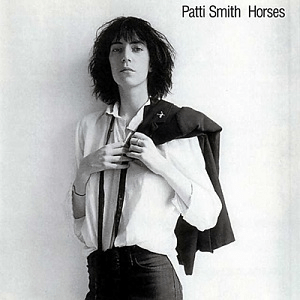
Drummer Mick Fleetwood (L) and bassist John McVie (R) were the two band members featured on the cover of the 1975 album. (Image found online.  Original source unknown.)

Buckingham brought more than his voice & guitar prowess to the band. His gift for producing and arranging helped define the group’s new rock sound, taking them from a blues oriented band-founded in 1967 by English guitarist Pete Green-to one which helped establish the classic rock sound of the 1970’s.

The album’s first single, penned by Christine McVie (July 12 marked her 82nd birth anniversary), peaked at #20 on the U.S. charts in January 1976. It was the group’s first Top 20 song. Another one of her songs, “Say You Love Me”, was the album’s third single which peaked at #11 in September 1976. The second single, written by Stevie Nicks, also reached #11 in June 1976. And the first track on the album, written by Lindsey Buckingham, made me fall head over heels in love with his voice, his talent and his incredibly sexy appearance.

The group’s follow up album, 1977’s Rumours, is the one that skyrocketed them to fame while telling the story of their romantic entanglements & heartaches. But it was the 1975 album that changed the band’s direction, their sound and rewrote their place in music history.

Pictured L-R: Christine McVie, Lindsey Buckingham and Stevie Nicks circa 1976. (Image found online.  Original source unknown.)

Fleetwood Mac: “Over My Head” (1975, written by Christine McVie).

Fleetwood Mac: “Rhiannon” (1975, written by Stevie Nicks).

Fleetwood Mac: “Monday Morning” (1975, written by Lindsey Buckingham).

Stay safe & well.