Music Monday: March 2, 2026

Hi, everyone. Welcome to this week’s edition of Music Monday.
(Image found online.  Original source unknown.)

Legendary actor Robert Duvall passed away last month at age 95. Born January 5, 1931 in San Diego, California, his esteemed & remarkable 60 year film career began in 1962 as Boo Radley in “To Kill A Mockingbird”. The screenplay was written by Horton Foote who was also the writer of 1983’s “Tender Mercies”. That film earned Duvall the Best Actor Oscar in 1984 for his role as country singer Mac Sledge. Duvall received a total of seven Academy Award nominations in his career, three times for Best Actor & four times for Best Supporting Oscar. He also won four Golden Globe awards amongst his many accolades.

In between those two films Duvall rose to prominance for several high profile roles especially as Tom Hagen in “The Godfather” (1972) & “The Godfather Part 2” (1974), Lt. Col. Kilgore in “Apocalypse Now” (1979), Bull Meechum in “The Great Santini” (1979), grieving dad Joe Hillerman in “The Stone Boy” (1984), Gus McCrae in “Lonesome Dove” (1989), Earl in “A Family Thing” (1996), the title character in “The Apostle” (1997), Hub in “Secondhand Lions” (2003), Wayne in “Crazy Heart” (2009) and Joseph Palmer in “The Judge” (2014).
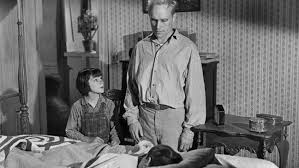
Robert Duvall as Boo Radley in his 1962 film debut, “To Kill a Mockingbird” (with Mary Badham who played Scout). (Image found online.  Original source unknown.)
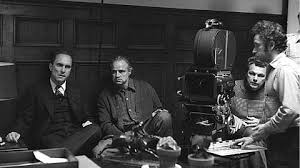
Duvall (L) during the filming of “The Godfather” (1972) with Marlon Brando (R). (Image found online.  Original source unknown.)
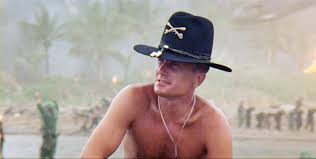
Duvall as Lieutenant Colonel Bill Kilgore in “Apocalypse Now”, released in August 1979. (Image found online.  Original source unknown.)
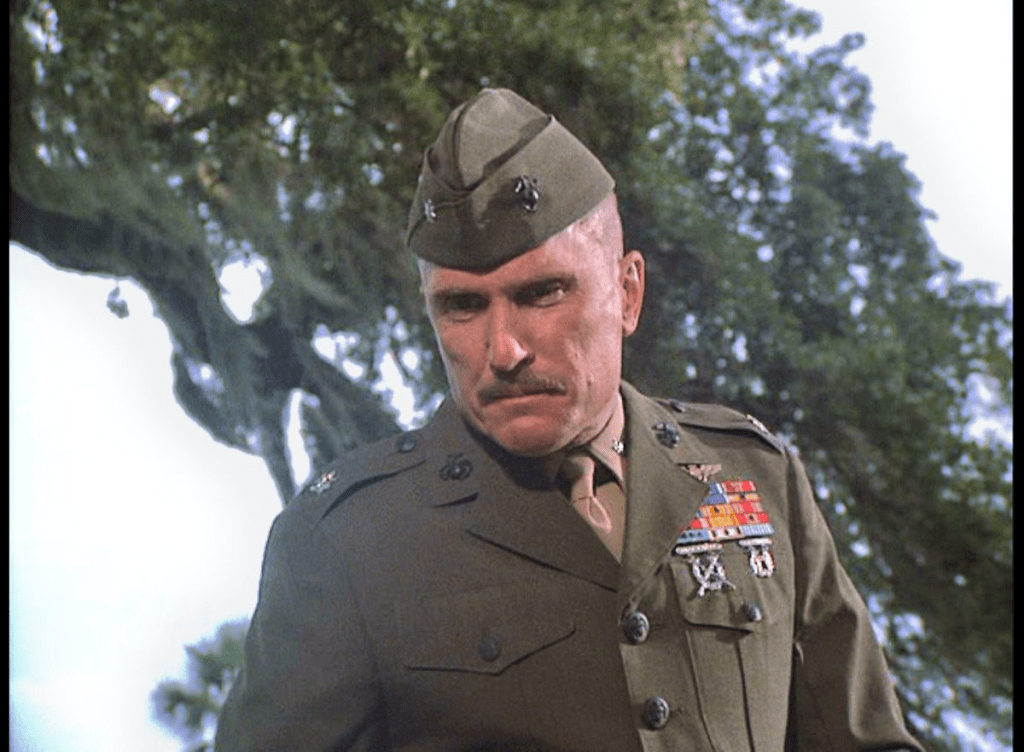
Duvall in “The Great Santini”, released in October 1979. (Image found online.  Original source unknown.)
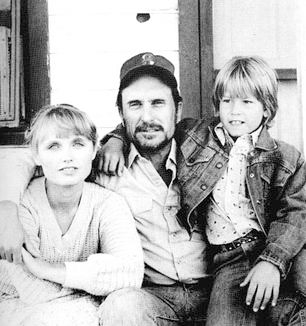

Still from 1983’s “Tender Mercies” (L-R): Tess Harper, Duvall and Allan Hubbard. (Image found online.  Original source unknown.)
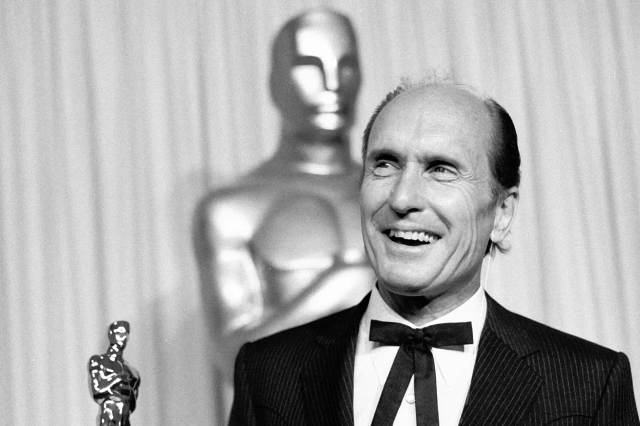
Duvall with his Best Actor Oscar at the 1984 Academy Awards. (Image found online.  Original source unknown.)
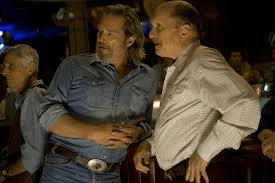
Jeff Bridges (L) with Duvall (R) in “Crazy Heart” (2009). (Image found online.  Original source unknown.)

James Roday’s hilarious alter ego, Shawn Spencer, mentions Duvall by name while talking to a friend in a Psych episode from 2010 (S4 E10). Spencer concedes to jumping to the wrong conclusion about a possible suspect the police were observing.

“It’s funny that Major General Felts turned out to be the good guy in all of this. If I hadn’t seen “The Great Santini” so many times, I probably would have seen that sooner”.

Spencer & his friend then marvel about the actor’s performance: “Duvall. Yeah, Duvall”.

Farewell to an astonishingly gifted actor.

Robert Selden Duvall: January 5, 1931 – February 15, 2026.
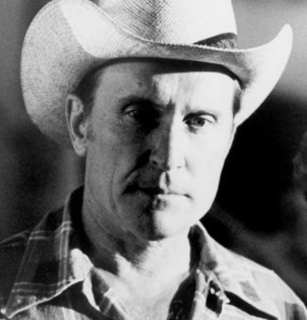
Duvall in “The Stone Boy” (1984). (Image found online.  Original source unknown.)

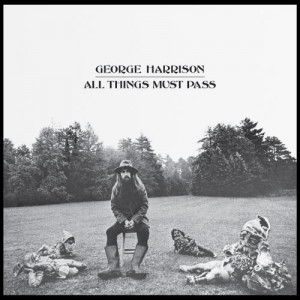
When the country rang in the new year 55 years ago, George Harrison’s first solo single was at the top of the charts. The song reached the #1 spot on December 26, 1970 and stayed in that position for four consecutive weeks. That success helped drive his third solo album, All Things Must Pass, to the top of the Billboard 200 chart for seven consecutive weeks beginning on January 2, 1971, less than a month after its release.
(Image found online.  Original source unknown.)

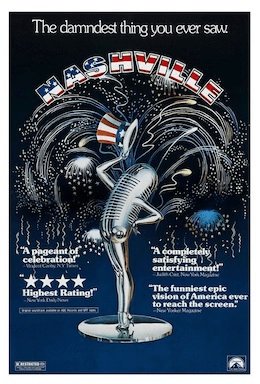
One of my favorite movies, “Nashville”, celebrated its 50th anniversary in 2025. I fell in love with the way director & producer Robert Altman told the story of two distinctively different families brought together by the union of their children in 1978’s “A Wedding”. He chronicled the every day  intricacies of life including all the ballast it brings through moments which are messy, quirky, warm, fun, sad, tragic and over entirely too fast. So when I found out he made a movie with all that set to a musical substory-and Lily Tomlin in a lead role-I welcomed it. The story features an ensemble cast telling the story of over two dozen people intertwined in each other’s lives, dreams, hopes & expectations over a five day period which changes their trajectory in powerful unexpected ways.

The Criterion Collection called the film “a cinematic tapestry that is equal parts comedy, tragedy, and musical. Many members of the astonishing cast wrote their own songs and performed them live on location, which lends another layer to the film’s quirky authenticity. Altman’s ability to get to the heart of American life via its eccentric byways was never put to better use than in this grand, rollicking triumph, which barrels forward to an unforgettable conclusion”.

One of the tracks I absolutely adore-written & performed by Keith Carradine-won the Oscar for Best Original Song at the 48th Academy Awards in 1976.
(Image found online.  Original source unknown.)
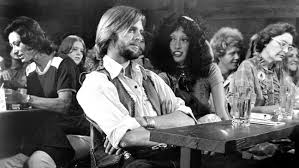
Keith Carradine (L) and Shelley Duvall (R) in “Nashville”. (Image found online.  Original source unknown.)

Robert Duvall (as Mac Sledge): “If You’ll Hold The Ladder (I’ll Climb To The Top)” (1983, written by Sara Busby and Buzz Rabin. Featured in the film, “Tender Mercies”).

George Harrison: “My Sweet Lord” (1970, written by George Harrison).

Keith Carradine: “I’m Easy” (1975, written by Keith Carradine).

Stay safe & well.

Music Monday: October 24, 2022

Hi, everyone. Welcome to another edition of Music Monday.

Music Monday

(Image found online.  Original source unknown.)

Fifty years ago the landscape of cinematic history changed with the premiere of one of the greatest films ever made. “The Godfather”, Francis Ford Coppola’s Academy Award winning masterpiece about Don Vito Corleone, a man at the head of an organized crime operation in New York City, was released in 1972. From its debut, it was hailed as a work of art, a masterful tale of family, respect, business, honor and the Italian culture both in America & in Europe. It also produced two sequels.

As an Italian American woman, there was no way I could let a monumental anniversary like this go without paying homage to its place in history. My dad was a huge fan of the movie and the 1969 book by Mario Puzo (who also wrote the screenplay with Coppola). I remember trying to watch it with my father when I was barely a teenager but gave up after the heartbreaking death of heir apparent first born son Santino (“Sonny”, played by James Caan).

Once I watched it as an adult I, of course, saw it for the phenomenal event that it was. I was especially struck by how fair, balanced and gentle Don Corleone was (played to perfection by Marlon Brando, who won the Best Actor Oscar for the role, which he famously declined), a man of many traits who valued family and could clearly see justice in even the most offensive situations. Case in point: Don Corleone was asked by an undertaker to kill the two the men who brutally beat his daughter. The Godfather told the anguished man that was not justice as his daughter was still alive. But that did not mean the men who hurt her did not deserve to suffer as well. And when Sonny was killed, his heartbroken father called for a truce rather than an act of revenge in order to save the lives of his other two sons.

Yet none of his boys inherited their father’s sense of balance. Each one fell victim to the predominant trait they inherited from Don Corleone. For Sonny, it was his temper. For Fredo, it was his pride. For Michael, it was his need for revenge. It cost two of them their lives and for Michael, it cost him his first wife & his daughter, as seen in the third installment of the trilogy (Don Vito also adopted a fourth son, Tom Hagen, when he was a child. He grew up to be the family lawyer and conciliary, played by Robert Duvall).

If everyone yearns to be Irish on St. Patrick’s Day, you can believe nearly everyone wanted to be Italian after seeing this film, despite the gangter underscore to the story. And it has been part of our pop culture vernacular for five decades. It has been referenced in so many other movies and TV shows I have lost count (but probably most famously in “The Sopranos” for obvious reasons). I think my favorite ones are in “You’ve Got Mail” (both Tom Hank’s & Greg Kinnear’s characters acknowledge quotes from the film) and in “Modern Family” in S4 E13, “Fulgencio”. Surprisingly in that story arc it was nice guy Phil Dunphy who took his turn as The Godfather to save his family’s honor with the help of his son, Luke. It was an exceptionally funny episode from a series full of them & definately worth the watch if you have not seen it.

But for me, like with everything else, the film was about the music-in particularly-the theme song. I remember being in another room of my house when I heard the hauntingly beautiful instrumental score coming from the living room. My dad was watching the movie again but this time it looked remarkably different than what I remembered. Michael Corleone (Al Pacino) was walking along the hills of Sicily as the gorgeous theme played. I loved it so much (and the music from Connie’s wedding scene too, especially The Tarantella) that my dad bought me the album. But surprisingly enough, the theme song was not on The Godfather’s Family Wedding Album.

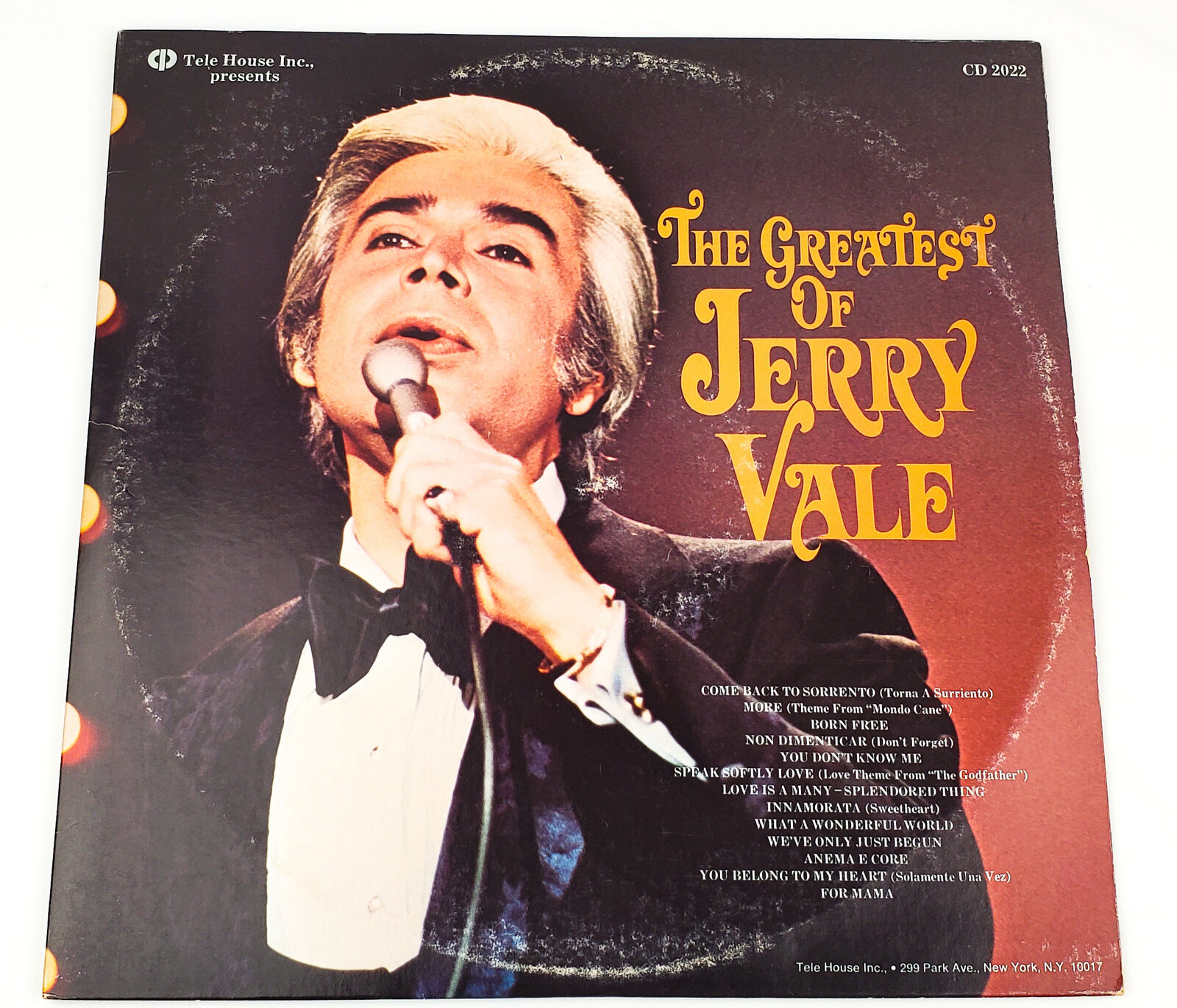
My grandmother remembered hearing a version of it by Italian vocalist Jerry Vale, so we searched the stores for it and found it on his 1974 greatest hits compilation. Crooner Andy Williams had a hit with his interpretation of the song in 1972 but not many singers have covered it in the past five decades, so Vale’s is still the rendition I come back to time and time again (although Andrea Bocelli’s 2015 Sicilian version, Brucia la terra, is quite beautiful). And as gorgeous as the instrumental score by Nino Rota was, the addition of the lyrics by Larry Kusik turned the song into an event fitting for a film considered the second best ever made after “Citizen Kane”.

Viva IL Padrino.

“Wine-colored days
Warmed by the sun
Deep velvet nights
When we are one”.

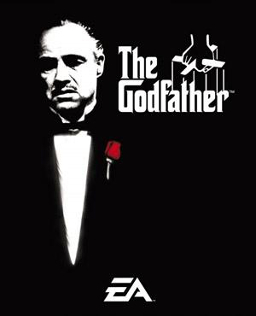
The Godfather movie poster

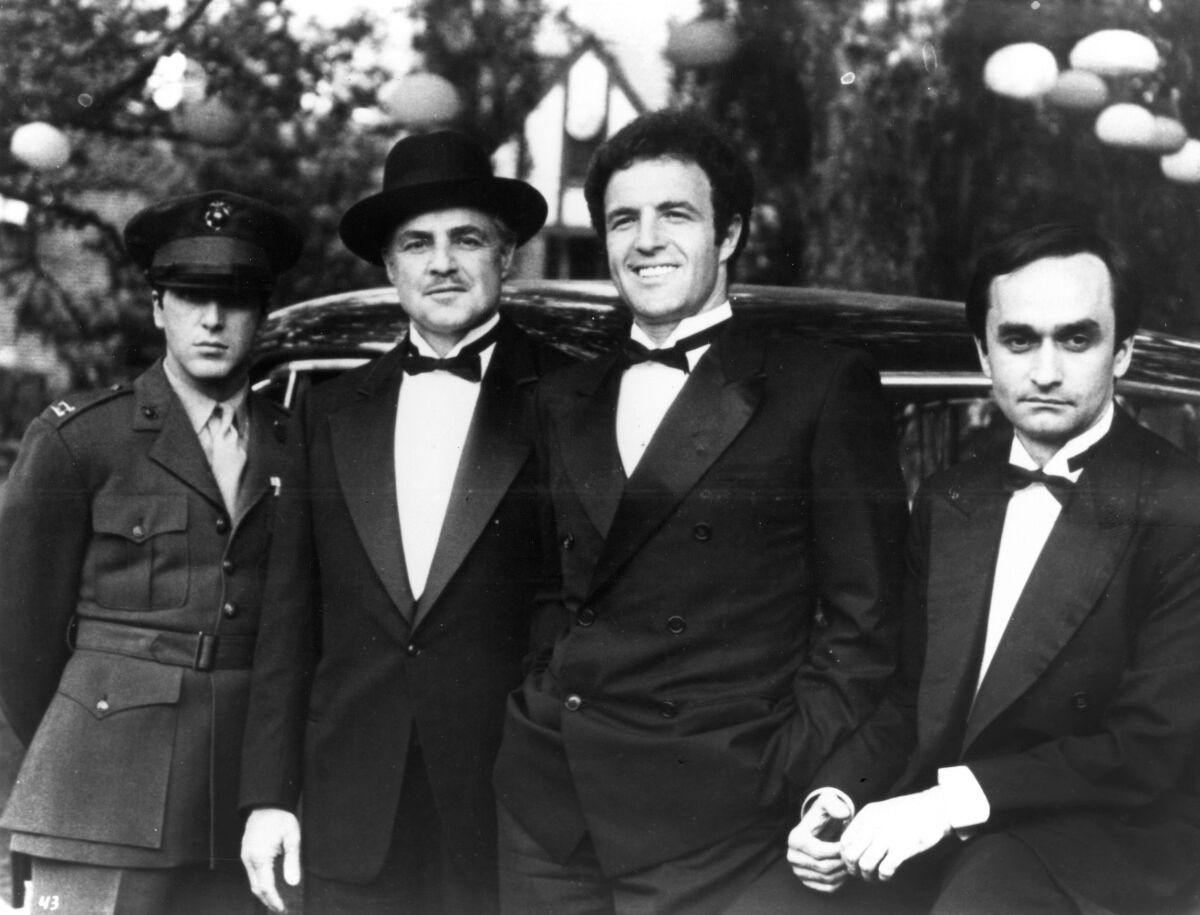
The men of The Godfather

Godfather Wedding Album

Jerry Vale

From top to bottom: The 1972 movie poster for “The Godfather”; The Corleone men (L-R): Michael (Al Pacino), Don Vito (Marlon Brando), Santino (James Caan) and Fredo (John Cazale): The Godfather’s Wedding Album (1972) and “The Greatest Of Jerry Vale” (1974). (Images found online.  Original sources unknown.)

Jerry Vale: “Speak Softly Love” (The Love Theme To “The Godfather“), music by Nino Rota, lyrics by Larry Kusik).

Stay safe and well.

Let’s Take A Moment Day 13

Hi everyone.  Hope you are all well and continue to stay that way during this global health crisis we are facing.  But in addition to protecting your physical wellness, what are you doing to stay mentally healthy today?

music heart

(Image found online.  Original source unknown.)

I know we are in a serious situation, but I need a break from the gloom, doom and bullying by way of hoarding. Music has always been my refuge and watching those beautiful Italians singing to each other from their balconies reaffirmed my belief that music is the answer. So until the old normal returns, I am going to share a song I listen to that helps me escape the current state of things, if only for a few minutes each day. And if this helps anyone else, even better.

My elementary school gym teacher was very progressive for her time.  She realized that dance and choreographed routines were excellent forms of exercise.  Every spring she had us perform to two different songs.  Today’s pick was one of them and from the first time I heard it I adored it.  This song had come in and out of my life for years until I heard it at the end of a “Mad Men” episode in 2013 when I finally added it to my Spotify & YT favorites list so I would not lose track of it again.

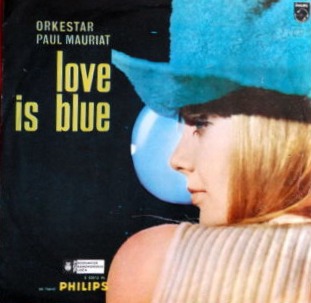
Although the version we used in gym class was the instrumental one, the song was recorded with its full lyrics in 1968 by Italian crooner Al Martino (also known as  Johnny Fontane in “The Godfather” movies).  I was also very surprised to learn rock guitarist Jeff Beck did his own version of this song using only  the lyrics from the chorus interspersed between his guitar solos.  But to me, the best version is by this French conductor.

Paul_Mauriat_Love_Is_Blue

(Image found online.  Original source unknown.)

Paul Mauriat:  “Love Is Blue” (1968, music written by Andre Popp with french lyrics by Pierre Cour and English lyrics by Bryan Blackburn).

I do not own the rights to anything.  I am just sharing what I love and how I am coping with you.

Stay well.